
Apple TV Review – Cape Fear
Will Hume evaluates the season premiere of the Apple TV remake of Cape Fear…
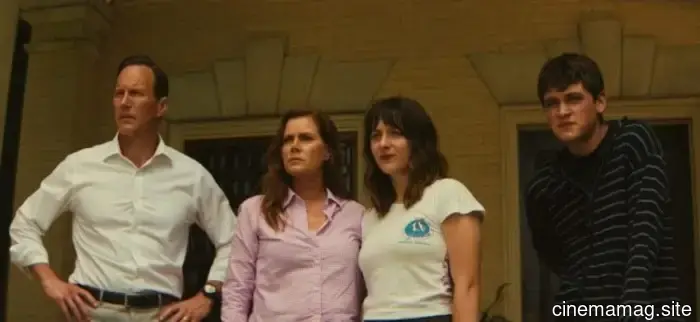
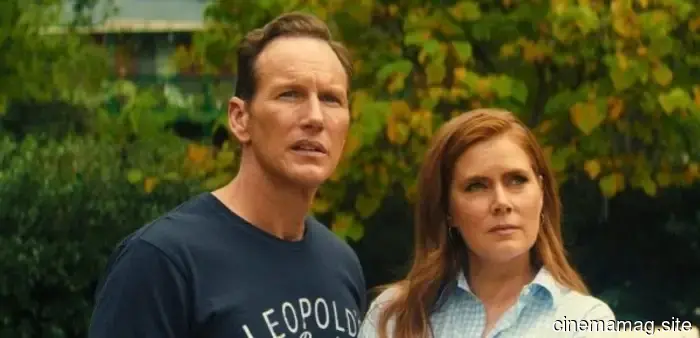
In the 34 years since Martin Scorsese took us through a gripping exploration of Cape Fear, much has changed, yet Max Cady continues to have newspaper articles related to his case pinned up in his home. Now taking place in 2026, his attorney’s family comprises Anna (Amy Adams), his defense lawyer, and in a new twist, Tom (Patrick Wilson), the prosecutor responsible for his conviction for murdering his wife and unborn child. They have a son named Zack (Joe Anders), who is melancholic, plays video games alone in his room, neglects his father, and grapples with undiagnosed mental health issues. One night, he arrives home missing a toe. Could Cady be involved? He must be, right? Otherwise, there’s no plot. Or perhaps this narrative unfolds differently this time.
This latest retelling incorporates minor twists reminiscent of the 1991 Scorsese film, the 1962 original, and the 1957 novel, all of which are acknowledged here. However, the primary influences this time stem from the years of true crime murder stories that have unfolded in court since the last adaptation, along with the effects of social media. High-profile cases like those of the Ramseys, the Petersons, and the Murdaugh family serve as models for the affluent Bowden family. The show cleverly plants the seeds of the family’s downfall through its portrayal of media. Each snapshot or video taken by a paparazzo or during a planned benefit has the potential to haunt them.
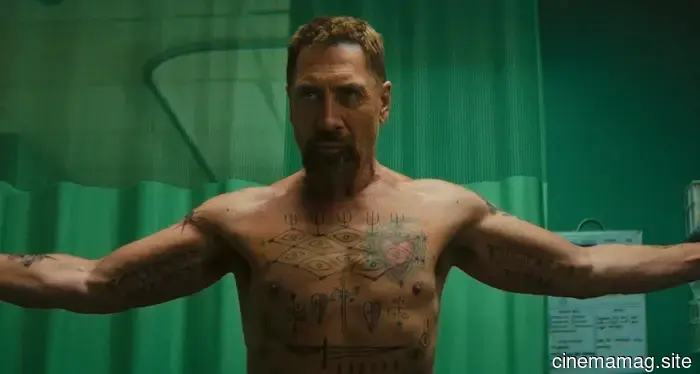
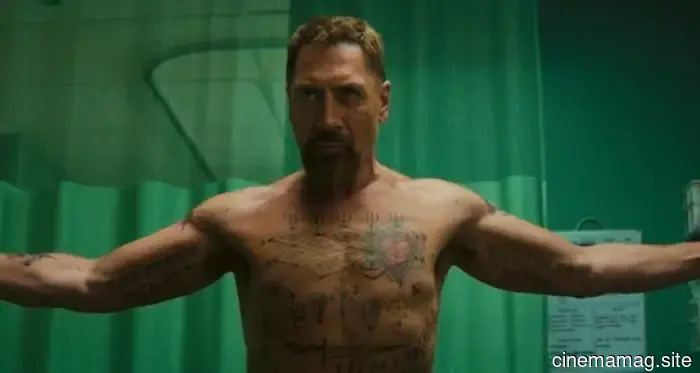
Cady, as an antagonist, is still motivated by intense jealousy towards the Bowden family, but this version presents his character in a more relatable light. Unlike previous versions, Cady is not depicted as a sex offender. His colored contacts serve more than just a stylistic purpose. His conviction for the murder of his wife and unborn child has been overturned, and we catch an early glimpse of his prison life where he was assaulted and seriously injured, resulting in blindness in one eye and light sensitivity. Visually, this serves as a reminder to the Bowdens of the possible injustice they contributed to. His jealousy appears more justified, as Anna unsuccessfully defended Cady during his trial while she was pregnant with her own daughter, Natalie. Zack encounters a deepfake online featuring Cady’s unborn child as an adult. The threat Cady poses seems to shift from physical danger (though he remains formidable) to more social manipulation. He could be influencing their son through anonymous texts or online interactions. Time will reveal if the series can effectively navigate the complex interplay of sympathy between Max Cady and the Bowden family.
Is there a more fitting choice for a psychopath than Javier Bardem? The actor won an Oscar for his portrayal of one in the Best Picture-winning No Country For Old Men and played the primary antagonist in Skyfall, the highest-grossing Bond film ever. Some critics initially dismissed his casting as uninspired, claiming he could perform the role in his sleep. Yet, what distinguishes Bardem’s interpretation of Cady is that despite his villainous appearance and introduction, he behaves like a human. Following conventional filmmaking techniques, his face isn’t revealed until he speaks, allowing his history to create an aura of menace. Bardem and the creators leverage the audience’s familiarity with the character’s background to convey depth. The series avoids depicting Cady as the relentless, cartoonish psychopath portrayed by De Niro in the 1991 film, which would be exhausting over ten episodes. Instead, Cady speaks softly, enabling the direction and his reputation to carry the weight of his character.
However, the production does suffer from excessive dialogue that is overly explicit for a tone that addresses the material so directly. There are numerous instances of clunky exposition where characters state information that would already be known to one another. For example, the children mention their relationship to their parents, with one saying, “You’re their real kid,” and the other responding, “But they like you better though.” In another scene, Anna recounts how she fell in love with Tom during Cady’s trial. This straightforwardness extends beyond the dialogue into symbolism when a family of dead skunks is pulled from the pool. Some lines curiously lack detail, such as, “Damnit, it’s doing that thing again,” referring to electronic interference with the security system, which will obviously resurface when Cady breaks into their home. A major coincidence occurs early on during a hospital visit where Cady coincidentally appears just a few rooms away from the Bowden family; he encounters Anna and then Zack in the bathroom but deliberately avoids Tom.
Hopefully, this clumsiness serves a purpose for efficiency and doesn’t hinder future episodes. These instances serve as reminders that, even with an A-list Hollywood cast, the production still feels like a TV movie, which is more of a regression than an advancement
Other articles
 The 5 Highest-Grossing Films That Received a Zero on Rotten Tomatoes
Here are the five highest-grossing films that have received a score of zero on Rotten Tomatoes.
The 5 Highest-Grossing Films That Received a Zero on Rotten Tomatoes
Here are the five highest-grossing films that have received a score of zero on Rotten Tomatoes.
-Arrives-This-October.jpg) Once Upon a Time in Harlem Teaser: The Documentary of the Year (and 1972) is Coming This October
Premiering at the Sundance Film Festival earlier this year and recently visiting Cannes, it would be an incredible year if a better documentary than Once Upon a Time in Harlem were to be released. This exceptional time capsule showcases footage captured by the late William Greaves (Symbiopsychotaxiplasm) and his son David Greaves of a party that took place in 1972.
Once Upon a Time in Harlem Teaser: The Documentary of the Year (and 1972) is Coming This October
Premiering at the Sundance Film Festival earlier this year and recently visiting Cannes, it would be an incredible year if a better documentary than Once Upon a Time in Harlem were to be released. This exceptional time capsule showcases footage captured by the late William Greaves (Symbiopsychotaxiplasm) and his son David Greaves of a party that took place in 1972.
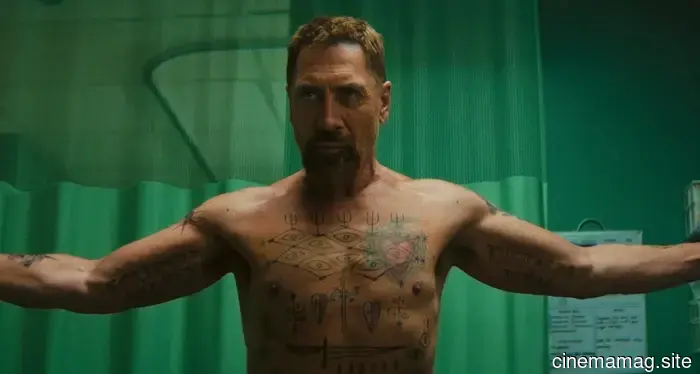 Review of Apple TV – Cape Fear
Will Hume assesses the season premiere of the Apple TV remake of Cape Fear… A lot has changed in the 34 years since Martin Scorsese led us through the intense experience of Cape Fear, but Max Cady still…
Review of Apple TV – Cape Fear
Will Hume assesses the season premiere of the Apple TV remake of Cape Fear… A lot has changed in the 34 years since Martin Scorsese led us through the intense experience of Cape Fear, but Max Cady still…
 Comic Book Sneak Peek – Altered States: Warlords #1
Dynamite Entertainment launches its Elseworlds-inspired series, Altered States, this week with the debut of Altered States: Warlords #1, which includes characters like Red Sonja, Vampirella, Dejah Thoris, and Joh…
Comic Book Sneak Peek – Altered States: Warlords #1
Dynamite Entertainment launches its Elseworlds-inspired series, Altered States, this week with the debut of Altered States: Warlords #1, which includes characters like Red Sonja, Vampirella, Dejah Thoris, and Joh…
 “The Effort Lies in Screenwriting”: John Sayles Discusses Resourceful Filmmaking, James Cameron, and His TIFF Retrospective
One notable aspect of filmmaker John Sayles is his extensive body of work. Are you a fan of Steven Spielberg's E.T. the Extra-Terrestrial or Tobe Hooper's Poltergeist? Sayles' unproduced screenplay Night Skies contributes elements to both beloved films. And what about The Big Chill? Sayles' delightful Return of the Secaucus 7, which he both wrote and directed, is also noteworthy.
“The Effort Lies in Screenwriting”: John Sayles Discusses Resourceful Filmmaking, James Cameron, and His TIFF Retrospective
One notable aspect of filmmaker John Sayles is his extensive body of work. Are you a fan of Steven Spielberg's E.T. the Extra-Terrestrial or Tobe Hooper's Poltergeist? Sayles' unproduced screenplay Night Skies contributes elements to both beloved films. And what about The Big Chill? Sayles' delightful Return of the Secaucus 7, which he both wrote and directed, is also noteworthy.
 Top Payout Online Casinos 2026: A Review of High RTP Websites
Compare the top-paying online casinos for 2026, featuring high-RTP slots, quick cryptocurrency withdrawals, and equitable bonuses you can take advantage of now.
Top Payout Online Casinos 2026: A Review of High RTP Websites
Compare the top-paying online casinos for 2026, featuring high-RTP slots, quick cryptocurrency withdrawals, and equitable bonuses you can take advantage of now.
Apple TV Review – Cape Fear
Will Hume examines the season premiere of Apple TV's remake of Cape Fear... There has been a lot of transformation in the 34 years since Martin Scorsese provided an intense exploration of Cape Fear, but Max Cady remains...