
Review of Apple TV – Cape Fear
Will Hume reviews the season premiere of the Cape Fear remake on Apple TV…
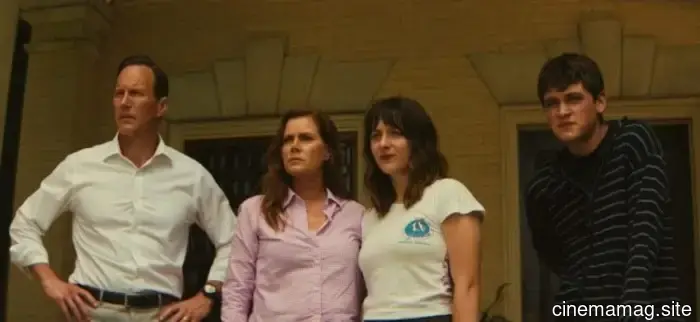
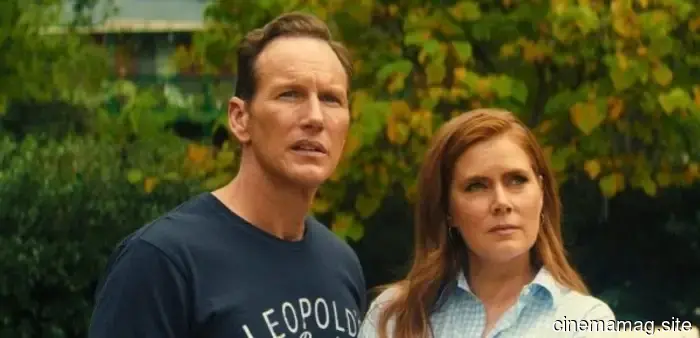
A lot has changed in the 34 years since Martin Scorsese offered us a gripping look at Cape Fear, yet Max Cady continues to have newspaper articles about the case displayed in his home. Now set in 2026, his lawyer's family comprises Anna (Amy Adams), his defense attorney, and in an intriguing twist, Tom (Patrick Wilson), the prosecutor who convicted him for the murder of his wife and unborn child. Anna and Tom share a son, Zack (Joe Anders), who is troubled, spends time gaming alone in his room, ignores his father, and struggles with undiagnosed mental health problems. One night, he returns home missing his toe. Could Cady be involved? He has to be, right? Otherwise, there would be no story. Or maybe it's a different narrative this time.
This third adaptation adds to the small twists found in the 1991 Scorsese film, the 1962 original, and the 1957 novel, each of which is acknowledged here. However, the main influences this time are the years of true crime murder documentaries that have unfolded in courts since the last version aired, alongside the influence of social media. Cases like those of the Ramseys, the Petersons, and the Murdaugh family serve as inspiration for the affluent Bowden family. The show adeptly plants the seeds of the family's downfall through its depiction of media involvement. Every snap from a stalkerazzi or a staged charity event holds the potential to haunt them later.
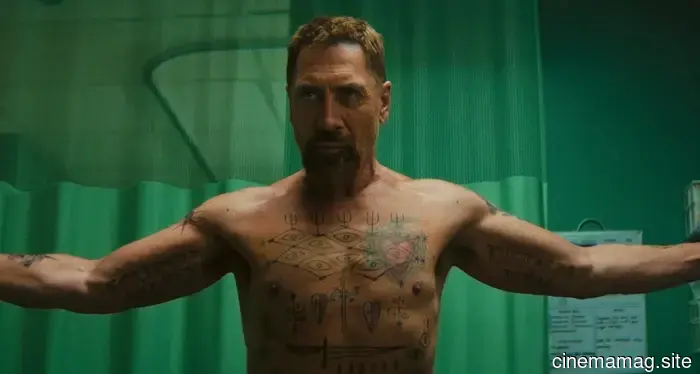
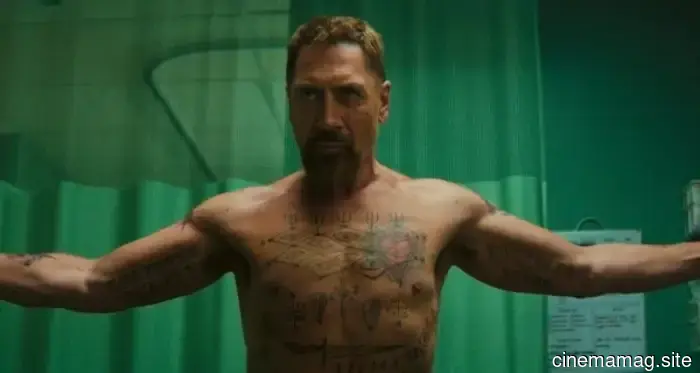
Cady, as the antagonist, is still fueled by a frenzied jealousy towards the Bowden family, presented in a manner that is more understandable and empathetic. Unlike earlier versions, Cady is not depicted as a sex offender. His colored contacts serve a purpose beyond just style. His conviction for murdering his wife and unborn child has been overturned, and we get an early look into his prison life, where he was attacked and seriously injured, resulting in blindness in one eye and light sensitivity. Visually, this serves as a reminder to the Bowdens of the possible injustices they faced. His jealousy also becomes clearer as Anna unsuccessfully defended Cady in the case involving his unborn child while she was pregnant with her daughter, Natalie. Zack encounters a deep fake online of Cady’s unborn child as an adult. The threat Cady poses seems to veer away from physical confrontations (though he remains a powerful presence) and leans towards social manipulation. He may be influencing their son through anonymous messages or online interactions. It remains to be seen whether the show can successfully balance sympathy between Max Cady and the Bowden family.
Is there an easier choice for a psychopath than Javier Bardem? The actor won an Oscar for portraying one in the Best Picture-winning No Country for Old Men and played the primary villain in Skyfall, the highest-grossing Bond film ever. Critics initially dismissed his casting as uninspired, deeming it a role he could play with ease. However, what distinguishes Bardem’s portrayal of Cady is that, despite his villainous appearance and introduction, he behaves like a human. Following conventional filmmaking practices, his face remains hidden until he speaks, as his reputation precedes him. Bardem and the rest allow the audience's prior knowledge of the character to do much of the work. The series avoids exploring Cady as the relentlessly cartoonish psychopath portrayed so brilliantly by De Niro in the 1991 adaptation, as that would become tedious over ten episodes. Cady speaks softly, letting the direction and his character’s reputation handle the heavy lifting.
The production does have its downsides, with dialogue that often feels too direct for a material played so plainly. There are numerous instances of clumsy exposition where characters state things they would already know. For example, when the kids each clarify their relationship to their parents, saying, “You’re their real kid,” or, “But they like you better.” In another scene, Anna explains how she fell for Tom during Cady’s trial. This straightforwardness extends beyond dialogue into visuals, as when a family of dead skunks is pulled from the pool. Additionally, some lines lack specificity, like “Damnit, it’s doing that thing again,” referring to electronic interference with the security system, which is likely to be relevant when Cady breaks in. A significant coincidence occurs early on during a hospital visit when Cady appears just a few rooms away from the Bowden family; he encounters Anna and later Zack in the bathroom but avoids Tom.
Hopefully, this clumsiness is deployed effectively for storytelling efficiency and doesn’t hinder future episodes. These moments serve as reminders that, despite the A-list Hollywood cast, viewers are still watching something akin to a TV movie, which feels like a step backwards rather than forwards. Greater balance is necessary.
Other articles
 The 12 Most Transformative Films of 1976, a Year of Uprising
Here are the 12 most groundbreaking films of 1976, a year when outcasts and nonconformists dominated the box office.
The 12 Most Transformative Films of 1976, a Year of Uprising
Here are the 12 most groundbreaking films of 1976, a year when outcasts and nonconformists dominated the box office.
 “The Effort Lies in Screenwriting”: John Sayles Discusses Resourceful Filmmaking, James Cameron, and His TIFF Retrospective
The remarkable aspect of filmmaker John Sayles is that he has explored every facet of the industry. Are you a fan of Steven Spielberg's E.T. the Extra-Terrestrial or Tobe Hooper's Poltergeist? Sayles’ unused screenplay Night Skies served as a foundation for both iconic films. And what about The Big Chill? Sayles’ delightful Return of the Secaucus 7, which he both wrote and directed, is worth mentioning.
“The Effort Lies in Screenwriting”: John Sayles Discusses Resourceful Filmmaking, James Cameron, and His TIFF Retrospective
The remarkable aspect of filmmaker John Sayles is that he has explored every facet of the industry. Are you a fan of Steven Spielberg's E.T. the Extra-Terrestrial or Tobe Hooper's Poltergeist? Sayles’ unused screenplay Night Skies served as a foundation for both iconic films. And what about The Big Chill? Sayles’ delightful Return of the Secaucus 7, which he both wrote and directed, is worth mentioning.
-Arrives-This-October.jpg) Once Upon a Time in Harlem Teaser: The Documentary of the Year (and 1972) is Coming This October
Premiering at the Sundance Film Festival earlier this year and recently visiting Cannes, it would be an incredible year if a better documentary than Once Upon a Time in Harlem were to be released. This exceptional time capsule showcases footage captured by the late William Greaves (Symbiopsychotaxiplasm) and his son David Greaves of a party that took place in 1972.
Once Upon a Time in Harlem Teaser: The Documentary of the Year (and 1972) is Coming This October
Premiering at the Sundance Film Festival earlier this year and recently visiting Cannes, it would be an incredible year if a better documentary than Once Upon a Time in Harlem were to be released. This exceptional time capsule showcases footage captured by the late William Greaves (Symbiopsychotaxiplasm) and his son David Greaves of a party that took place in 1972.
 Tribeca Review: The Revisionist Is a Comedy of Manners That Becomes Complicated
Alex Vlack’s The Revisionist possesses all the characteristics of an excellent comedy of manners before shifting to something that is clearly hinted at in the film's initial scenes. While having that context might add depth during a rewatch, it's still disappointing that the film veered away from what could have been a unique satirical character exploration had it taken a different direction.
Tribeca Review: The Revisionist Is a Comedy of Manners That Becomes Complicated
Alex Vlack’s The Revisionist possesses all the characteristics of an excellent comedy of manners before shifting to something that is clearly hinted at in the film's initial scenes. While having that context might add depth during a rewatch, it's still disappointing that the film veered away from what could have been a unique satirical character exploration had it taken a different direction.
 Tribeca Review: Ponderosa Delivers a Mysterious, Humorous Perspective on America’s National Myths
Family and belonging shape society on a mythic level, their symbolic significance easily integrated into ideologies that divide the world into binaries—"us" and "them," "familiar" and "foreign," "left" and "right." While these vestiges of a bygone purity remain prominent in our collective consciousness, they are reinterpreted in the creations of filmmaker Rob Rice. Originating from Massachusetts,
Tribeca Review: Ponderosa Delivers a Mysterious, Humorous Perspective on America’s National Myths
Family and belonging shape society on a mythic level, their symbolic significance easily integrated into ideologies that divide the world into binaries—"us" and "them," "familiar" and "foreign," "left" and "right." While these vestiges of a bygone purity remain prominent in our collective consciousness, they are reinterpreted in the creations of filmmaker Rob Rice. Originating from Massachusetts,
 Top Payout Online Casinos 2026: A Review of High RTP Websites
Compare the top-paying online casinos for 2026, featuring high-RTP slots, quick cryptocurrency withdrawals, and equitable bonuses you can take advantage of now.
Top Payout Online Casinos 2026: A Review of High RTP Websites
Compare the top-paying online casinos for 2026, featuring high-RTP slots, quick cryptocurrency withdrawals, and equitable bonuses you can take advantage of now.
Review of Apple TV – Cape Fear
Will Hume assesses the season premiere of the Apple TV remake of Cape Fear… A lot has changed in the 34 years since Martin Scorsese led us through the intense experience of Cape Fear, but Max Cady still…