

The 12 Most Transformative Films of 1976, a Year of Uprising
Here are 12 of the most groundbreaking films from 1976, a year where rebels and underdogs dominated the box office.
As America celebrated its bicentennial, a spirit of revolution filled the air, with film stars pushing back against the established norms.
As we honor America’s 250th anniversary, we also recognize the bold films that defied conventions half a century ago. Happy anniversary to these 12 crucial films from 1976.
**Network**
Credit: United Artists
In a definitive rejection of authority, veteran news anchor Howard Beale (Peter Finch) has an impassioned breakdown, urging all Americans to lean out their windows and shout, “I’m mad as hell and I’m not gonna take it anymore.”
What fueled this anger? There are plenty of options: government corruption, inflation, Vietnam, crime… Network most vehemently criticizes complacency and the learned helplessness stemming from a continuous onslaught of negative news. Curious about that feeling?
Finch won Best Actor posthumously, Faye Dunaway (shown above) took home Best Actress, Beatrice Straight won Best Supporting Actress, and Paddy Chayefsky scooped up the award for Best Original Screenplay, marking an impressive year for screenwriting.
**Carrie**
Credit: United Artists
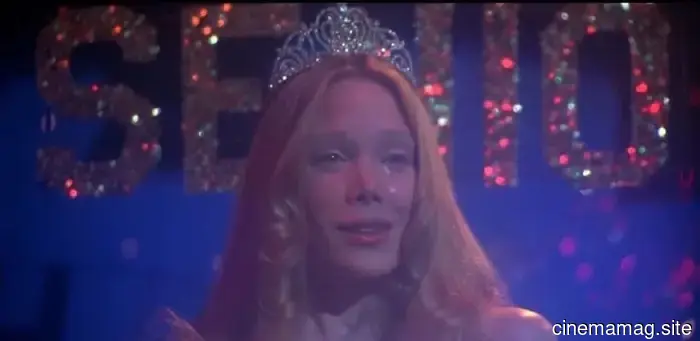
Carrie stands as one of the most impactful horror films ever, particularly for anyone who has experienced high school.
Sissy Spacek delivers a performance that is both vulnerable and frightening as Carrie, a timid outsider with hidden, remarkable rage — and the power to match.
This was director Brian De Palma’s first major success and notably, the first film that brought the box office might of Stephen King adaptations to the forefront. It's regarded as one of the scariest movies of the 1970s and of all time.
**Taxi Driver**
Credit: Columbia Pictures
Taxi Driver feels more relevant than ever in our current climate of angry young men and violence. Robert De Niro is explosive as Travis Bickle, an unstable loner fixated on a campaign worker (Cybill Shepherd) and intent on cleansing the treacherous streets of New York City.
A straightforward narrative might have sided with Bickle (similarly to Death Wish) or outright condemned him. However, director Martin Scorsese and writer Paul Schrader eschew a simplistic approach, refusing to make Taxi Driver a comfortable journey for viewers.
In the film’s gripping conclusion, Bickle liberates the victimized young Iris (Jodie Foster) from her dire predicament, challenging our previously held perceptions of the story.
**Rocky**
Credit: United Artists
Downer endings became typical in the early 1970s, but screenwriter and star Sylvester Stallone believed it was time for American cinematic heroes to reclaim victory.
The Academy concurred: Rocky won Best Picture, and John G. Avildsen secured the Best Director award. Stallone was nominated for Best Original Screenplay, but the award went to the aforementioned Chayefsky for Network.
While Rocky doesn’t ultimately defeat Apollo Creed, he achieves a monumental victory simply by having his moment in the ring. Rocky paved the way for Stallone to emerge as one of the biggest stars over the next 50 years, and it grossed more than 100 times its budget.
**All the President’s Men**
Credit: Warner Bros.
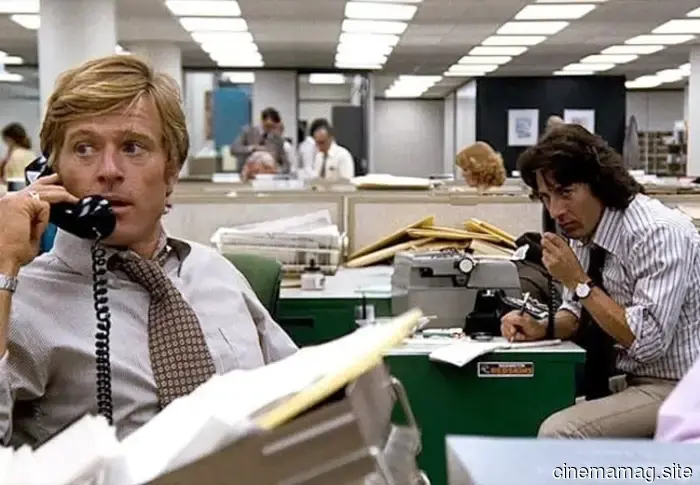
Robert Redford and Dustin Hoffman portray reporters Bob Woodward and Carl Bernstein, who tirelessly investigate what truly happened during the Watergate break-in — ultimately contributing to the downfall of President Richard Nixon.
This is a rare 50-year-old film that still feels intensely relevant, thanks to the immersive direction of renowned conspiracy thriller master Alan J. Pakula, and a sharp script by William Goldman that introduced the phrase “follow the money.”
It’s a principle that remains applicable today.
**Marathon Man**
Credit: Paramount Pictures
Remarkably, All the President’s Men was one of two 1976 films that united screenwriter William Goldman with the stellar Dustin Hoffman.
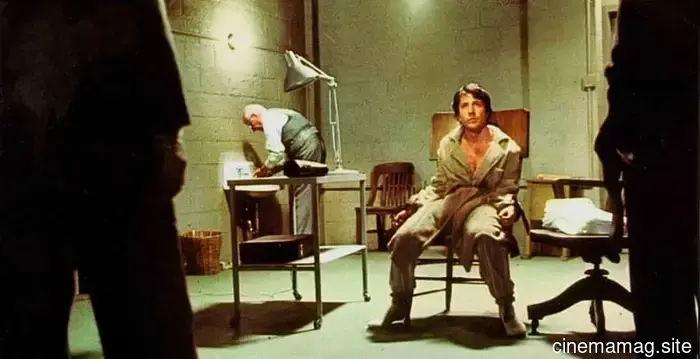
Marathon Man, adapted from Goldman’s own 1974 novel, is a gripping thriller about “Babe” Levy (Hoffman), a long-distance runner who inadvertently becomes embroiled in a plot by a Nazi war criminal (Laurence Olivier) aiming to reclaim stolen diamonds.
Its most memorable scene is undoubtedly the most terrifying dentistry sequence ever captured on film, eclipsing even Little Shop of Horrors, courtesy of director John Schlesinger.
**Harlan County, USA**
Credit: Cinema 5
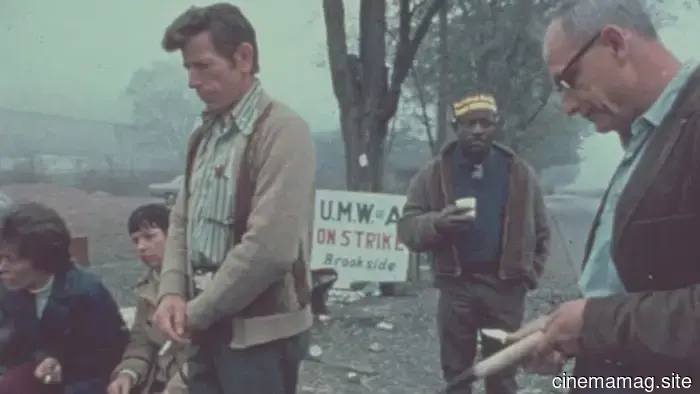
The 1970s produced a number of significant films about rural American life, but none conveyed the truth as bluntly as Barbara Kopple’s Harlan County, USA. It’s as much of a rallying cry as Network, but is rooted in reality.
This documentary chronicles a harsh, protracted 13-month strike by coal miners against the Brookside Mine in Harlan County, Kentucky, highlighting the clash between determined workers and




Other articles
 Tribeca Review: The Revisionist Is a Comedy of Manners That Becomes Complicated
Alex Vlack’s The Revisionist possesses all the characteristics of an excellent comedy of manners before shifting to something that is clearly hinted at in the film's initial scenes. While having that context might add depth during a rewatch, it's still disappointing that the film veered away from what could have been a unique satirical character exploration had it taken a different direction.
Tribeca Review: The Revisionist Is a Comedy of Manners That Becomes Complicated
Alex Vlack’s The Revisionist possesses all the characteristics of an excellent comedy of manners before shifting to something that is clearly hinted at in the film's initial scenes. While having that context might add depth during a rewatch, it's still disappointing that the film veered away from what could have been a unique satirical character exploration had it taken a different direction.
-Arrives-This-October.jpg) Once Upon a Time in Harlem Teaser: The Documentary of the Year (and 1972) is Coming This October
Premiering at the Sundance Film Festival earlier this year and recently visiting Cannes, it would be an incredible year if a better documentary than Once Upon a Time in Harlem were to be released. This exceptional time capsule showcases footage captured by the late William Greaves (Symbiopsychotaxiplasm) and his son David Greaves of a party that took place in 1972.
Once Upon a Time in Harlem Teaser: The Documentary of the Year (and 1972) is Coming This October
Premiering at the Sundance Film Festival earlier this year and recently visiting Cannes, it would be an incredible year if a better documentary than Once Upon a Time in Harlem were to be released. This exceptional time capsule showcases footage captured by the late William Greaves (Symbiopsychotaxiplasm) and his son David Greaves of a party that took place in 1972.
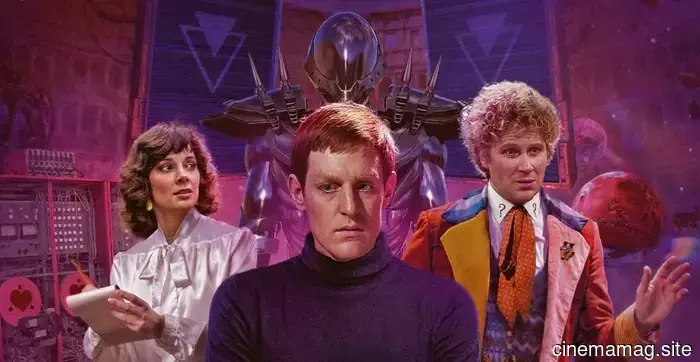 Colin Baker's Sixth Doctor encounters a Reunion in the upcoming Doctor Who adventure this August.
Today marks Colin Baker's 83rd birthday, and Big Finish Productions has chosen to commemorate this occasion by announcing The Sixth Doctor Adventures: Reunion, an all-new audio drama box set…
Colin Baker's Sixth Doctor encounters a Reunion in the upcoming Doctor Who adventure this August.
Today marks Colin Baker's 83rd birthday, and Big Finish Productions has chosen to commemorate this occasion by announcing The Sixth Doctor Adventures: Reunion, an all-new audio drama box set…
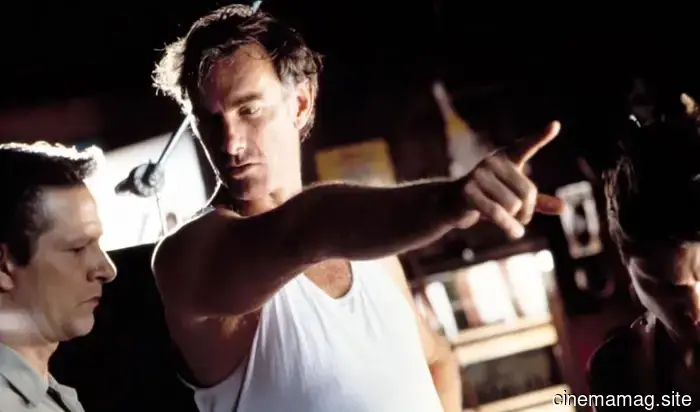 “The Effort Lies in Screenwriting”: John Sayles Discusses Resourceful Filmmaking, James Cameron, and His TIFF Retrospective
One notable aspect of filmmaker John Sayles is his extensive body of work. Are you a fan of Steven Spielberg's E.T. the Extra-Terrestrial or Tobe Hooper's Poltergeist? Sayles' unproduced screenplay Night Skies contributes elements to both beloved films. And what about The Big Chill? Sayles' delightful Return of the Secaucus 7, which he both wrote and directed, is also noteworthy.
“The Effort Lies in Screenwriting”: John Sayles Discusses Resourceful Filmmaking, James Cameron, and His TIFF Retrospective
One notable aspect of filmmaker John Sayles is his extensive body of work. Are you a fan of Steven Spielberg's E.T. the Extra-Terrestrial or Tobe Hooper's Poltergeist? Sayles' unproduced screenplay Night Skies contributes elements to both beloved films. And what about The Big Chill? Sayles' delightful Return of the Secaucus 7, which he both wrote and directed, is also noteworthy.
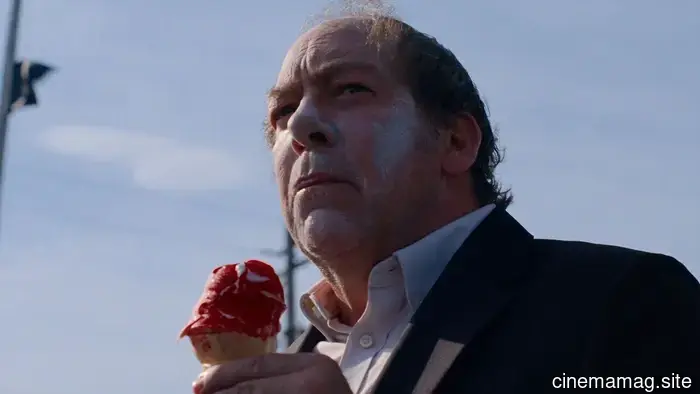 Tribeca Review: Ponderosa Delivers a Mysterious, Humorous Perspective on America’s National Myths
Family and belonging shape society on a mythic level, their symbolic significance easily integrated into ideologies that divide the world into binaries—"us" and "them," "familiar" and "foreign," "left" and "right." While these vestiges of a bygone purity remain prominent in our collective consciousness, they are reinterpreted in the creations of filmmaker Rob Rice. Originating from Massachusetts,
Tribeca Review: Ponderosa Delivers a Mysterious, Humorous Perspective on America’s National Myths
Family and belonging shape society on a mythic level, their symbolic significance easily integrated into ideologies that divide the world into binaries—"us" and "them," "familiar" and "foreign," "left" and "right." While these vestiges of a bygone purity remain prominent in our collective consciousness, they are reinterpreted in the creations of filmmaker Rob Rice. Originating from Massachusetts,
 Tribeca Review: The Revisionist Is a Comedy of Etiquette That Becomes Complicated
Alex Vlack’s The Revisionist contains all the characteristics of an excellent comedy of manners, but it ultimately shifts to something that is clearly hinted at in the film’s initial scenes. While having that background may add depth upon a second viewing, it is still disappointing that the film did not remain true to what could have been a unique satirical character exploration.
Tribeca Review: The Revisionist Is a Comedy of Etiquette That Becomes Complicated
Alex Vlack’s The Revisionist contains all the characteristics of an excellent comedy of manners, but it ultimately shifts to something that is clearly hinted at in the film’s initial scenes. While having that background may add depth upon a second viewing, it is still disappointing that the film did not remain true to what could have been a unique satirical character exploration.
The 12 Most Transformative Films of 1976, a Year of Uprising
Here are the 12 most groundbreaking films of 1976, a year when outcasts and nonconformists dominated the box office.