
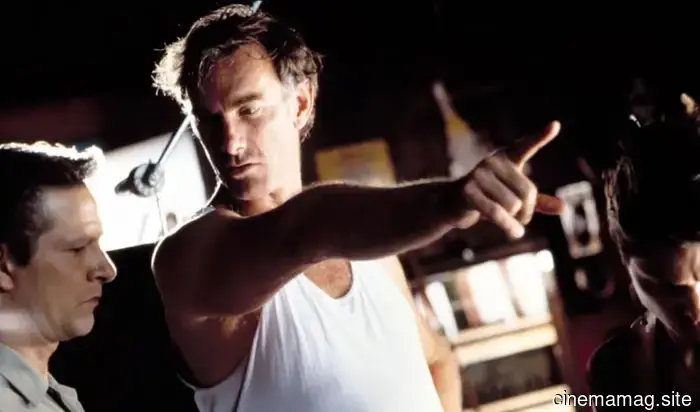
"‘The Effort Lies in Screenwriting’: John Sayles Discusses Inventive Filmmaking, James Cameron, and His TIFF Retrospective"
Filmmaker John Sayles has truly done it all. If you’re a fan of Steven Spielberg’s E.T. the Extra-Terrestrial or Tobe Hooper’s Poltergeist, you might be interested to know that Sayles’ unreleased screenplay Night Skies served as a foundation for both films. Likewise, his beautiful Return of the Secaucus 7, which he both wrote and directed, explored the deterioration of the American dream for baby boomers well ahead of Lawrence Kasdan’s The Big Chill. Over the years, Sayles has been pivotal to the development of nearly every genre in American cinema in various ways.
As TIFF Cinematheque prepares to launch their retrospective Declarations of Independence: The Cinema of John Sayles (curated by Adam Nayman, starting this Thursday), we had the opportunity to converse with Sayles about the series and the film selections. We also discussed his upcoming film I Passed This Way, his collaboration with James Cameron, and his recent encounters with classic noir films.
You can read or watch the interview below, or listen on The B-Side here.
The Film Stage: A couple of years ago, we had a fun conversation about all the classic films from the ‘30s, ‘40s, and ‘50s that we’re constantly catching up on. Have you seen any noteworthy classics recently?
John Sayles: I’ve actually watched quite a few pre-code films from the ‘30s. These are movies I might have heard of, but hadn’t seen before because they were rarely shown on TV after the Code was enforced. As a kid, I saw old movies with commercials, but these were often left out due to being deemed banned or edited. I've found several gems from that era. For instance, Lee Tracy often portrayed fast-talking, cynical reporters and starred in around a dozen interesting films, though he somewhat sabotaged his own career with his behavior.
I also recently viewed a lovely French film called Any Number Can Win featuring Jean Gabin and Alain Delon, which is a gripping psychological caper about a heist. There’s an early Frank Capra film titled American Madness with Walter Huston, and Black Tuesday, a prison escape movie starring Edward G. Robinson. Post-war Japanese cinema has also captured my interest, particularly Branded to Kill, featuring Joe Shishido, whose peculiar plastic surgery gives him an unusual appearance for a tough-guy character.
Moreover, I watched some movies about the “Sun Tribe,” a group of wealthy youth in Japan during tough times, who embraced Western culture with things like water-skiing. A must-see is Burt Lancaster's Criss Cross. Dodsworth, also featuring Walter Huston, is excellent as well. Scarlet Street, directed by Fritz Lang, is another standout I appreciated. A fine film called Silver Dollar, starring Edward G. Robinson alongside Aline MacMahon, showcases her exceptional talent. MacMahon was a notable character actress from the original Actors Studio who managed to maintain a film career.
The Sniper is another interesting film set in San Francisco about a man targeting women. The Half-Naked Truth, with Lee Tracy and Lupe Vélez, is fun, too — a 77-minute flick that’s a brisk watch. Jewel Robbery features William Powell and Kay Francis and is quite entertaining. Heat Lightning also stars Aline MacMahon as a former wild girl now managing a garage and dealing with her past. There's a suitably tough movie called Merrily We Go to Hell, directed by Dorothy Arzner, featuring Sylvia Sidney. I’d strongly recommend The Narrow Margin, which stars Charles McGraw and fits into the B or C-movie category.
I think the remake with Gene Hackman is commendable, too. The original Nightmare Alley, featuring Tyrone Power, is quite remarkable as well. I recently saw Piccadilly, a silent film starring Anna May Wong, set in London’s cabarets. Lastly, there's The Lineup, a lesser-known 1950s film featuring Eli Wallach as a hitman in San Francisco, which is fantastic. I’ve watched numerous others, but I’m starting to create a list to keep track of their similar titles. It’s getting hard to distinguish one from the other with names like Roadblock or Crossroads.
What was your experience collaborating with Adam Nayman on this series?
It was interesting because they asked us to suggest what films we’d like to screen. However, we discovered not all our films were available in a format that could be played in Toronto. So, we aimed to select films of ours that deserve more visibility—many were underappreciated at their release—and a couple of well-directed films I wrote. I’ve penned numerous films for others, and sometimes opt to remain uncredited if other writers contributed. It shines a light on works people wish to see. I've directed 18 films and wrote approximately another 25 that were produced, leaving plenty to choose from

Other articles
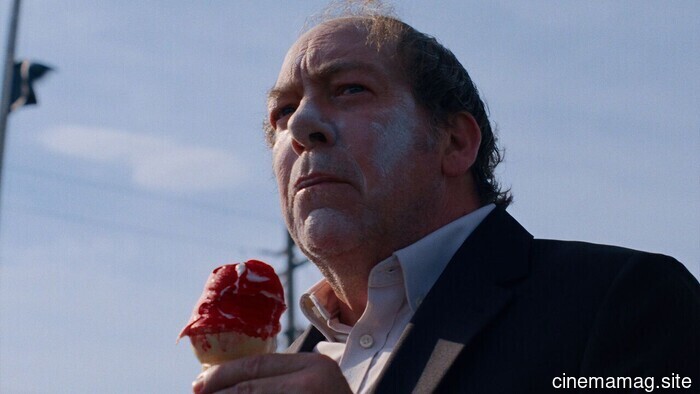 Tribeca Review: Ponderosa Delivers a Cryptic, Humorous Perspective on America’s National Legends
Family and the sense of belonging shape society on a mythical level, and their symbolic significance is easily integrated into ideologies that divide the world into binaries—“us” and “them,” “familiar” and “foreign,” “left” and “right.” Although these echoes of a bygone purity are deeply embedded in our collective consciousness, they emerge in new forms through the creations of filmmaker Rob Rice. Originally from Massachusetts,
Tribeca Review: Ponderosa Delivers a Cryptic, Humorous Perspective on America’s National Legends
Family and the sense of belonging shape society on a mythical level, and their symbolic significance is easily integrated into ideologies that divide the world into binaries—“us” and “them,” “familiar” and “foreign,” “left” and “right.” Although these echoes of a bygone purity are deeply embedded in our collective consciousness, they emerge in new forms through the creations of filmmaker Rob Rice. Originally from Massachusetts,
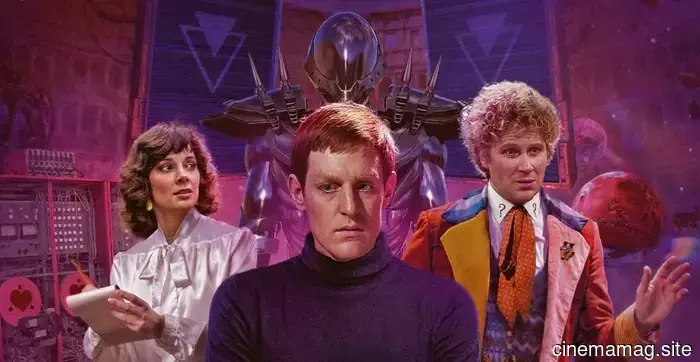 Colin Baker's Sixth Doctor encounters a Reunion in the upcoming Doctor Who adventure this August.
Today marks Colin Baker's 83rd birthday, and Big Finish Productions has chosen to commemorate this occasion by announcing The Sixth Doctor Adventures: Reunion, an all-new audio drama box set…
Colin Baker's Sixth Doctor encounters a Reunion in the upcoming Doctor Who adventure this August.
Today marks Colin Baker's 83rd birthday, and Big Finish Productions has chosen to commemorate this occasion by announcing The Sixth Doctor Adventures: Reunion, an all-new audio drama box set…
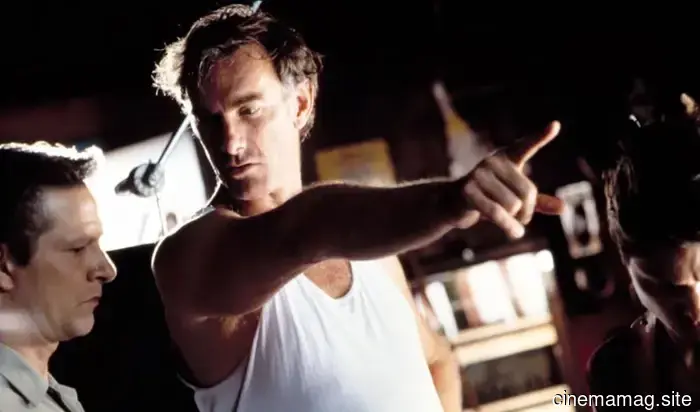 “The Effort Lies in Screenwriting”: John Sayles Discusses Resourceful Filmmaking, James Cameron, and His TIFF Retrospective
The remarkable aspect of filmmaker John Sayles is that he has explored every facet of the industry. Are you a fan of Steven Spielberg's E.T. the Extra-Terrestrial or Tobe Hooper's Poltergeist? Sayles’ unused screenplay Night Skies served as a foundation for both iconic films. And what about The Big Chill? Sayles’ delightful Return of the Secaucus 7, which he both wrote and directed, is worth mentioning.
“The Effort Lies in Screenwriting”: John Sayles Discusses Resourceful Filmmaking, James Cameron, and His TIFF Retrospective
The remarkable aspect of filmmaker John Sayles is that he has explored every facet of the industry. Are you a fan of Steven Spielberg's E.T. the Extra-Terrestrial or Tobe Hooper's Poltergeist? Sayles’ unused screenplay Night Skies served as a foundation for both iconic films. And what about The Big Chill? Sayles’ delightful Return of the Secaucus 7, which he both wrote and directed, is worth mentioning.
 Apple TV Review – Cape Fear
Will Hume examines the season premiere of Apple TV's remake of Cape Fear... There has been a lot of transformation in the 34 years since Martin Scorsese provided an intense exploration of Cape Fear, but Max Cady remains...
Apple TV Review – Cape Fear
Will Hume examines the season premiere of Apple TV's remake of Cape Fear... There has been a lot of transformation in the 34 years since Martin Scorsese provided an intense exploration of Cape Fear, but Max Cady remains...
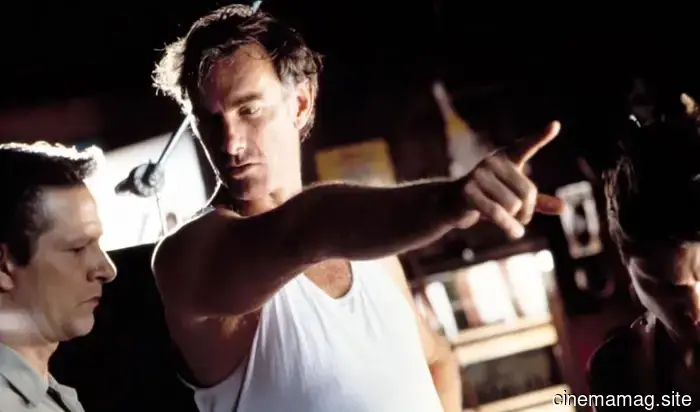 “The Effort Lies in Screenwriting”: John Sayles Discusses Resourceful Filmmaking, James Cameron, and His TIFF Retrospective
One notable aspect of filmmaker John Sayles is his extensive body of work. Are you a fan of Steven Spielberg's E.T. the Extra-Terrestrial or Tobe Hooper's Poltergeist? Sayles' unproduced screenplay Night Skies contributes elements to both beloved films. And what about The Big Chill? Sayles' delightful Return of the Secaucus 7, which he both wrote and directed, is also noteworthy.
“The Effort Lies in Screenwriting”: John Sayles Discusses Resourceful Filmmaking, James Cameron, and His TIFF Retrospective
One notable aspect of filmmaker John Sayles is his extensive body of work. Are you a fan of Steven Spielberg's E.T. the Extra-Terrestrial or Tobe Hooper's Poltergeist? Sayles' unproduced screenplay Night Skies contributes elements to both beloved films. And what about The Big Chill? Sayles' delightful Return of the Secaucus 7, which he both wrote and directed, is also noteworthy.
-Arrives-This-October.jpg) Once Upon a Time in Harlem Teaser: The Documentary of the Year (and 1972) Launches This October.
Making its debut at the Sundance Film Festival earlier this year and recently showcased at Cannes, it would be impressive if a superior documentary arrives this year than Once Upon a Time in Harlem. This remarkable time capsule presents footage filmed by the late William Greaves (Symbiopsychotaxiplasm) and his son David Greaves of a party from 1972 taking place in
Once Upon a Time in Harlem Teaser: The Documentary of the Year (and 1972) Launches This October.
Making its debut at the Sundance Film Festival earlier this year and recently showcased at Cannes, it would be impressive if a superior documentary arrives this year than Once Upon a Time in Harlem. This remarkable time capsule presents footage filmed by the late William Greaves (Symbiopsychotaxiplasm) and his son David Greaves of a party from 1972 taking place in
"‘The Effort Lies in Screenwriting’: John Sayles Discusses Inventive Filmmaking, James Cameron, and His TIFF Retrospective"
The interesting aspect of filmmaker John Sayles is that he has accomplished a wide range of work. Are you a fan of Steven Spielberg's E.T. the Extra-Terrestrial or Tobe Hooper's Poltergeist? Sayles' unproduced screenplay Night Skies serves as a foundational element for both of those iconic films. And what about The Big Chill? Sayles' charming Return of the Secaucus 7, which he wrote and