
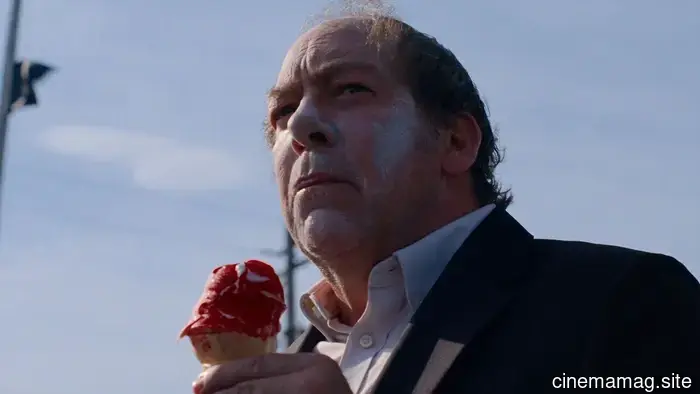
Tribeca Review: Ponderosa Delivers a Mysterious, Humorous Perspective on America’s National Myths
Family and belonging are foundational to society, representing mythical dimensions, their symbolic significance easily integrated into ideologies that divide the world into binaries—“us” and “them,” “familiar” and “foreign,” “left” and “right.” These enduring images of a bygone purity manifest in new ways in the works of filmmaker Rob Rice. Originating from Massachusetts, the Los Angeles-based writer-director released his debut, Way Out Ahead of Us, in 2022, marking his commitment to cinema as a form of community and connection, a platform for authenticity and seemingly indirect actions. This hybrid film features a real married couple navigating questions of true mortality and the imagined independence of a fictional daughter; its sequel, the Tribeca-premiering Ponderosa, is a more straightforward work of fiction.
Ponderosa, named after the “Old West”-themed restaurant chain, exists in a space between past and present, engaged in a struggle for a better future. Zeke (Jack Dylan Grazer), the main character, encapsulates the essence of an “old soul” in his early 20s—disheveled hair and a wise, empathetic look—perhaps due to being the only child of a single parent. His mother, Sandra (Alexis Bledel, portrayed in an unfamiliar light), may work at a Ponderosa buffet, but her presence is filled with deep melancholy. She glides rather than walks and speaks very little. However, when she does speak, the warmth of her deep-blue eyes wraps around you like a comforting blanket. This duo of a mother and son is undoubtedly symbolic, yet the film never suggests that it lacks something essential—whether that be a father, financial security, or extended relatives. What are Zeke and Sandra to each other? They are sufficient.
Enter heteropatriarchy, ready to disrupt this peaceful existence in the form of buffet regular George (Bill Camp, both endearing and menacing), who arrives when the Ponderosa restaurant is set to close. Driven by an irrational and indefinable urge to father Zeke (symbolically, yet almost entirely), George becomes a misguided antagonist—representing capitalist inequality as a middle-aged single man whose life has centered around amassing wealth by constructing substandard homes. Camp portrays his unsettling character, an aging white man plagued by questions of legacy, with a notable absence of self-reflection. Moreover, he spends his weekends among like-minded men with a “fathering” complex: nationalists united by a “founding-father” mentality. While we’ve encountered variations of this subplot that exploit toxic masculinity for ideological purposes, we have never seen it faced with Zeke’s hilarious stoicism—much like Bartleby, he would simply rather not engage.
In Ponderosa, Rice critiques America’s national myths in a more stylized manner, utilizing uncanny visuals, unexpectedly low angles, and comedic wide shots by cinematographer Barton Cortright (The Cathedral), all assembled in poetically awkward (yet sharply intentional) sequences by editor Mina Fitzpatrick. The contrast between what appears familiar—the atmosphere of a dramatic thriller, the soaring score, tense male confrontations, and even the gentle features of Alexis Bledel’s well-known face—and what feels utterly foreign fuels a mythical kind of storytelling: everything and nothing are possible simultaneously. Describing Ponderosa as a strange film doesn’t fully capture its essence. Its enigmatic quality is more an invitation to rethink societal structures—not necessarily in radically new ways but to question intentions and resist conformity, even in the face of pervasive loneliness. One of the film's most touching elements—and there are many!—is the ability to share loneliness without allowing it to overwhelm. “Just keep pushing,” Sandra advises a despondent George, her irony capable of toppling kingdoms. However, her simple (and somewhat foreboding) advice isn’t meant for concrete application: the future belongs to those who soften to endure.
Ponderosa debuted at the 2026 Tribeca Festival.
Other articles
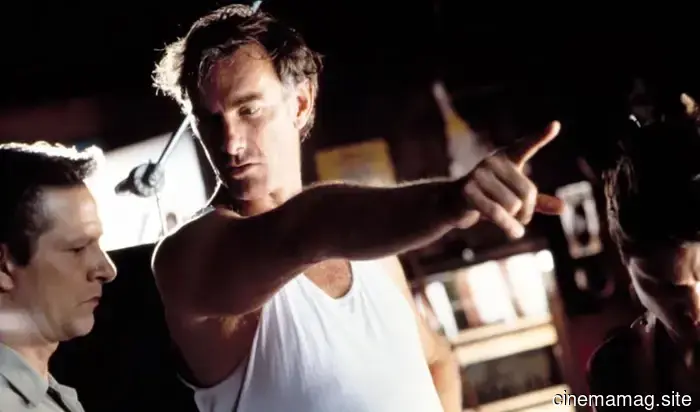 “The Effort Lies in the Screenwriting”: John Sayles Discusses Resourceful Filmmaking, James Cameron, and His TIFF Retrospective
The remarkable aspect of filmmaker John Sayles is that he has tackled a wide array of projects. Are you a fan of Steven Spielberg's E.T. the Extra-Terrestrial or Tobe Hooper's Poltergeist? Sayles' unproduced screenplay Night Skies contributes to the foundational concept for both of those iconic films. And what about The Big Chill? Sayles' beautiful Return of the Secaucus 7—which he both wrote and directed—plays a significant role in that narrative as well.
“The Effort Lies in the Screenwriting”: John Sayles Discusses Resourceful Filmmaking, James Cameron, and His TIFF Retrospective
The remarkable aspect of filmmaker John Sayles is that he has tackled a wide array of projects. Are you a fan of Steven Spielberg's E.T. the Extra-Terrestrial or Tobe Hooper's Poltergeist? Sayles' unproduced screenplay Night Skies contributes to the foundational concept for both of those iconic films. And what about The Big Chill? Sayles' beautiful Return of the Secaucus 7—which he both wrote and directed—plays a significant role in that narrative as well.
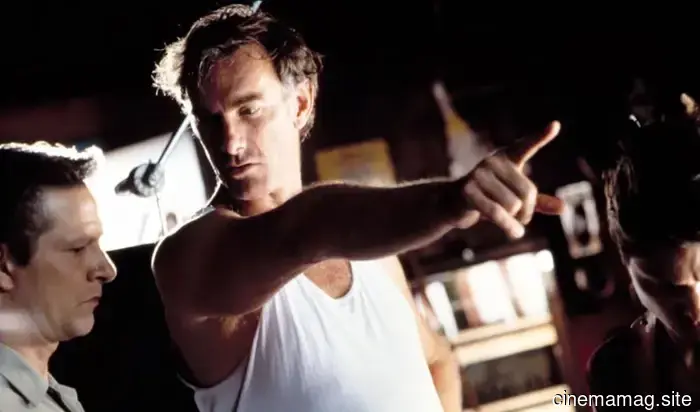 “The Effort Lies in Screenwriting”: John Sayles Discusses Resourceful Filmmaking, James Cameron, and His TIFF Retrospective
The remarkable aspect of filmmaker John Sayles is that he has explored every facet of the industry. Are you a fan of Steven Spielberg's E.T. the Extra-Terrestrial or Tobe Hooper's Poltergeist? Sayles’ unused screenplay Night Skies served as a foundation for both iconic films. And what about The Big Chill? Sayles’ delightful Return of the Secaucus 7, which he both wrote and directed, is worth mentioning.
“The Effort Lies in Screenwriting”: John Sayles Discusses Resourceful Filmmaking, James Cameron, and His TIFF Retrospective
The remarkable aspect of filmmaker John Sayles is that he has explored every facet of the industry. Are you a fan of Steven Spielberg's E.T. the Extra-Terrestrial or Tobe Hooper's Poltergeist? Sayles’ unused screenplay Night Skies served as a foundation for both iconic films. And what about The Big Chill? Sayles’ delightful Return of the Secaucus 7, which he both wrote and directed, is worth mentioning.
 Tribeca Review: The Revisionist Is a Comedy of Etiquette That Becomes Complicated
Alex Vlack’s The Revisionist contains all the characteristics of an excellent comedy of manners, but it ultimately shifts to something that is clearly hinted at in the film’s initial scenes. While having that background may add depth upon a second viewing, it is still disappointing that the film did not remain true to what could have been a unique satirical character exploration.
Tribeca Review: The Revisionist Is a Comedy of Etiquette That Becomes Complicated
Alex Vlack’s The Revisionist contains all the characteristics of an excellent comedy of manners, but it ultimately shifts to something that is clearly hinted at in the film’s initial scenes. While having that background may add depth upon a second viewing, it is still disappointing that the film did not remain true to what could have been a unique satirical character exploration.
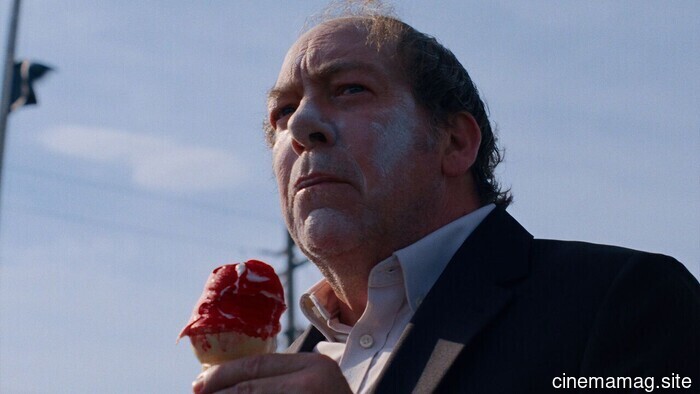 Tribeca Review: Ponderosa Delivers a Cryptic, Humorous Perspective on America’s National Legends
Family and the sense of belonging shape society on a mythical level, and their symbolic significance is easily integrated into ideologies that divide the world into binaries—“us” and “them,” “familiar” and “foreign,” “left” and “right.” Although these echoes of a bygone purity are deeply embedded in our collective consciousness, they emerge in new forms through the creations of filmmaker Rob Rice. Originally from Massachusetts,
Tribeca Review: Ponderosa Delivers a Cryptic, Humorous Perspective on America’s National Legends
Family and the sense of belonging shape society on a mythical level, and their symbolic significance is easily integrated into ideologies that divide the world into binaries—“us” and “them,” “familiar” and “foreign,” “left” and “right.” Although these echoes of a bygone purity are deeply embedded in our collective consciousness, they emerge in new forms through the creations of filmmaker Rob Rice. Originally from Massachusetts,
-Arrives-This-October.jpg) Once Upon a Time in Harlem Teaser: The Documentary of the Year (and 1972) is Coming This October
Premiering at the Sundance Film Festival earlier this year and recently visiting Cannes, it would be an incredible year if a better documentary than Once Upon a Time in Harlem were to be released. This exceptional time capsule showcases footage captured by the late William Greaves (Symbiopsychotaxiplasm) and his son David Greaves of a party that took place in 1972.
Once Upon a Time in Harlem Teaser: The Documentary of the Year (and 1972) is Coming This October
Premiering at the Sundance Film Festival earlier this year and recently visiting Cannes, it would be an incredible year if a better documentary than Once Upon a Time in Harlem were to be released. This exceptional time capsule showcases footage captured by the late William Greaves (Symbiopsychotaxiplasm) and his son David Greaves of a party that took place in 1972.
 The 12 Most Transformative Films of 1976, a Year of Uprising
Here are the 12 most groundbreaking films of 1976, a year when outcasts and nonconformists dominated the box office.
The 12 Most Transformative Films of 1976, a Year of Uprising
Here are the 12 most groundbreaking films of 1976, a year when outcasts and nonconformists dominated the box office.
Tribeca Review: Ponderosa Delivers a Mysterious, Humorous Perspective on America’s National Myths
Family and belonging shape society on a mythic level, their symbolic significance easily integrated into ideologies that divide the world into binaries—"us" and "them," "familiar" and "foreign," "left" and "right." While these vestiges of a bygone purity remain prominent in our collective consciousness, they are reinterpreted in the creations of filmmaker Rob Rice. Originating from Massachusetts,