

Tribeca Review: The Revisionist is a Comedy of Manners That Becomes Complicated.
Alex Vlack’s *The Revisionist* possesses all the characteristics of an excellent comedy of manners before shifting to something that is clearly anticipated from the film’s opening scenes. Having this context might lend a bit more weight upon a second viewing, but it remains disappointing that the film didn’t adhere to what could have been an invigorating satirical character study had it taken a more straightforward approach. This is a rare instance where a bold choice detracts from what could have been something exceptional, had it unfolded in a less complicated and more traditional manner.
Elise (Alison Brie) plays a novelist-turned-academic who ends up coaching her husband Jacob (Tom Sturridge)—an advertising executive-turned-biographer—as he endeavors to write about his father David (Dustin Hoffman). David is a renowned storyteller who is reluctant to share his tales with his son. He feels more at ease with John (André Holland), the charismatic ex-lover of Elise and Jacob’s best friend. John arrives so perfectly timed that it’s surprising his last name isn’t MacGuffin. After years of pursuing his own adventures away from their college town, John returns without a job or a plan, yet somehow manages to charm everyone.
This is where *The Revisionist*—premiering at a festival filled with documentaries that are not only sanctioned by the celebrities they portray but also produced by their teams—could have cleverly explored the notion of the “authorized” biography. Jacob promises his publisher access that David is unwilling to provide. Instead, John agrees to record David’s stories once they start spending time together, delivering those recordings to Jacob until John is presented with an irresistible opportunity from his past.
Meanwhile, Elise invites John to guest lecture at the college, where he dispenses wisdom to a class of aspiring students and assists a student struggling to develop a mid-story arc. John appears to have a positive impact on everyone he meets, even inspiring a receptionist at *The New Yorker* to persevere despite having seemingly distanced himself from his friends and the literary world for at least 15 years.
While specific scenes—particularly those involving David and John—outshine the main storyline of Jacob and Elise attempting to articulate their perspectives, what seems like a critical flaw in the moment is actually intentional in Vlack's script. Transitioning from the realm of nonfiction and museum exhibitions to feature film, Vlack is well-acquainted with colorful, engaging characters whose stories are worth telling. There are moments that provide smart and insightful commentary on the creative process, even if the plot meanders as Elise seeks David's counsel on navigating ethical boundaries before ultimately seducing the willing John. If John and David’s friendship appears implausible and contrived… well, that is by design.
Ultimately, *The Revisionist* is a film about the control inherent in the creative process, filled with individual moments that spark intriguing possibilities the film does not entirely realize. It leans on predictable plot twists that ultimately imply a hurried first draft—which, once more, is intentional. This aspect of the creative process may indeed be the least compelling: the early drafts that typically sit on a laptop until they are completely developed.
Had Vlack adhered to the original satirical premise, it might have succeeded remarkably. All the components, including a stellar cast, are present for a clever comedy of manners about a brilliant man who harbors resentment toward his unremarkable son and prefers to have his story narrated by a charming individual who understands him. Instead, the creative process is showcased in a manner that feels more laborious than innovative as Elise engages in her own form of wish fulfillment while navigating ethical dilemmas. Once I discerned the direction it was headed, my interest began to wane. This is unfortunate because *The Revisionist* shines brightest when it focuses on David’s sphere—a legend who knows everyone, enjoys sleeping late, and offers a Negroni at 11:00 AM. The creatives surrounding him are rather mundane, even if they lead nearly perfect lives; perhaps the message is that some academics can become disconnected while pursuing authenticity in the least authentic manner possible.
*The Revisionist* premiered at the 2026 Tribeca Festival.
Other articles
 Apple TV Review – Cape Fear
Will Hume examines the season premiere of Apple TV's remake of Cape Fear... There has been a lot of transformation in the 34 years since Martin Scorsese provided an intense exploration of Cape Fear, but Max Cady remains...
Apple TV Review – Cape Fear
Will Hume examines the season premiere of Apple TV's remake of Cape Fear... There has been a lot of transformation in the 34 years since Martin Scorsese provided an intense exploration of Cape Fear, but Max Cady remains...
 The 12 Most Transformative Films of 1976, a Year of Uprising
Here are the 12 most groundbreaking films of 1976, a year when outcasts and nonconformists dominated the box office.
The 12 Most Transformative Films of 1976, a Year of Uprising
Here are the 12 most groundbreaking films of 1976, a year when outcasts and nonconformists dominated the box office.
-Arrives-This-October.jpg) Once Upon a Time in Harlem Teaser: The Documentary of the Year (and 1972) is Coming This October
Premiering at the Sundance Film Festival earlier this year and recently visiting Cannes, it would be an incredible year if a better documentary than Once Upon a Time in Harlem were to be released. This exceptional time capsule showcases footage captured by the late William Greaves (Symbiopsychotaxiplasm) and his son David Greaves of a party that took place in 1972.
Once Upon a Time in Harlem Teaser: The Documentary of the Year (and 1972) is Coming This October
Premiering at the Sundance Film Festival earlier this year and recently visiting Cannes, it would be an incredible year if a better documentary than Once Upon a Time in Harlem were to be released. This exceptional time capsule showcases footage captured by the late William Greaves (Symbiopsychotaxiplasm) and his son David Greaves of a party that took place in 1972.
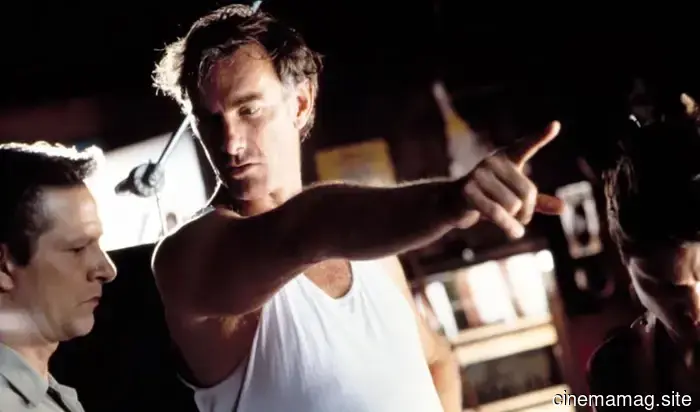 “The Effort Lies in the Screenwriting”: John Sayles Discusses Resourceful Filmmaking, James Cameron, and His TIFF Retrospective
The remarkable aspect of filmmaker John Sayles is that he has tackled a wide array of projects. Are you a fan of Steven Spielberg's E.T. the Extra-Terrestrial or Tobe Hooper's Poltergeist? Sayles' unproduced screenplay Night Skies contributes to the foundational concept for both of those iconic films. And what about The Big Chill? Sayles' beautiful Return of the Secaucus 7—which he both wrote and directed—plays a significant role in that narrative as well.
“The Effort Lies in the Screenwriting”: John Sayles Discusses Resourceful Filmmaking, James Cameron, and His TIFF Retrospective
The remarkable aspect of filmmaker John Sayles is that he has tackled a wide array of projects. Are you a fan of Steven Spielberg's E.T. the Extra-Terrestrial or Tobe Hooper's Poltergeist? Sayles' unproduced screenplay Night Skies contributes to the foundational concept for both of those iconic films. And what about The Big Chill? Sayles' beautiful Return of the Secaucus 7—which he both wrote and directed—plays a significant role in that narrative as well.
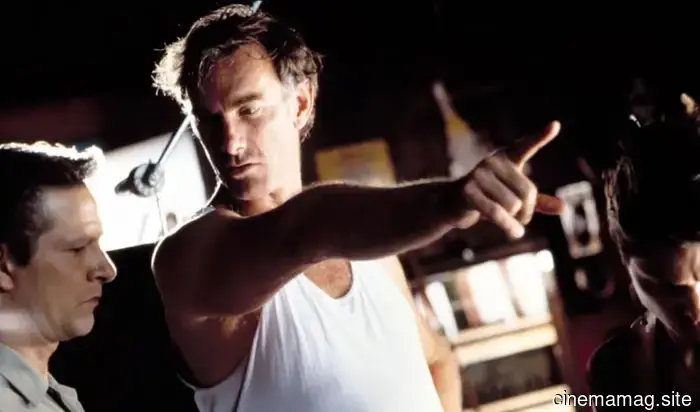 "‘The Effort Lies in Screenwriting’: John Sayles Discusses Inventive Filmmaking, James Cameron, and His TIFF Retrospective"
The interesting aspect of filmmaker John Sayles is that he has accomplished a wide range of work. Are you a fan of Steven Spielberg's E.T. the Extra-Terrestrial or Tobe Hooper's Poltergeist? Sayles' unproduced screenplay Night Skies serves as a foundational element for both of those iconic films. And what about The Big Chill? Sayles' charming Return of the Secaucus 7, which he wrote and
"‘The Effort Lies in Screenwriting’: John Sayles Discusses Inventive Filmmaking, James Cameron, and His TIFF Retrospective"
The interesting aspect of filmmaker John Sayles is that he has accomplished a wide range of work. Are you a fan of Steven Spielberg's E.T. the Extra-Terrestrial or Tobe Hooper's Poltergeist? Sayles' unproduced screenplay Night Skies serves as a foundational element for both of those iconic films. And what about The Big Chill? Sayles' charming Return of the Secaucus 7, which he wrote and
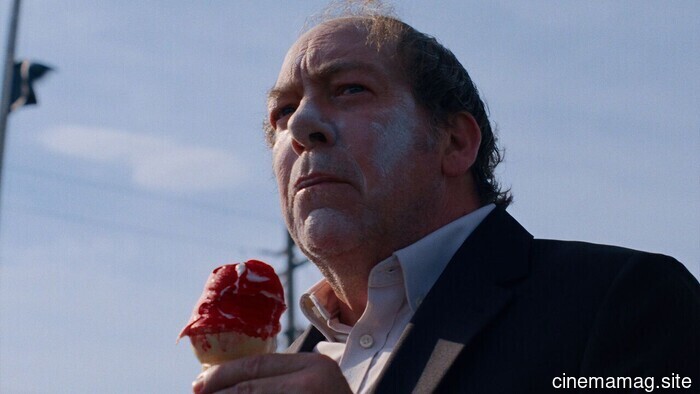 Tribeca Review: Ponderosa Delivers a Cryptic, Humorous Perspective on America’s National Legends
Family and the sense of belonging shape society on a mythical level, and their symbolic significance is easily integrated into ideologies that divide the world into binaries—“us” and “them,” “familiar” and “foreign,” “left” and “right.” Although these echoes of a bygone purity are deeply embedded in our collective consciousness, they emerge in new forms through the creations of filmmaker Rob Rice. Originally from Massachusetts,
Tribeca Review: Ponderosa Delivers a Cryptic, Humorous Perspective on America’s National Legends
Family and the sense of belonging shape society on a mythical level, and their symbolic significance is easily integrated into ideologies that divide the world into binaries—“us” and “them,” “familiar” and “foreign,” “left” and “right.” Although these echoes of a bygone purity are deeply embedded in our collective consciousness, they emerge in new forms through the creations of filmmaker Rob Rice. Originally from Massachusetts,
Tribeca Review: The Revisionist is a Comedy of Manners That Becomes Complicated.
Alex Vlack’s The Revisionist incorporates all the characteristics of an excellent comedy of manners, only to shift towards a direction clearly hinted at in the opening scenes. While having that background may lend some added weight during a second viewing, it remains unfortunate that the film didn't maintain its potential as a fresh satirical character exploration.