

We’re All Creatures in a Confinement Together: An Exclusive Interview with Ben Foster on Motor City
Robert Kojder speaks with Ben Foster, star of Motor City…
Ben Foster is perhaps most recognized for his unsettling portrayals of unpredictable characters and for his ability to drastically change his appearance from film to film. Generally, audiences have an idea of what to expect from a performance by him. He has taken on roles ranging from violent outlaws and soldiers to drug addicts and abusive partners. To be fair, he has also played more sympathetic characters in rescue dramas and even portrayed Lance Armstrong, demonstrating a broad range of versatility. In the crime drama action film Motor City, set in 1970s Detroit and directed by Potsy Ponciroli, Foster embodies a character that certainly fits the unhinged archetype, but with a unique twist.
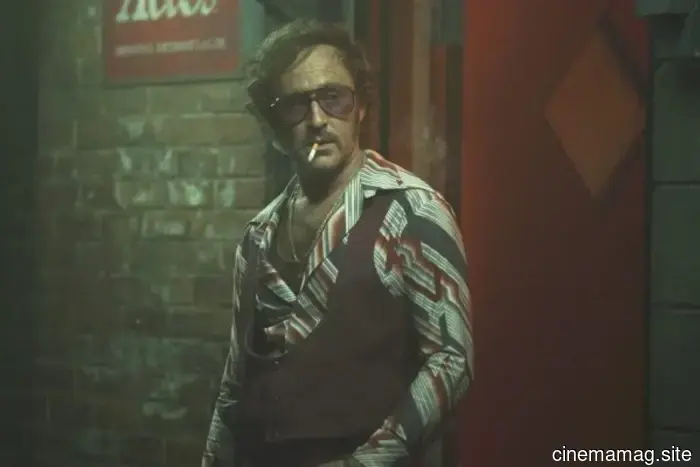
With only five lines of dialogue, the film relies heavily on visuals and musical cues to tell its story and create action, allowing the actors to express their characters through body language. Foster portrays Reynolds, a sleazy crime boss determined to ruin the life of John Miller, played by Alan Ritchson, while scheming to reclaim his former love, Sophia (Shailene Woodley). This role presents a version of Ben Foster similar to those audiences have seen before, yet under entirely new direction and constraints, making this performance a mix of the familiar and the novel.
In engaging in virtual interviews, it was a privilege to speak with Ben Foster, whose career spans notable films from Hell or High Water to The Program, and who gained prominence alongside Bruce Willis in Hostage—where I first took notice of his talent—as well as in Alpha, Warcraft, and his recent portrayal of Christy Martin’s violently abusive husband in the biopic of the same name. During our conversation, his responses varied from a calm, thoughtful tone to sudden bursts of enthusiasm, particularly when discussing the mindset behind specific scenes or his intense interactions with Alan Ritchson. We also delved into his interesting family background, which helped him connect with the era, and how he approaches his performance knowing that it may be overshadowed by the score or licensed music. Foster aims to perform as many of his stunts as possible, an expectation for someone who is set to play Evel Knievel.
More significantly, Motor City serves as a psychological slow burn that culminates in some truly dynamic and striking action. The film deserves to find an audience as a homage to classic action films, appreciated for its experimental narrative that strips away dialogue to focus on the visuals and sounds that propel the action and emotion, featuring yet another chilling, morally ambiguous performance from Ben Foster. Enjoy the interview below:
You portray a threatening and unlikable crime boss, but you also need to express a twisted affection for Sophia without using words. Could you elaborate on how you developed this character without dialogue?
Sure! Chad St. John crafted the script, and without visuals, it felt reminiscent of a graphic novel. It had a lot of momentum and felt charged. In discussions with Potsy, we aimed to shape Reynolds—who the audience can classify as a villain or not—into a character who genuinely cares about someone and has a complicated desire to preserve his love. People can perform very intricate actions based on their feelings, so exploring those values was thrilling.
One element I appreciate, beyond the action, is how you psychologically torment John Miller without dialogue, like through the message written on the card sent to him in prison or the imagined scene where he's kissing Sophia (Shailene Woodley) in front of John. That scene is bold and exceptionally performed. Could you discuss the process of shooting that scene?
That's a fantastic question! The dynamics were clearly laid out in the script. It’s akin to two individuals asserting, “Get off my porch, that’s mine,” and exploring how far one would go for that. Whether it’s through dialogue or silence, it’s about how it feels. Was he torturous and arrogant? Perhaps. But it also reflects someone marking their territory, like “this is mine!”
I appreciate your perspective on it. Did you do any research into 1970s Detroit or model your character after anyone specific?
Yes! Interestingly, my parents had a disco roller rink while I was in utero, and my mom would count pennies as she rocked me to sleep. I believe the disco culture that enveloped her influenced me somehow. I also examined many old photos of my parents. The 70s were such a wild and freeing time, so I drew inspiration from that spirit and the rebellious essence of the decade.
You danced well! The climactic fight in the speeding car is exhilarating. How much of that is your performance versus that of a stunt double?
I like to do as much as I can. I am grateful for my stunt double for certain car scenes because things can go awry very quickly. Alan is a formidable presence; he’s a big guy, while I’m not. But you must figure out how to handle it without giving up.
He brings a very different



Other articles
 Hasbro has revealed a 2-pack of action figures featuring Janine Melnitz and Louis Tully from The Real Ghostbusters in their Kenner Classics line.
To mark the 40th anniversary of The Real Ghostbusters, Hasbro has unveiled the Kenner Classics 2-pack featuring Janine Melnitz and Louis Tully, inspired by the look of these beloved characters in the b...
Hasbro has revealed a 2-pack of action figures featuring Janine Melnitz and Louis Tully from The Real Ghostbusters in their Kenner Classics line.
To mark the 40th anniversary of The Real Ghostbusters, Hasbro has unveiled the Kenner Classics 2-pack featuring Janine Melnitz and Louis Tully, inspired by the look of these beloved characters in the b...
 NECA launches a Superman action figure featuring Christopher Reeve in a flying pose.
Following the release of its Adam West Batman, NECA has revealed promotional images for the upcoming Superman clothed action figure, showcasing an 8-inch rendition of the Man of Steel as portrayed by Chri…
NECA launches a Superman action figure featuring Christopher Reeve in a flying pose.
Following the release of its Adam West Batman, NECA has revealed promotional images for the upcoming Superman clothed action figure, showcasing an 8-inch rendition of the Man of Steel as portrayed by Chri…
 Disney+ has released the trailer for season 3 of Percy Jackson & the Olympians.
Disney+ has released a teaser trailer and a poster for season 3 of Percy Jackson & the Olympians, which is adapted from the third book in Rick Riordan’s popular series The Titan…
Disney+ has released the trailer for season 3 of Percy Jackson & the Olympians.
Disney+ has released a teaser trailer and a poster for season 3 of Percy Jackson & the Olympians, which is adapted from the third book in Rick Riordan’s popular series The Titan…
 Comic Book Sneak Peek – Marvel's Queen in Black #1
Marvel Comics is set to launch its new event series, Queen in Black, next week. You can check out an early glimpse of the first chapter with the official preview of Queen in Black #1 below… HEL…
Comic Book Sneak Peek – Marvel's Queen in Black #1
Marvel Comics is set to launch its new event series, Queen in Black, next week. You can check out an early glimpse of the first chapter with the official preview of Queen in Black #1 below… HEL…
 Hasbro has revealed a 2-pack of action figures featuring Janine Melnitz and Louis Tully from The Real Ghostbusters, part of the Kenner Classics line.
To commemorate the 40th anniversary of The Real Ghostbusters, Hasbro has announced the Janine Melnitz and Louis Tully Kenner Classics 2-pack, drawing inspiration from the iconic looks of these beloved characters in the b...
Hasbro has revealed a 2-pack of action figures featuring Janine Melnitz and Louis Tully from The Real Ghostbusters, part of the Kenner Classics line.
To commemorate the 40th anniversary of The Real Ghostbusters, Hasbro has announced the Janine Melnitz and Louis Tully Kenner Classics 2-pack, drawing inspiration from the iconic looks of these beloved characters in the b...
 The day the producer announced, “You have one week to revise your screenplay” - MovieMaker Magazine
Jake felt a flutter in his stomach. His first script sale, his big opportunity, was now on the verge of being torn apart in a Hollywood shredder. A week to revise two acts?
The day the producer announced, “You have one week to revise your screenplay” - MovieMaker Magazine
Jake felt a flutter in his stomach. His first script sale, his big opportunity, was now on the verge of being torn apart in a Hollywood shredder. A week to revise two acts?
We’re All Creatures in a Confinement Together: An Exclusive Interview with Ben Foster on Motor City
Robert Kojder speaks with Motor City star Ben Foster… Known for his intense portrayal of volatile characters and frequently altering his appearance like a chameleon from film to film, o…