
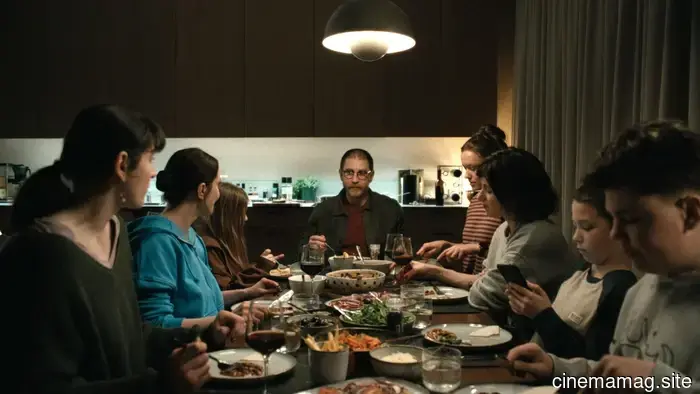
How to Divorce During the War Review: Lithuania’s Oscar Submission Sheds Light on the Absurdity of a Tragic Situation
Life must be quite satisfactory when one finds themselves contemplating divorce simply out of boredom. Is that the sole reason for Marija’s (Žygimantė Elena Jakštaitė) choice? Not entirely. She has also fallen in love with someone else. However, one can't help but feel that her boredom plays a part in that as well. After all, her response to Vytas (Marius Repšys), when he asks what he can do to fix their situation, is, “Be the man you were twelve years ago.” Back when he was engaging and entertaining.
Marija is the breadwinner as an executive at a marketing firm famous for its viral internet videos, while Vytas handles the cooking, cleaning, and caring for their daughter Dovile (Amelija Adomaityte). Has his shift to being a homemaker extinguished the passion and creativity that this once-renowned filmmaker had? Or did he choose this path to indulge his tendency to procrastinate? Regardless, they are undoubtedly stuck in a rut, merely going through the motions. Enter a war to stir things up.
Well, not quite. That description may suggest that Andrius Blaževičius’ How to Divorce During the War is a comedy, when in fact, it is a drama that does not shy away from exposing the absurdity in its tragic circumstances. The humor found in Marija asking Vytas for a divorce the day prior to Russia's invasion of Ukraine doesn’t trivialize the latter; it merely provides the characters with a new distraction through a “First World Problems” framework.
This notion feels somewhat dismissive, given the real threat facing Lithuania. They were part of the Soviet Union and understand the tactics used by leaders like Putin to manipulate the public into believing they need protection from an imagined threat, when he is the real danger. What if Ukraine succumbs? What if their nation becomes the next territory to be reclaimed? With refugees being welcomed, Marija and Vytas are intimately tied to this conflict.
It's an insightful angle that sheds new light on the domestic disputes and petty selfishness we grapple with daily. What impact does it have on one’s self-esteem to be forced from one’s home because one’s spouse has lost interest, while Ukrainians flee theirs transformed into a battlefield? What occurs when you staunchly adhere to your principles and resign from your job because of its ties to the war, only to realize that your work defined your identity more than you thought?
Blaževičius cleverly incorporates numerous details to explore the emotional and psychological ramifications. Discovering that your parents have been consuming a steady diet of Russian propaganda television for years. Coming to terms with the fact that altruism feels easier in theory than in practice once you notice that the refugee family you’ve taken in struggles to meet your expectations for cleanliness. The trauma experienced by a child caught in chaos both at home and in the world.
The film essentially shifts course once Vytas moves out. He was the one directionless, while Marija thrived. They both immerse themselves in the invasion as a new identity—he volunteers, and she quits her job, motivated by both compassion and a sense of justice. Vytas’ new role reignites his creative spirit, making him a minor celebrity while sleeping in his car. Meanwhile, Marija finds herself at home, comfortable but aimless.
One might wonder if Marina (Alla Bineeva) and her teenage refugee sons become a burden for Marija since they struggle to “contribute.” And what about Vytas leveraging the upheaval—consciously or not—to reengage? It’s telling that as we learn more about them, he speaks Russian to connect with the Ukrainians as a spokesperson, while she realizes her disdain for Russians stems from their role in disrupting her life.
Therefore, it's not surprising that Marija is portrayed in an unflattering manner. There is a clear bias in how leaving Vytas turns him into a victim while she shifts her focus onto the true victims of this tragedy because she has never wanted to be responsible for cleaning her home. Could Blaževičius have balanced perspectives better? Perhaps. While the conflict between political art and capitalism is necessary, Marija unfortunately finds herself on the unfavorable side of both marriage and war.
It’s a complicated situation overall. Blaževičius’ message is less about our impulse to support others amidst horrific violence and more about our tendency to let apathy creep back in. The separation allows Marija and Vytas to embrace the adrenaline of the conflict and revive their zest for life, but it’s clear they will revert to their old habits when challenges arise. Boredom serves as a comforting blanket. Boredom is the real escape.
Repšys and Jakštaitė skillfully navigate the delicate balance between acting as they should and yearning to revert to their self-centered ways. The outside world is chaotic, as evidenced by V
Other articles
.jpg) Film Review – Insidious: Out of the Further (2026)
Insidious: Out of the Further, 2026. Written and directed by Jacob Chase. Featuring Amelia Eve, Island Austin, Lin Shaye, Sam Spruell, Brandon Perea, Maisie Richardson-Sellers, Joseph Lopez, Laura Gord…
Film Review – Insidious: Out of the Further (2026)
Insidious: Out of the Further, 2026. Written and directed by Jacob Chase. Featuring Amelia Eve, Island Austin, Lin Shaye, Sam Spruell, Brandon Perea, Maisie Richardson-Sellers, Joseph Lopez, Laura Gord…
 Snake Eyes is now part of Super7's G.I. Joe: A Real American Hero ReAction+ Comic Collector Series.
Continuing from this year's announcements, Super7 has officially revealed the second release in its Skybound Comic Book Series subline of G.I. Joe ReAction+ figures, featuring a Snake Eyes figure among others...
Snake Eyes is now part of Super7's G.I. Joe: A Real American Hero ReAction+ Comic Collector Series.
Continuing from this year's announcements, Super7 has officially revealed the second release in its Skybound Comic Book Series subline of G.I. Joe ReAction+ figures, featuring a Snake Eyes figure among others...
 Snake Eyes becomes part of Super7’s G.I. Joe: A Real American Hero ReAction+ Comic Collector Series.
Continuing from this year's events, Super7 has officially revealed the second release in its Skybound Comic Book Series subline of G.I. Joe ReAction+ figures, featuring a Snake Eyes figure along with…
Snake Eyes becomes part of Super7’s G.I. Joe: A Real American Hero ReAction+ Comic Collector Series.
Continuing from this year's events, Super7 has officially revealed the second release in its Skybound Comic Book Series subline of G.I. Joe ReAction+ figures, featuring a Snake Eyes figure along with…
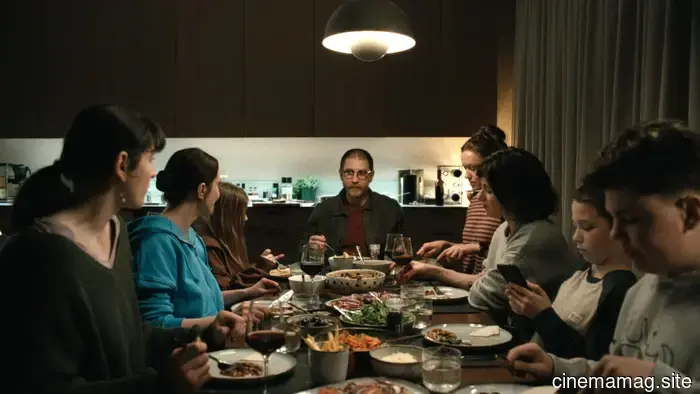 How to Divorce During the War Review: Lithuania's Oscar Submission Sheds Light on the Absurdity Within a Tragic Reality
Life should be pleasant when your reason for seeking a divorce is merely boredom. Is that all that drives Marija's (Žygimantė Elena Jakštaitė) choice? Not quite. She has also developed feelings for another person. However, one can't shake the feeling that her boredom plays a part in that as well. After all, her reaction to
How to Divorce During the War Review: Lithuania's Oscar Submission Sheds Light on the Absurdity Within a Tragic Reality
Life should be pleasant when your reason for seeking a divorce is merely boredom. Is that all that drives Marija's (Žygimantė Elena Jakštaitė) choice? Not quite. She has also developed feelings for another person. However, one can't shake the feeling that her boredom plays a part in that as well. After all, her reaction to
.jpg) Film Review – Insidious: Out of the Further (2026)
Insidious: Out of the Further, 2026. Screenplay and Direction by Jacob Chase. Featuring performances by Amelia Eve, Island Austin, Lin Shaye, Sam Spruell, Brandon Perea, Maisie Richardson-Sellers, Joseph Lopez, Laura Gord…
Film Review – Insidious: Out of the Further (2026)
Insidious: Out of the Further, 2026. Screenplay and Direction by Jacob Chase. Featuring performances by Amelia Eve, Island Austin, Lin Shaye, Sam Spruell, Brandon Perea, Maisie Richardson-Sellers, Joseph Lopez, Laura Gord…
How to Divorce During the War Review: Lithuania’s Oscar Submission Sheds Light on the Absurdity of a Tragic Situation
Life must be pretty great if you're contemplating a divorce merely due to boredom. Is that all there is to Marija's (Žygimantė Elena Jakštaitė) choice? Not quite. She's developed feelings for another person. However, one can't shake the feeling that her boredom plays a part in that as well. After all, her reaction to