
Age of Disclosure director Dan Farah states that Marco Rubio is 'genuinely worried' about UAPs.
Dan Farah, the director of The Age of Disclosure, expressed that he sensed the intensity of Marco Rubio, then a senator and currently the Secretary of State, during their conversation about the threats posed by UAPs.
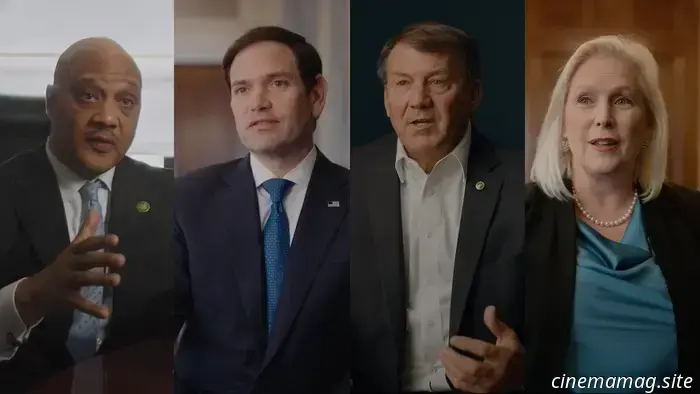
At the time, Rubio served as the vice chairman of the Senate Intelligence Committee and was among numerous politicians from both parties whom Farah interviewed regarding UAPs—Unidentified Anomalous Phenomena, previously referred to as UFOs.
“I was sitting just three feet away from him during the interview, and I felt the weight of his concern—it was unbelievably serious,” Farah remarked.
The film asserts that the U.S. has possessed extraterrestrial technology since at least the Roswell incident in 1947 and that countries like Russia and China have similar technologies. Farah spoke with high-ranking officials who maintain that the U.S. and its adversaries are secretly competing to reverse-engineer this technology, with human destiny hanging in the balance.
In the documentary, Rubio addresses the possibility that one of the U.S.’s competitors might successfully develop UAP technology before the United States does.
“If their pursuit is grounded in science and the ambition to match what they believe we have, we might one day find ourselves thinking, ‘I’m not sure how they achieved this, but they surpassed us, and now we’re in trouble,’” Rubio stated.
The film, which shattered records on Prime Video, showcases Farah’s interviews with pilots, military personnel, intelligence officials, and notable lawmakers from both parties regarding the mysteries of UAPs. Members of Congress have viewed it, and Farah believes that President Trump is also aware of the film.
“I think the film paves the way for a sitting president to confidently address the world, stating we’re not alone in the universe—which, in my view, would be the most significant moment in human history and undoubtedly the most monumental moment for any leader,” Farah shared. (You can find our full interview here or above.)
The White House did not respond to a request for comments.
The film has garnered considerable attention due to Farah's measured approach, primarily comprising interviews without resorting to clichéd reenactments or the usual methods seen in standard cable UFO documentaries. It argues that the concealment of UAPs historically included efforts to delegitimize and discredit those who take the phenomenon seriously.
“I interviewed 34 high-ranking military, government, and intelligence officials who collectively broke their silence to reveal an 80-year cover-up regarding the existence of non-human intelligent life. Additionally, they disclosed that parts of the U.S. government are deeply engaged in a covert, high-stakes Cold War against nations like China and Russia to reverse engineer foreign technology. Despite how extraordinary this sounds, the individuals I interviewed are extremely credible,” he told MovieMaker.
“I aimed to create a serious, sober, and credible documentary while avoiding sensationalism,” he added.
Farah highlights that bipartisan agreement on UAPs is rare, yet many politicians share a common belief that greater transparency is necessary regarding what the government knows about these phenomena.
In addition to Rubio, the film features interviews with Democratic Senator Kirsten Gillibrand of New York, Democratic Representative André Carson from Indiana, and Republican Senator Mike Rounds of South Dakota, all advocating for increased transparency concerning UAPs. It also includes archival footage of U.S. Representative Alexandria Ocasio-Cortez calling for more openness.
At one point in The Age of Disclosure, Rubio likens the potential reverse-engineering of UAP technology to the unexpected nature of events such as the Pearl Harbor and 9/11 attacks.
“Some of the most significant strategic mistakes in human history stemmed from a lack of imagination, the conviction that an adversary couldn’t do something simply because it hadn’t been done before,” Rubio stated. “The U.S. felt secure about the ships in Pearl Harbor because we never believed the Japanese could reach them, let alone employ torpedoes to attack these vessels, until they did.
“We never contemplated that terrorists would strike on American soil after training for a year as pilots, hijacking planes, and crashing them into buildings, but they did. What troubles me the most is the human tendency to avoid preparing for unexpected events—this leads to strategic surprises, sometimes altering the course of human history.”
Rubio left the Senate to join the Trump Administration as Secretary of State, later becoming the acting National Security Advisor. Farah believes he became “extremely informed” about UAPs while serving as vice chairman of the Senate Intelligence Committee.
“Being the vice chairman or chairman of the Senate Intelligence Committee means access to every significant classified piece of information,” Farah explained. “All intelligence agencies report to the Senate Intelligence Committee on crucial matters, including some information that only goes to the vice chairman or chairman. Thus, Rubio became highly knowledgeable about the realities of this situation and felt it was crucial to inform the public about the basic facts he could legally disclose in the
Age of Disclosure director Dan Farah states that Marco Rubio is 'genuinely worried' about UAPs.
Dan Farah, the director of Age of Disclosure, mentioned that he sensed Marco Rubio's intensity during their conversation about the threats presented by UAPs, while Rubio was serving as the current Secretary of State.