
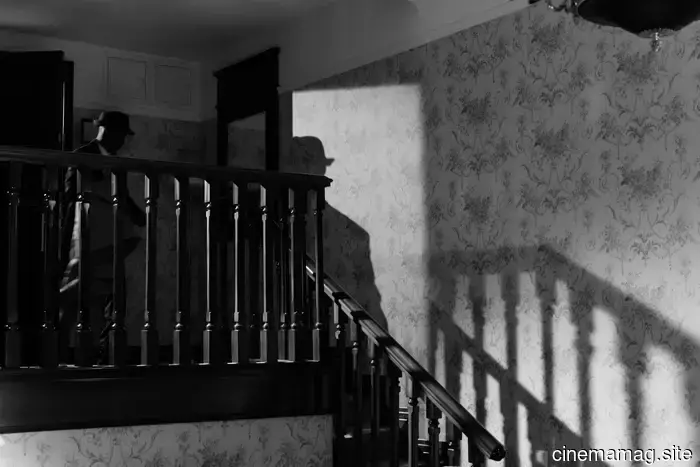
Creating Suspense Without Dialogue: A Filmmaker's Technique
There’s a point in some films where everything simply… goes silent.
No backstory. No explanations about what’s going to occur. Just a character, an environment, and that unsettling sense that something is amiss. These are often the scenes that linger in viewers' minds.
Dialogue is among the most potent elements in filmmaking, but when it vanishes, something else takes its place. Directors rely on composition, sound, timing, and acting to bear the burden. The audience shifts from listening to watching intently. And that transformation alters everything.
What remains unseen is just as significant.
Much of the tension is established through framing. The camera's position, what it captures, and what it omits. A doorway that lingers in the shot for a moment too long. A hallway that seems empty, yet not entirely safe. A slightly out-of-focus figure lurking in the background.
Hitchcock mentioned providing the audience with more knowledge than the character. That concept is still prevalent. You witness something before the character does, and suddenly you're ahead of the situation. Alternatively, there are moments when you’re unclear about what you're witnessing. That ambiguity creates suspense.
Sound fills the void.
When dialogue fades, sound takes precedence. Not only music, but also footsteps, breathing, and distant noises that may or may not hold significance. Silence itself becomes a strategic element. A Quiet Place is a well-known example, but not the sole one. Eliminating sound draws attention to minute details. A floorboard creaking can resonate louder than any spoken line.
Sound doesn’t always clarify. Sometimes it misleads. You might hear something off-screen and anticipate its appearance, yet nothing materializes. That uncertainty keeps you engaged.
Timing is crucial.
Suspense thrives on timing. A cut too soon dissipates the tension. If the shot lingers too long, it creates a pleasantly uncomfortable feeling. Editors grasp this better than anyone. Sometimes the wisest choice is simply to wait. Allow the moment to extend. Let the audience inhabit it. Without dialogue, there’s no direction to guide you out of the scene; you remain there until something shifts. And that’s precisely the intention.
Actors convey more with less.
When there’s no dialogue, performances sharpen. Subtle details gain greater importance. A glance, a hesitation, a change in stance. Even breathing can indicate that something is amiss. The most compelling performances in these moments are usually subtle. Nothing feels forced; it aligns more closely with how individuals actually react when they feel uncertain or anxious. As a viewer, you begin interpreting the character rather than listening to them.
The environment starts to feel animated.
Effective suspense often derives from the setting itself. Lighting, shadows, reflections. A room that feels excessively still. A space that appears ordinary until you spend a bit more time observing it. Directors leverage these components to imply presence without direct depiction. Something could be there. Or perhaps not. Regardless, you start to sense it. The setting transforms from mere background to a part of the suspense.
Suspense hinges on uncertainty.
At its essence, suspense is about the unknown. You’re not sure what will happen, but you feel certain that something will. This sensation is meticulously regulated. Too much information diminishes tension; too little leaves the scene unclear. The finest filmmakers find a balance.
There’s a similar cadence in systems designed around anticipation and results. You receive just enough information to remain engaged, but not quite enough to feel secure. That cycle between expectation and outcome is evident in various settings, including platforms tied to melbet registration, where attention is captured by how results unfold over time. In film, that same tension is emotional rather than interactive.
People love to discuss these scenes.
Dialogue-free moments tend to resonate with viewers. Not because they clarify everything but because they leave things open to interpretation. Audiences depart with varying insights. One might notice a background detail, another might concentrate on sound, while someone else perceives an actor’s reaction differently. This diversity encourages conversation.
Online platforms amplify this phenomenon. Viewers analyze scenes, compare their observations, and strive to make sense of the meaning behind it all. Discussions surrounding MelBet Instagram Somalia illustrate how audiences continue these dialogues, responding to outcomes and sharing their viewpoints. The silence invites interpretation.
Why it’s so effective.
When dialogue fades away, the fundamentals of filmmaking take center stage. You become more aware of framing. You perceive sound in a new way. You focus more on pacing and performance than you might otherwise. The experience becomes more immediate. You aren’t told how to feel; you're responding instinctively.
Final thoughts.
Suspense without dialogue isn’t about eliminating elements; it’s about redirecting focus. Directors utilize less to evoke greater emotional responses. They dictate what you see, hear, and for how long you engage with it. And when executed successfully, these moments remain with you—not due to explanations, but because you felt them.
Other articles
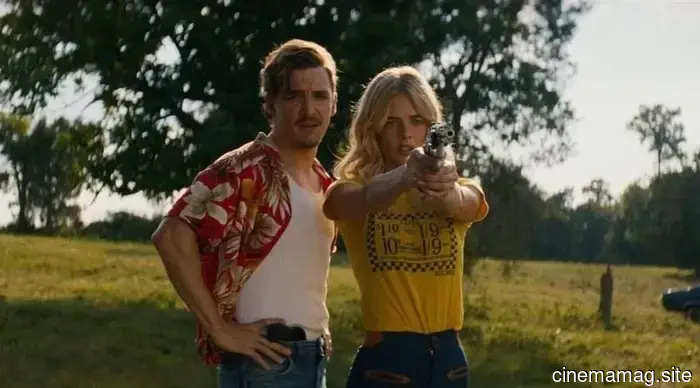 In the trailer for "Carolina Caroline," Samara Weaving and Kyle Gallner engage in a crime wave.
Magnolia Pictures and Magnet Releasing have released a teaser trailer for the romantic crime thriller Carolina Caroline, directed by Adam Carter Rehmeier. The film features Samara Weaving as a young woman yearning for...
In the trailer for "Carolina Caroline," Samara Weaving and Kyle Gallner engage in a crime wave.
Magnolia Pictures and Magnet Releasing have released a teaser trailer for the romantic crime thriller Carolina Caroline, directed by Adam Carter Rehmeier. The film features Samara Weaving as a young woman yearning for...
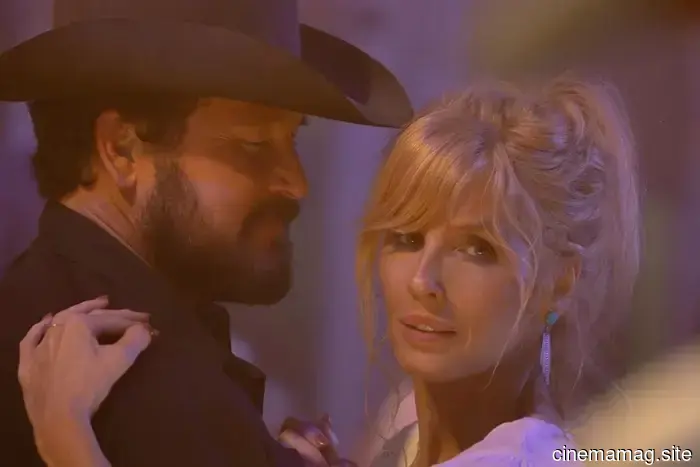 Beth and Rip are back in the trailer for the new Yellowstone spinoff, Dutton Ranch.
Paramount+ has released the first trailer for Dutton Ranch, the newest spinoff in the Yellowstone universe, which centers around Beth Dutton (Kelly Reilly) and Rip Wheeler (Cole Hauser) as they struggle to b…
Beth and Rip are back in the trailer for the new Yellowstone spinoff, Dutton Ranch.
Paramount+ has released the first trailer for Dutton Ranch, the newest spinoff in the Yellowstone universe, which centers around Beth Dutton (Kelly Reilly) and Rip Wheeler (Cole Hauser) as they struggle to b…
 The Emotional Journey of Characters Confronting High-Stakes Choices - MovieMaker Magazine
That is, of course, unless the writing or direction is exceptional. For instance, Cormac McCarthy was an incredibly talented writer who had a remarkable ability to convey the
The Emotional Journey of Characters Confronting High-Stakes Choices - MovieMaker Magazine
That is, of course, unless the writing or direction is exceptional. For instance, Cormac McCarthy was an incredibly talented writer who had a remarkable ability to convey the
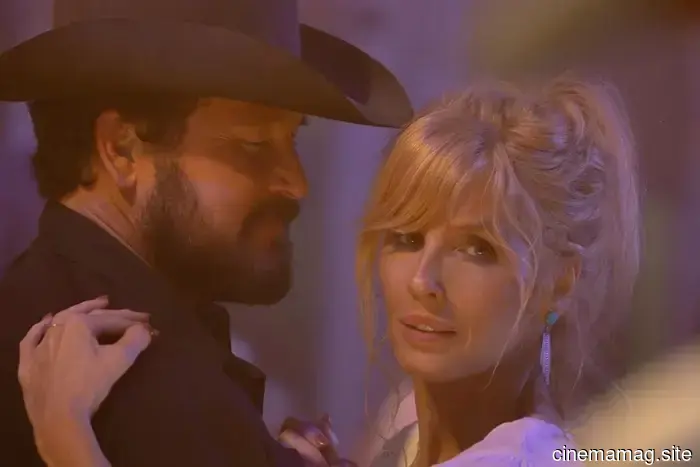 Beth and Rip are back in the trailer for the upcoming Yellowstone spinoff, Dutton Ranch.
Paramount+ has released the initial trailer for Dutton Ranch, the newest spinoff within the Yellowstone universe, focusing on Beth Dutton (Kelly Reilly) and Rip Wheeler (Cole Hauser) as they struggle to b...
Beth and Rip are back in the trailer for the upcoming Yellowstone spinoff, Dutton Ranch.
Paramount+ has released the initial trailer for Dutton Ranch, the newest spinoff within the Yellowstone universe, focusing on Beth Dutton (Kelly Reilly) and Rip Wheeler (Cole Hauser) as they struggle to b...
 12 Unapologetic Comedies That Aren't Concerned About Offending You
These unapologetic classic comedies are indifferent to whether you feel offended; their only focus is on being amusing.
12 Unapologetic Comedies That Aren't Concerned About Offending You
These unapologetic classic comedies are indifferent to whether you feel offended; their only focus is on being amusing.
 Disney’s live-action adaptation of Moana reveals a new trailer, poster, and behind-the-scenes featurette.
A new trailer and poster have appeared online for the live-action reimagining of the cherished 2016 animated film Moana, accompanied by a featurette that offers a glimpse behind the scenes of the musical adventure…
Disney’s live-action adaptation of Moana reveals a new trailer, poster, and behind-the-scenes featurette.
A new trailer and poster have appeared online for the live-action reimagining of the cherished 2016 animated film Moana, accompanied by a featurette that offers a glimpse behind the scenes of the musical adventure…
Creating Suspense Without Dialogue: A Filmmaker's Technique
An in-depth examination of how directors utilize visuals, audio, and rhythm to create tension without depending on spoken words.