
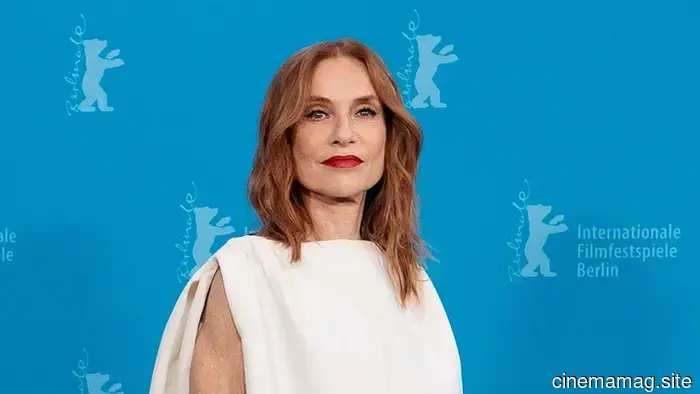
Isabelle Huppert on Transforming into a Vampire, Ulrike Ottinger’s Enduring Influence, and Asghar Farhadi’s Interconnected Stories
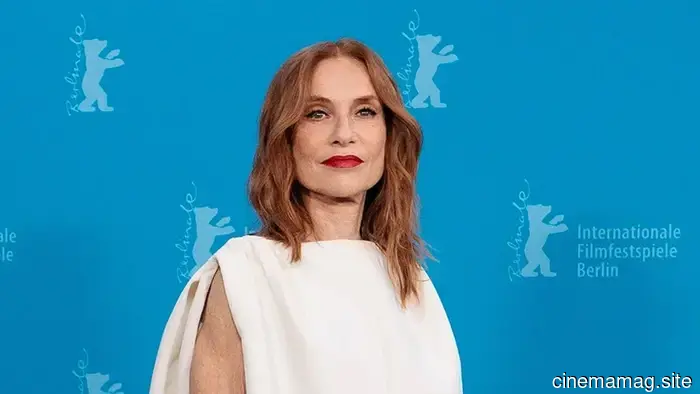
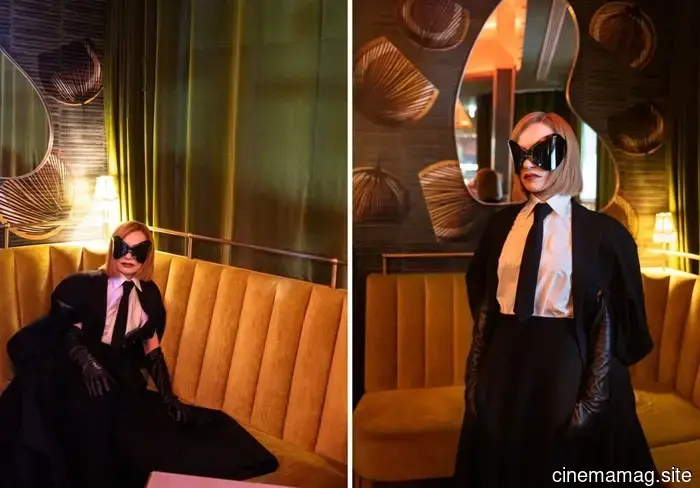
Isabelle Huppert’s performance in Ulrike Ottinger’s The Blood Countess, a vampire fantasy set in Vienna (and featuring the local icon Conchita Wurst) marks the 158th entry in her impressive career, which had me reflecting. Sitting across from her at the Luxembourg Film Festival on a recent Saturday afternoon, I found it puzzling that an actress who frequently dons the deep reds of Balenciaga and whose film roles rarely shy away from blood—such as in Paul Verhoeven’s Elle and Michael Haneke’s The Piano Teacher—had never portrayed a vampire before.
“Yeah, I was very happy!” Huppert said, her eyes wide as she leaned forward in a silk scarf featuring the fashion brand's logo, radiating more warmth than I had braced myself for in our conversation. At the Thessaloniki Film Festival last November, I had watched her perplex moderators during a series of Q&As and public appearances, not out of malice but from an almost instinctual disinterest in providing anything longer than a five-word response.
It’s true that, unlike most stars at “contributions to cinema” events who typically appear just to smile for cameras, share a few stories, and walk the red carpet, Huppert went above and beyond with her many appearances. She played an active role in planning her retrospective, even consulting on film selections and program notes. I left feeling that she was aware of her own legacy and her growing role as one of cinema’s great advocates, regardless of her tendency to hold back anecdotes from interviewers.
Fortunately for us, the actress arrived at the Hotel Le Place d’Armes in a cheerful mood, readily joking and laughing at herself one moment and then passionately praising a collaborator the next. Over the course of about 20 minutes (which I have edited for clarity), Huppert discussed her work with Ottinger and themes of vampires, wigs, and costumes, shared her desire to collaborate with Mia Hansen-Løve again, and recounted her recent experience working with Asghar Farhadi on the upcoming film Parallel Tales, which is likely to be announced at this week’s Cannes press conference.
The Film Stage: I was surprised to learn this was your first time playing a vampire. Did you watch any vampire films to prepare for the role?
Isabelle Huppert: Yes, I was very happy! But no, not really. I’m not much of a vampire… uh… viewer. I think that was beneficial, as I approached the film with a certain naivety, I would say. However, I could tell during the filming—and when I mentioned to others that I would be doing it—that people seemed excited and intrigued. I sensed how it sparked something in their minds. So, in a way, I was inspired by their enthusiasm regarding the film.
You often say that acting on stage and in front of a camera are not all that different, but this film has an additional layer of theatricality. How did that influence your performance and the character?
It provides a kind of freedom, in a way, because it liberates you from sentimentalism or from being overly psychological. You know precisely what kind of music you embody, which allows the actors a lot of freedom because there is no need to take the character too seriously. In essence, it doesn’t matter that much, you know? It’s more of a tale, granting us great freedom. That was Ulrike’s vision for the project: you can do whatever you like, in a sense.
Reflecting on your career, I think this and Madame Hyde are perhaps the only two supernatural roles you've undertaken.
In a sense, yes! And it's amusing because we filmed some of Madame Hyde here in Luxembourg, I think. I’m a bit confused since I did two films with Serge Bozon, Tip Top and Madame Hyde, but I believe we might have filmed one or both here. However, I appreciate the comparison because Serge Bozon’s universe is certainly not realistic and is highly imaginative, setting stories in a completely fictional reality, which is also true for this film.
In both movies, there seems to be a joyfulness or playfulness in your performances. You appear to be enjoying yourself. Is there a specific reason you haven’t pursued more roles like this?
Well, I have done quite a few films in this vein—perhaps not exactly like this one, as not all films can encompass everything this one does—but this particular film is truly special. This reflects Ulrike Ottinger’s essence. It’s the kind of movie where you don’t really discuss who the character is. To be honest, who cares? Certainly not me. [Laughs] I didn’t mind because I sensed from the beginning where we were headed. It’s something entirely timeless. You can’t pinpoint the time period, but you know she’s guiding the audience somewhere. And what I love most about the film? When she disappears. I
Other articles
 Peacock has released a trailer, poster, and images for its Miami crime drama M.I.A.
Peacock has unveiled a trailer, poster, and images for the forthcoming crime drama M.I.A. The series tracks the experiences of Etta Tiger Jonze as she explores the shadowy depths of Miami in her quest for justice...
Peacock has released a trailer, poster, and images for its Miami crime drama M.I.A.
Peacock has unveiled a trailer, poster, and images for the forthcoming crime drama M.I.A. The series tracks the experiences of Etta Tiger Jonze as she explores the shadowy depths of Miami in her quest for justice...
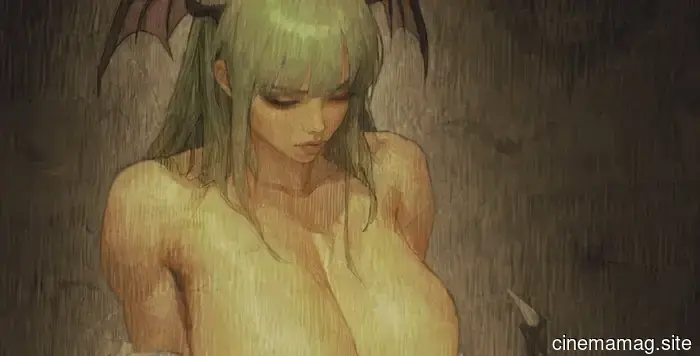 A one-shot titled "Darkstalkers X Street Fighter: Queen’s Shadow" is set to be released this month.
This month, Udon Entertainment is reuniting two iconic Capcom video game franchises in comic book format with the launch of the crossover one-shot special Darkstalkers X Street Fighter…
A one-shot titled "Darkstalkers X Street Fighter: Queen’s Shadow" is set to be released this month.
This month, Udon Entertainment is reuniting two iconic Capcom video game franchises in comic book format with the launch of the crossover one-shot special Darkstalkers X Street Fighter…
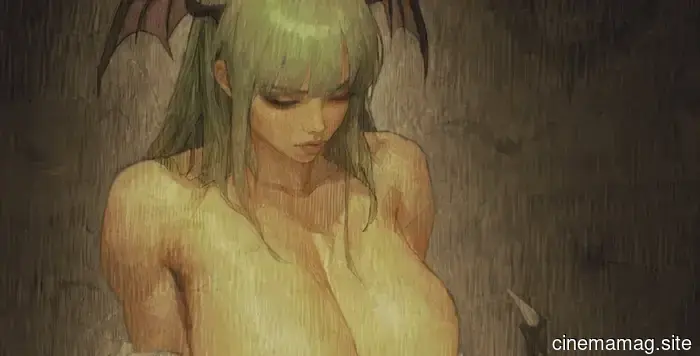 This month, a one-shot titled Darkstalkers X Street Fighter: Queen’s Shadow is on its way.
Udon Entertainment is uniting two classic Capcom video game franchises yet again in comic book form this month with the launch of the crossover one-shot special Darkstalkers X Street Fighter…
This month, a one-shot titled Darkstalkers X Street Fighter: Queen’s Shadow is on its way.
Udon Entertainment is uniting two classic Capcom video game franchises yet again in comic book form this month with the launch of the crossover one-shot special Darkstalkers X Street Fighter…
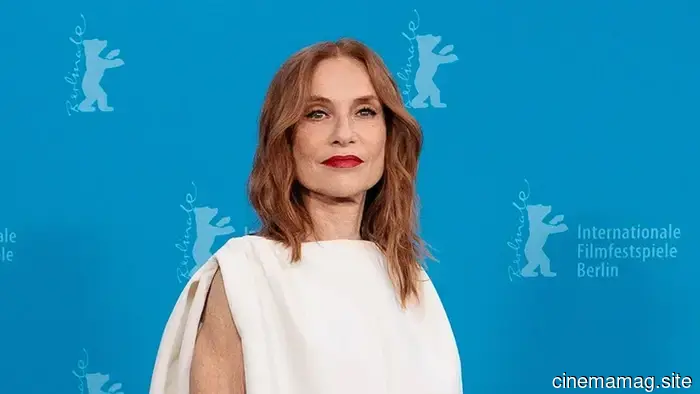 Isabelle Huppert Discusses Transforming into a Vampire, Ulrike Ottinger’s Timeless Style, and Asghar Farhadi’s Intersecting Stories
Isabelle Huppert's role in Ulrike Ottinger’s The Blood Countess, a vampire fantasy set in Vienna (and featuring the local icon Conchita Wurst), which represents her 158th credited appearance in her extraordinary career, led me to ponder. During a recent Saturday afternoon at the Luxembourg Film Festival, while sitting across from her, I couldn’t completely
Isabelle Huppert Discusses Transforming into a Vampire, Ulrike Ottinger’s Timeless Style, and Asghar Farhadi’s Intersecting Stories
Isabelle Huppert's role in Ulrike Ottinger’s The Blood Countess, a vampire fantasy set in Vienna (and featuring the local icon Conchita Wurst), which represents her 158th credited appearance in her extraordinary career, led me to ponder. During a recent Saturday afternoon at the Luxembourg Film Festival, while sitting across from her, I couldn’t completely
Isabelle Huppert on Transforming into a Vampire, Ulrike Ottinger’s Enduring Influence, and Asghar Farhadi’s Interconnected Stories
Isabelle Huppert's portrayal in Ulrike Ottinger’s The Blood Countess, a vampire fantasy set in Vienna (featuring the local icon Conchita Wurst), which adds the 158th entry to her impressive career, prompted some reflections. During a recent Saturday afternoon at the Luxembourg Film Festival, as we sat across from each other, I found myself unable to...