

Tribeca Review: Sophia Takal's Act One Resembles a Clear Nightmare
Following her reimagined version of Black Christmas, Sophia Takal’s Act One emerges as a divisive film set against the backdrop of Anytown, USA (primarily filmed in and around Takal’s hometown of Montclair, NJ). Taking place during the AOL Instant Messenger era—prior to the infiltration of social media and influencers into teenagers' lives—Act One presents a psychosexual thriller reminiscent of 1980s films showcasing suburban threats. Shot in the restrictive Academy aspect ratio of 1.37:1, the camera frequently inches in on picturesque scenes of domesticity teetering on the brink of collapse. The film encapsulates a lucid nightmare that its antagonist, Melanie (Ari Graynor), would encourage aspiring actors to explore as part of their character development. For the impressionable Hannah (a perfectly cast Ella Beatty), this danger is integral to her craft; she interprets her willingness to cross healthy boundaries as a sign of personal growth.
In an unspecified town (yet identifiable by New Jersey license plates), Melanie sees herself as a local legend, both nurturing and undermining talent. After being excluded from her high school's production of Rumors, Hannah seeks out Melanie at a turning point in her life. Initially, Hannah faces criticism from her mother, Julie (Elizabeth Reaser), for her refusal to get contact lenses and for wearing somewhat clumsy glasses. Although Beatty is in her mid-20s, she convincingly portrays a high school senior nearing 18, exuding an emotional maturity that causes others—including her classmate Henry (Nate Mann) and Melanie—to overlook her youth.
Perceiving Hannah as a blank canvas, Melanie essentially grooms her, asserting that an artist's role is to "heal people" and promising to cultivate her into a great performer if she is fully committed. Hannah wholeheartedly embraces this notion. Initially, she engages in evening classes before auditioning with Henry for a so-called “advanced” class that operates like a cult for those willing to fully commit. This class demands constant availability; soon, Hannah finds herself sneaking out at night to rehearse at the studio or attend private sessions at Melanie’s residence. One such session ultimately transgresses boundaries, resulting in psychological harm akin to what online content moderators often experience; the expectation to internalize and express “big emotions” proves detrimental for a teenager thrust into the limelight. Meanwhile, Julie, caught up in her husband's antics (played by Robert Sean Leonard), becomes unaware of the growing influence Melanie has over Hannah, even taking her to get birth control and contact lenses.
Presented as a thriller, Act One captivates viewers, reminiscent of Josephine Decker’s Madeline’s Madeline, which also delved into a young woman's navigation of identities she struggles to comprehend. Both films address issues of control both on and off stage, but whereas Helena Howard’s Madeline is advised to distinguish between performance and reality, Hannah is encouraged to blur those lines to delve deeper into her subconscious, exploring avenues that many would avoid in pursuit of “art.”
Takal, an actress immersed in genre-blending cinema, crafts a compelling film that resembles a nightmarish vision, gradually darkening as it delves into the dynamics of a cult that demands silence and strict discipline. While some raise red flags throughout, Melanie adeptly navigates legal boundaries while transcending ethical ones. Much of this resonates with a particular time; Takal, an older millennial, sets her film in the late 1990s/early 2000s, a period when the Internet began to unite the world, predating the era of smartphones. Act One captures the timeframe, setting, and anxieties of that period with stark honesty.
The film expertly portrays Hannah's journey of liberation and subsequent disintegration. Like Melanie, Act One confronts harsh realities, echoing other dark tales of manipulation (such as Craig Zobel’s Compliance). While the storyline may strike some as implausible and the conclusion somewhat lackluster, it serves as a universal true-crime narrative of a mentor overstepping boundaries, all while adopting the visual and editing style of a “stranger danger” television movie. Act One ultimately presents an engrossing character study, and despite some scenes feeling slightly rushed due to the structure, it thrives largely on the powerful performances of Beatty and Graynor.
Act One premiered at the 2026 Tribeca Festival.
Other articles
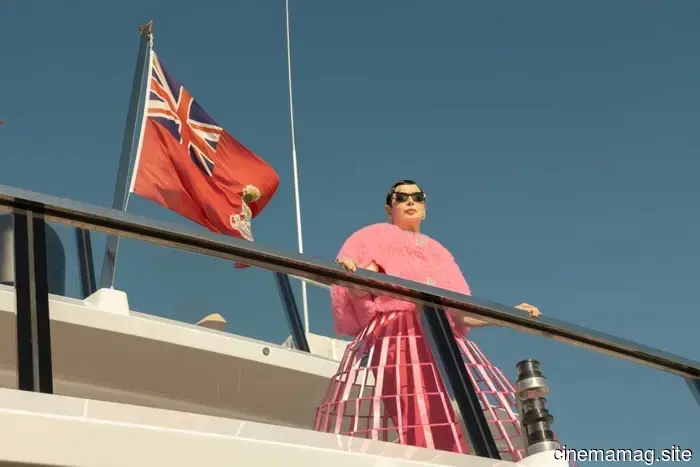 Sarah Evelyn on Crafting the Costumes for The Beauty
Costume designer Sarah Evelyn had collaborated with Ryan Murphy prior to The Beauty. Therefore, she was aware that during their meetings, the first step is to jot down “every single
Sarah Evelyn on Crafting the Costumes for The Beauty
Costume designer Sarah Evelyn had collaborated with Ryan Murphy prior to The Beauty. Therefore, she was aware that during their meetings, the first step is to jot down “every single
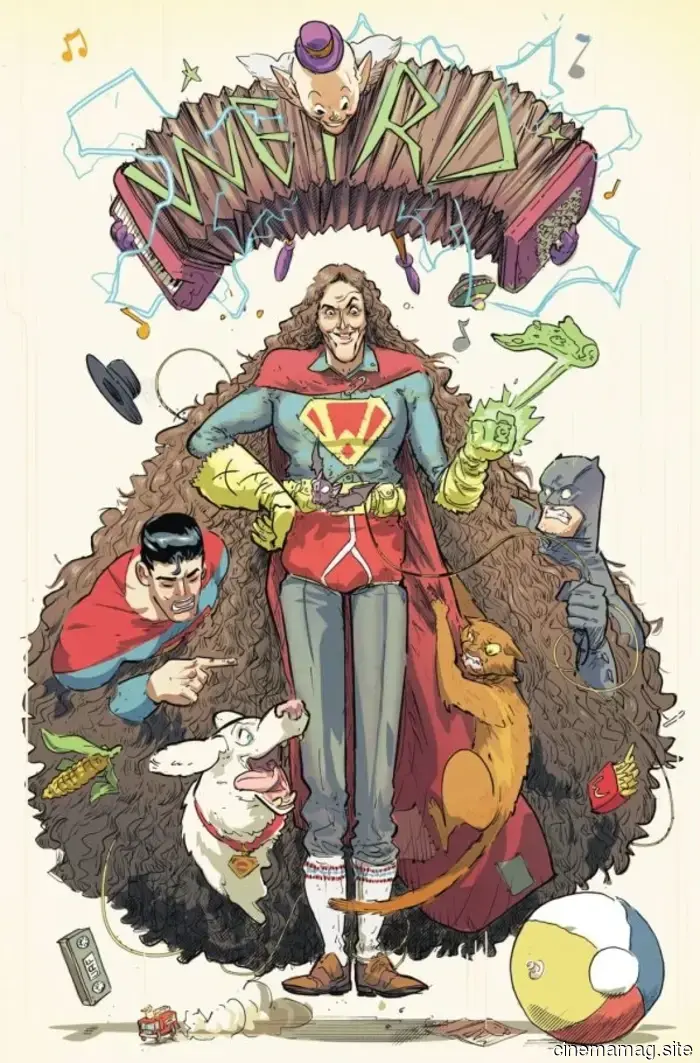 Weird Al collaborates with Batman and Superman for the World's Weirdest one-shot comic from DC Comics.
Comedian “Weird Al” Yankovic will collaborate with the World’s Finest this September when DC Comics publishes the one-shot special Batman/Superman/Weird Al: World’s Weirdest, written by Mark Waid and…
Weird Al collaborates with Batman and Superman for the World's Weirdest one-shot comic from DC Comics.
Comedian “Weird Al” Yankovic will collaborate with the World’s Finest this September when DC Comics publishes the one-shot special Batman/Superman/Weird Al: World’s Weirdest, written by Mark Waid and…
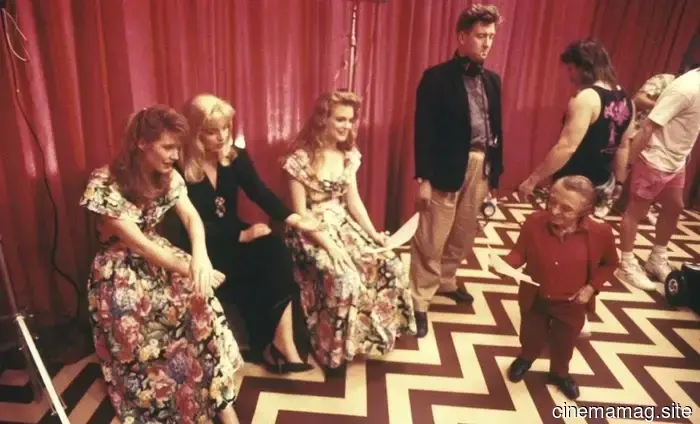 Explore This: Amazing and Unusual Heights, the Journey of Hannibal Lecter, A Hundred Years of Hitchcock, Martin Scorsese’s Cinematic Work, and Beyond.
Summer has arrived, bringing with it a selection of books in our latest roundup that's perfect for taking to the beach. However, don't be taken aback if you receive perplexed glances while diving into a book about Hannibal Lecter while relaxing by the pool. "A Place Both Wonderful and Strange" by Scott Meslow (Running Press) explores the death of David Lynch.
Explore This: Amazing and Unusual Heights, the Journey of Hannibal Lecter, A Hundred Years of Hitchcock, Martin Scorsese’s Cinematic Work, and Beyond.
Summer has arrived, bringing with it a selection of books in our latest roundup that's perfect for taking to the beach. However, don't be taken aback if you receive perplexed glances while diving into a book about Hannibal Lecter while relaxing by the pool. "A Place Both Wonderful and Strange" by Scott Meslow (Running Press) explores the death of David Lynch.
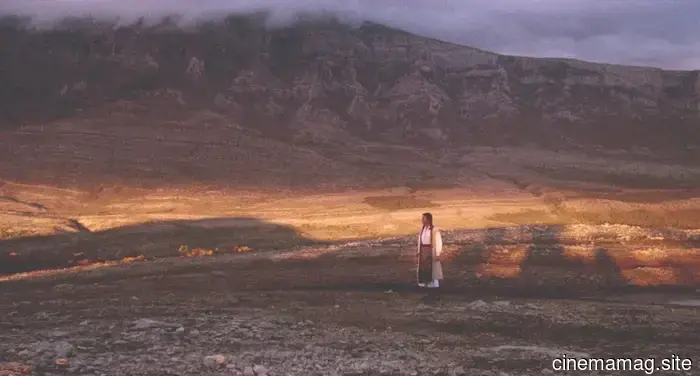 Exclusive: Altered Innocence Secures Restoration of Srđan Karanović’s Virgina for Release This Fall
We are thrilled to share the exclusive news that Altered Innocence has obtained North American rights to Virgina (Virdžina), the esteemed 1991 film by renowned Serbian director Srđan Karanović. The newly restored version will have its World Restoration Premiere at the Frameline LGBTQ+ Film Festival. Finished in June 1991 as Yugoslavia was on the brink of war, Virgina had essentially been lost.
Exclusive: Altered Innocence Secures Restoration of Srđan Karanović’s Virgina for Release This Fall
We are thrilled to share the exclusive news that Altered Innocence has obtained North American rights to Virgina (Virdžina), the esteemed 1991 film by renowned Serbian director Srđan Karanović. The newly restored version will have its World Restoration Premiere at the Frameline LGBTQ+ Film Festival. Finished in June 1991 as Yugoslavia was on the brink of war, Virgina had essentially been lost.
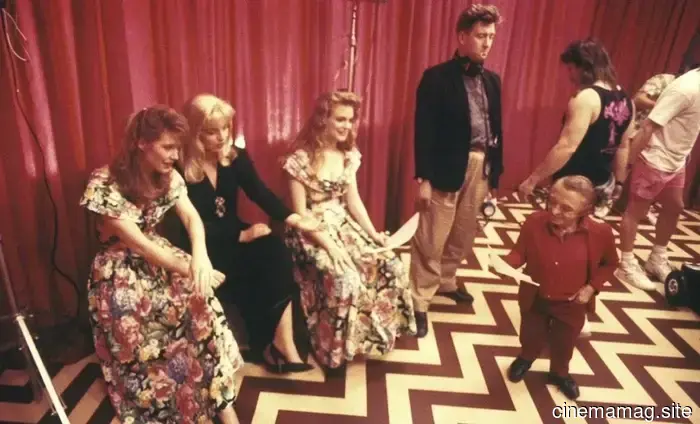 Explore This: Remarkable and Unusual Heights, the Story of Hannibal Lecter, A Century of Hitchcock, Martin Scorsese’s Body of Work & More
Summer has arrived, and our newest selection features numerous books perfect for bringing to the beach. Just be prepared for some curious glances if you dive into a book about Hannibal Lecter while relaxing by the pool. *A Place Both Wonderful and Strange* by Scott Meslow (Running Press) discusses the passing of David Lynch.
Explore This: Remarkable and Unusual Heights, the Story of Hannibal Lecter, A Century of Hitchcock, Martin Scorsese’s Body of Work & More
Summer has arrived, and our newest selection features numerous books perfect for bringing to the beach. Just be prepared for some curious glances if you dive into a book about Hannibal Lecter while relaxing by the pool. *A Place Both Wonderful and Strange* by Scott Meslow (Running Press) discusses the passing of David Lynch.
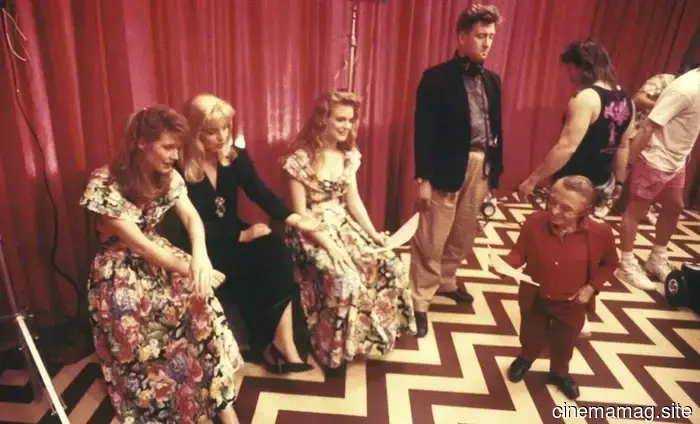 Explore This: Amazing and Unusual Heights, the Existence of Hannibal Lecter, a Hundred Years of Hitchcock, Martin Scorsese’s Body of Work & Additional Topics.
Summer has arrived, and our newest selection features numerous books that are perfect for bringing to the beach. Just be prepared for some odd stares if you're enjoying a novel about Hannibal Lecter while relaxing by the pool. A Place Both Wonderful and Strange by Scott Meslow (Running Press) The passing of David Lynch
Explore This: Amazing and Unusual Heights, the Existence of Hannibal Lecter, a Hundred Years of Hitchcock, Martin Scorsese’s Body of Work & Additional Topics.
Summer has arrived, and our newest selection features numerous books that are perfect for bringing to the beach. Just be prepared for some odd stares if you're enjoying a novel about Hannibal Lecter while relaxing by the pool. A Place Both Wonderful and Strange by Scott Meslow (Running Press) The passing of David Lynch
Tribeca Review: Sophia Takal's Act One Resembles a Clear Nightmare
Continuing from her reimagined version of Black Christmas, Sophia Takal's Act One is a divisive piece set in the obscurities of Anytown, USA (primarily shot in and around Takal’s native Montclair, NJ). Taking place during the time of AOL Instant Messenger—prior to the saturation of social media and influencers affecting the thoughts of teenagers—Act One is a psychosexual thriller that features