
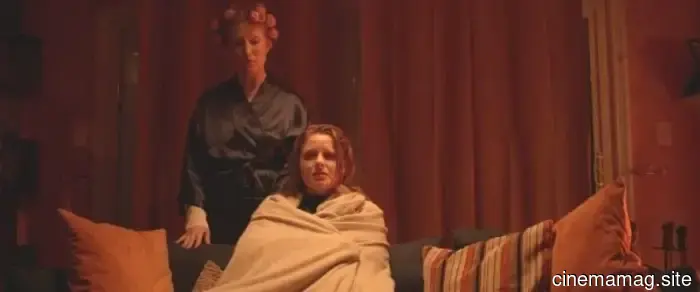
Exclusive Interview – Francesca Porcelluzzi talks about Magnolia Daughters, inspired by the 1970s.
The Italian production designer discusses how research, creativity, and meticulous attention to detail enabled the transformation of a contemporary home into a setting for a 1970s family drama.
For Francesca Porcelluzzi, the production designer, one of the most thrilling aspects of filmmaking is the ability to transport viewers to different times and places. This Italian-born creative, now residing in Los Angeles, has crafted her budding career around visual storytelling, employing environments, props, textures, and color schemes to enhance character depth and narrative strength. With a Master’s degree in Television, Cinema, and New Media from IULM University in Milan, and another in Film and Media Production from the New York Film Academy, Porcelluzzi has garnered a reputation for building genuine and emotionally rich worlds in short films, feature films, and commercial projects.
Her recent projects include titles like 10:52, She Reminds Me of You, The Stolen Mind, Half Life, and The Last Coin, each presenting its own creative hurdles. However, among her expanding portfolio, Magnolia Daughters presented a unique opportunity she had been eager to explore: the chance to design a genuine period film. Set in the 1970s, Magnolia Daughters is a drama that delves into themes of family, identity, and the connections that shape our lives. Through heartfelt storytelling and well-developed characters, the film encapsulates both the beauty and intricacy of a decade that remains significant in pop culture.
For Porcelluzzi, recreating that time period was both a challenge and a dream project. “I’ve always enjoyed period films because the environment plays such a crucial role in the storytelling,” she notes. “The audience must feel as if they’ve stepped into another era, and production design is vital in crafting that experience.”
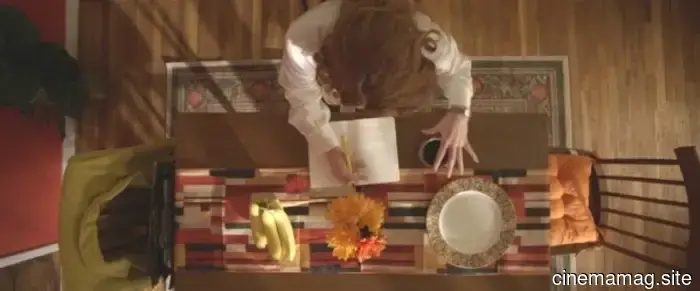
Unlike large studio productions that often create entire sets from the ground up, Magnolia Daughters necessitated a more resourceful approach. The production needed to convert a present-day home into a convincing 1970s atmosphere using existing locations and limited means. Instead of seeing these constraints as hindrances, Porcelluzzi viewed them as creative chances.
“One of the most enjoyable aspects of production design is problem-solving,” she remarks. “Every project presents a puzzle, and for Magnolia Daughters, the challenge was figuring out how to eliminate modern visual elements and replace them with authentic period details.”
To start, she immersed herself in thorough research, examining photographs, magazines, advertisements, and interior design styles from the decade. “I devoted considerable time to understanding how people actually lived in the 1970s,” she shares. “The types of furniture they had, the colors they used, the decor on their walls, and even the small items typically found in a home. Those nuances are what make a setting feel credible.”
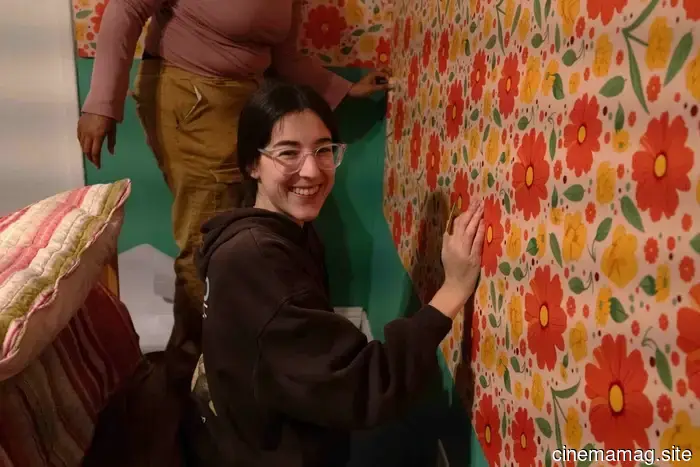
One of her favorite discoveries was finding ways to modify existing furniture rather than replacing entire rooms. “We began applying vintage-inspired wallpaper to furniture pieces to transform them into something that felt appropriate for the period,” she recalls. “It was such a straightforward solution, yet it drastically altered the ambiance of the space.”
Instances like these reinforced an essential lesson she has learned throughout her career: often, the smallest details can have the most significant impact. For Porcelluzzi, production design isn’t meant to draw attention to itself; rather, it serves to subtly enhance the story.
“The colors, textures, and items in a room can convey so much about a character without uttering a single word,” she explains. “These elements help establish mood, reveal personality, and foster emotional connections.”
This philosophy has become central to her work. Whether designing a culturally authentic Kurdish home for 10:52 or creating contrasting emotional atmospheres for She Reminds Me of You, she approaches every project by first understanding the people inhabiting the world she is creating. “I always start with the characters,” she states. “Who are they? How do they live? What items would matter to them? Once those questions are answered, the film's visual language begins to reveal itself naturally.”
Working on Magnolia Daughters was particularly significant for her as it allowed her to merge her passion for storytelling with her interest in history and design. “Period pieces demand a different level of research because audiences can easily spot when something feels out of place,” she mentions. “Simultaneously, that’s what makes them so fulfilling. You’re not merely decorating a space; you’re aiding in the recreation of an entire moment in time.”
Her enthusiasm for collaboration was also crucial during the production. Porcelluzzi believes that the best creative work emerges when directors, cinematographers, and designers share a unified vision.
“Filmmaking is entirely collaborative,” she asserts. “One of the most significant lessons I’ve learned is that, regardless of how great an idea may be, bringing it to fruition requires communication, trust, and teamwork.”
This collaborative spirit has been instrumental in shaping her advancing career in Los Angeles, where she continues to engage in projects addressing identity,

Exclusive Interview – Francesca Porcelluzzi talks about Magnolia Daughters, inspired by the 1970s.
The Italian production designer explains how her research, creativity, and meticulous attention to detail played a crucial role in converting a contemporary house into the setting of a 1970s family drama. For production designer Francesca Porcel…