
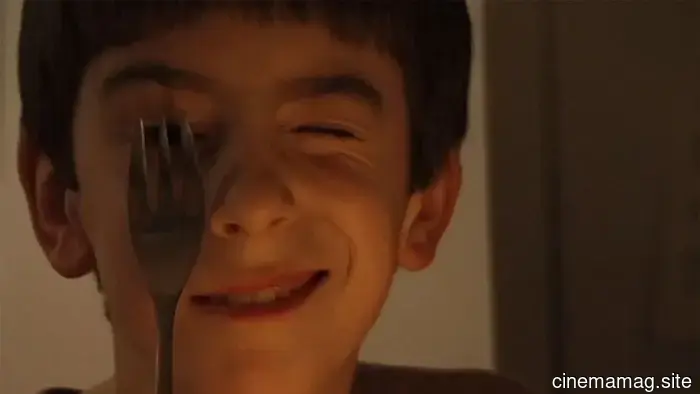
Ross McElwee discusses Remake and the deeply emotional and significant journey of creating a tribute to his son’s life.
As personal and heartfelt as a documentary can be, Ross McElwee has created a poignant tribute to his late son, Adrian, in Remake. As noted early in the film, Adrian tragically died of a fentanyl overdose in 2016 at the young age of 27. McElwee compiles a mosaic of footage gathered over the years to reflect the highs and lows of their relationship. It is an unflinchingly confessional and deeply stirring piece that is sure to shatter any parent's heart, yet McElwee also navigates the process of a company intending to adapt Sherman’s March, alongside his own marital and health experiences. Remake serves as a capstone for the filmmaker and stands out as one of the year’s finest documentaries.
Before the debut of the new 4K restoration of Sherman’s March on Friday, July 3, followed by the release of Remake on Friday, July 10, I had the privilege of discussing with McElwee the personal journey of creating the film, the contributions of Joe Bini, who frequently edits for Werner Herzog, his voiceover writing process, the balancing act of being both filmmaker and father, revisiting Sherman’s March, and mentoring the next generation of filmmakers.
The Film Stage: Voiceover plays a crucial role in your films, and I can’t envision this one without it. What is your method for writing and revising the voiceover? Is it entirely written out, or are there spontaneous moments that you later incorporate?
Ross McElwee: The spontaneous part mainly occurs at the beginning while I’m reviewing footage on an editing console, viewing shot after shot. I begin to engage in a sort of dialogue with it, mostly in my head, but occasionally an idea for voiceover surfaces, prompting me to pause and jot down a note. This can sometimes inform the final voiceover; other times, it might not.
Crafting the voiceover to match the footage is far more labor-intensive. I’m unsure why it takes me so long to get it right. A look at the transcript reveals it isn’t lengthy or complex; it’s quite straightforward. However, it does take me a considerable amount of time to write the voiceover in a way that feels seamlessly integrated with the footage.
Remake
You've talked about your decision for Remake to have an assistant editor compile only frames of videos of Adrian, which provided some emotional distance from the highly personal content of this film. How did this help you, and did this approach come immediately?
Yes. After my son passed away, I found it nearly impossible to view any footage—even benign home videos I had filmed—let alone consider how to assemble a film. I was unsure if I even wanted to create a film. To be frank, it was too painful to see him, especially when he was a child.
Consequently, I avoided watching the footage for some time. I hired someone from my past work to sift through every film featuring him and select two or three still frames. I attempted to write notes about those images, and I believe that helped break the ice. Since they were not moving images, they felt static, which allowed for some emotional distance that wouldn't have been the case with footage. This was my way of mentally preparing myself to watch the footage again. It worked; it was what I needed.
At the film's outset, you establish Adrian's death and the passage of seven years. This shifts the narrative from a mystery about what occurred to focusing on the relationships being portrayed. Can you discuss that structural choice? Was that your intention from the start?
Initially, I envisioned a substantial section of Adrian's childhood without disclosing he was no longer alive. I understood that most viewers would likely know that detail ahead of time.
I tried that approach, and while it worked to an extent and made for an easier entry into the film, I realized after screening it for filmmaker friends that withholding this critical information felt a bit disingenuous. So, I decided to move that revelation to the film's beginning, and it has remained there since.
Knowing your work well, I anticipated this wouldn’t turn into a PSA or a “message movie.” It resonates because the viewer is taken on this emotional journey. However, I’m curious if you considered incorporating a broader perspective on the opioid crisis to accentuate its significance and then opted against it?
Yes, I did consider that. I was very aware that others had produced compelling films about the opioid epidemic—such as Laura Poitras' All the Beauty and the Bloodshed—but there are many others, and various specials on HBO and other platforms addressed these issues effectively.
Recognizing that I was somewhat late to the discussion, I realized I needed to take a different angle if I wanted the opioid crisis to serve as a significant theme in my film. I attempted to include title cards at various moments to provide context about national occurrences while I narrated my life's events, using simple white text on a
Other articles
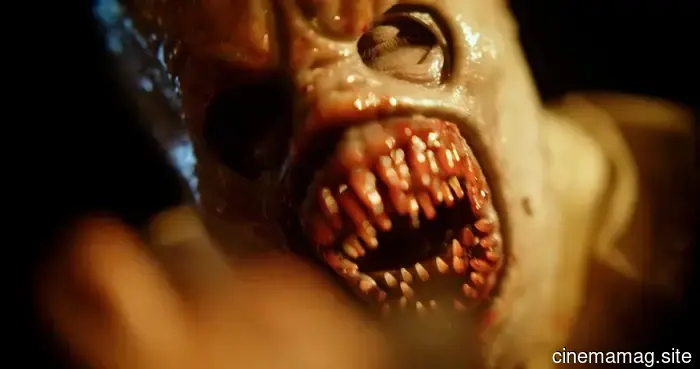 Creature feature The Leaching reveals trailer, poster, and images.
Dark Star Pictures and Uncork’d Entertainment have unveiled a trailer for The Leaching, a forthcoming creature feature directed and written by Evan Showalter. This supernatural horror film centers on a young woman who...
Creature feature The Leaching reveals trailer, poster, and images.
Dark Star Pictures and Uncork’d Entertainment have unveiled a trailer for The Leaching, a forthcoming creature feature directed and written by Evan Showalter. This supernatural horror film centers on a young woman who...
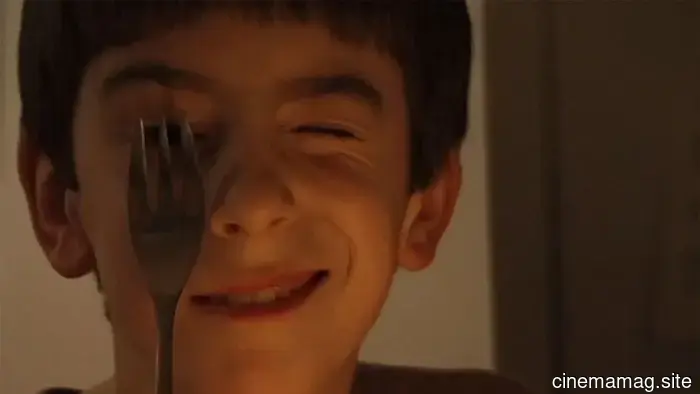 Ross McElwee reflects on the experience of recreating and the emotional, significant journey of crafting a testament to his son's life.
As intimate and significant as a documentary can get, Ross McElwee has created a heartfelt tribute to his deceased son, Adrian, with Remake. It is established at the outset that Adrian died from a fentanyl overdose in 2016 at the age of 27, and McElwee skillfully combines a tapestry of footage recorded over the years.
Ross McElwee reflects on the experience of recreating and the emotional, significant journey of crafting a testament to his son's life.
As intimate and significant as a documentary can get, Ross McElwee has created a heartfelt tribute to his deceased son, Adrian, with Remake. It is established at the outset that Adrian died from a fentanyl overdose in 2016 at the age of 27, and McElwee skillfully combines a tapestry of footage recorded over the years.
Ross McElwee discusses Remake and the deeply emotional and significant journey of creating a tribute to his son’s life.
As intimate and deep as a documentary can be, Ross McElwee has created a heartfelt tribute to his late son, Adrian, in Remake. It is established early on that Adrian died from a fentanyl overdose in 2016 at the age of 27, and McElwee intricately combines footage recorded over the years.