

Will Christopher Nolan's The Odyssey be the final classic epic ever made?
Christopher Nolan has created a stunning, predominantly practical, classic epic with The Odyssey. Will we witness its like again?
The Odyssey has been in development for several years, generating significant excitement among Nolan's fans who eagerly anticipated his follow-up to Oppenheimer. The lead-up to its much-publicized summer release in 2026 has largely been mired in online culture debates and contentious decisions that have provoked strong reactions. Whether it was the criticized armor designs, casting choices seen by some as mere attempts at promoting diversity, or the trailers showcasing modern American dialogue that drew criticism despite being out of context, the film faced its share of backlash.
Just weeks ago, pessimistic voices speculated that the film would be a colossal failure, citing the swarm of online 'downvotes' for its trailers that highlighted questionable lines or prompted outrage over glimpses of Lupita Nyong’o and Elliot Page. However, following the initial box office days and the overwhelmingly positive critical and fan responses, it seems likely that this film will achieve significant box office success and attract a large audience. After a somewhat tepid response to Tenet, Nolan has returned with two films that, while not typically classified as box office draws, have in the case of Oppenheimer proved to be extraordinarily successful. The Odyssey appears poised to achieve similar results, a remarkable feat given the epic genre's waning status in contemporary cinema.
It doesn't particularly matter whether the film's fame and its connection to people drive audiences to see The Odyssey or if it's merely the anticipation surrounding a Nolan film that guarantees box office success. The reality is that audiences are showing up, even against a vocal minority who take pleasure in declaring their refusal to engage with it. Much like individuals announcing their departure from a Facebook group, such declarations are often unnecessary.
However, if you’re opposed to any aspect of diversity in film, you’re missing out on key reasons to see Christopher Nolan’s adaptation of Homer's epic poem. If you cannot tolerate just a couple of minutes featuring Lupita Nyong’o or Elliot Page in battle armor—despite Nolan’s coherent rationale for their inclusion—you will likely miss out on what might be the last true old-fashioned, largely practical epic film produced in cinema.
The success of The Odyssey is positive and could potentially convince audiences that grand spectacles can still be achieved through traditional methods. Large sets filled with extras, shooting in real exotic locales (or in Scotland), and filming on actual boats in the water are all feasible. Nolan conjures scenes in a way that only he can, comparable to his colleague Denis Villeneuve. In examining the behind-the-scenes footage of recent blockbusters, one often sees extensive use of blue or green screens, minimal practical setups with CGI backdrops, and composite visuals that more often feel artificial and lack depth and authenticity. In contrast, when Nolan wants to depict hundreds of soldiers charging an ancient city, he likely involves numerous stunt actors in full costume at a genuine location, giving his films a tangible quality that is increasingly rare in modern blockbuster cinema.
Films like Train Dreams have excelled by filming in real locations without relying on VFX-specific lighting for compositing. While many filmmakers still achieve this on a smaller scale, The Odyssey echoes the grand epics of the 1950s and 60s, which created immersive worlds through elaborate sets, real locations, and hundreds of extras rather than merely a handful of foreground figures augmented with CGI.
Nolan’s approach to blending classical techniques with modern technology is a masterclass. He utilizes CGI sparingly and, while he might have contemplated embarking on a quest to find a real giant cyclops, he ultimately resorts to CGI only when necessary, using it judiciously. A typical Marvel adaptation might showcase an extended Cyclops scene featuring lingering shots of the monster's CGI, while Nolan’s approach presents the creature briefly and menacingly, akin to Spielberg's measured use of CGI in the original Jurassic Park compared to its sequels.
Nolan’s commitment to shooting on film has gained renewed popularity, despite the costs involved. While he opts for various formats, he consistently chooses film over digital. The obsession with IMAX cameras is something I find only mildly appealing, particularly as I have not had access to one of the few UK screens that can showcase The Odyssey to its full potential. I might prefer if he shot in a wider scope, but Nolan still frames his work to accommodate those viewing it in a conventional cinema. However, one wonders how long this fascination with film stock will linger. Will costs and practicalities eventually diminish this trend? Most mainstream audiences may be indifferent, but those with an appreciation for cinematography recognize the unique textures and richness of celluloid that digital often struggles to replicate unless handled by top-tier directors of photography like Roger Deakins. While we relish what could be a final, grounded event movie in the epic fantasy genre, it's essential to appreciate films shot on film as a creative decision before it becomes obsolete.
Nolan has demonstrated a remarkable ability


Other articles
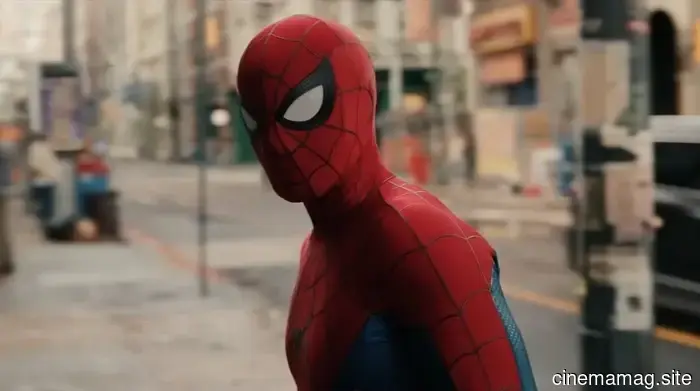 Peter Parker battles for a world that has forgotten him in the final trailer for Spider-Man: Brand New Day.
With only two weeks remaining before Spider-Man returns to theaters for the first time since the $1.9 billion box office hit No Way Home, Sony Pictures and Marvel Studios have released the final trailer...
Peter Parker battles for a world that has forgotten him in the final trailer for Spider-Man: Brand New Day.
With only two weeks remaining before Spider-Man returns to theaters for the first time since the $1.9 billion box office hit No Way Home, Sony Pictures and Marvel Studios have released the final trailer...
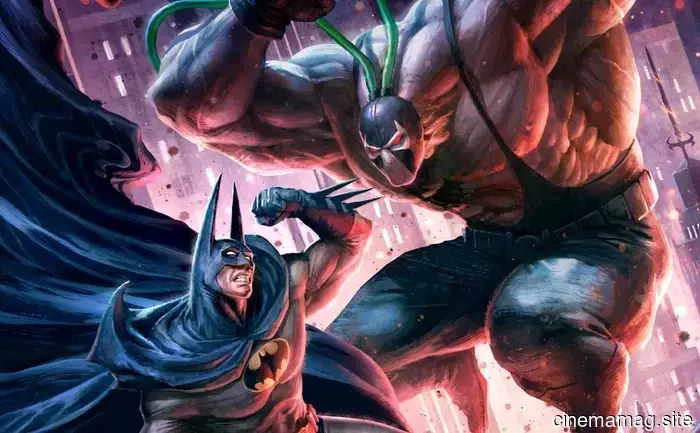 The trailer for Batman: Knightfall Part 1 reveals a summer release date.
DC has unveiled the official trailer for its forthcoming animated film, Batman: Knightfall Part 1: Knightfall, which adapts the legendary storyline featuring Bane's debut in the initial segment of a...
The trailer for Batman: Knightfall Part 1 reveals a summer release date.
DC has unveiled the official trailer for its forthcoming animated film, Batman: Knightfall Part 1: Knightfall, which adapts the legendary storyline featuring Bane's debut in the initial segment of a...
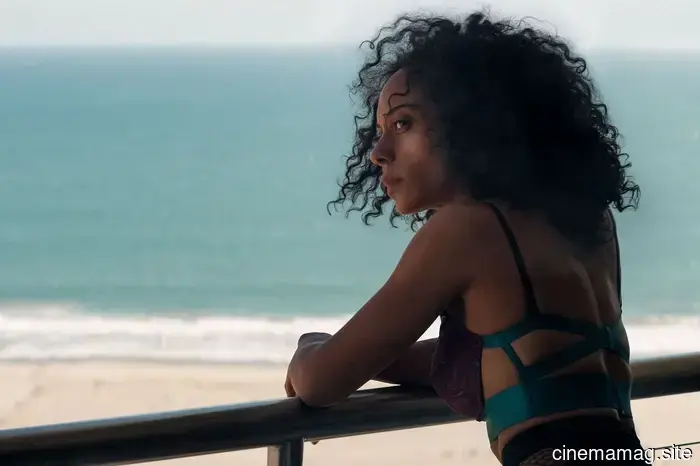 Misty Green Trailer: Rosalind Eleazar, Adam Driver, Daniel Kaluuya, Anna Kendrick, and Topher Grace Star in Chris Rock’s Drama
Chris Rock's first directorial project in 12 years, titled Misty Green, is scheduled to have its world premiere at TIFF 2026. The film features a cast that includes Rosalind Eleazar, Adam Driver, Daniel Kaluuya, Anna Kendrick, Topher Grace, and Chris Rock himself. A24 has dropped the first trailer in anticipation of the premiere and the film's release in October. Here’s a summary.
Misty Green Trailer: Rosalind Eleazar, Adam Driver, Daniel Kaluuya, Anna Kendrick, and Topher Grace Star in Chris Rock’s Drama
Chris Rock's first directorial project in 12 years, titled Misty Green, is scheduled to have its world premiere at TIFF 2026. The film features a cast that includes Rosalind Eleazar, Adam Driver, Daniel Kaluuya, Anna Kendrick, Topher Grace, and Chris Rock himself. A24 has dropped the first trailer in anticipation of the premiere and the film's release in October. Here’s a summary.
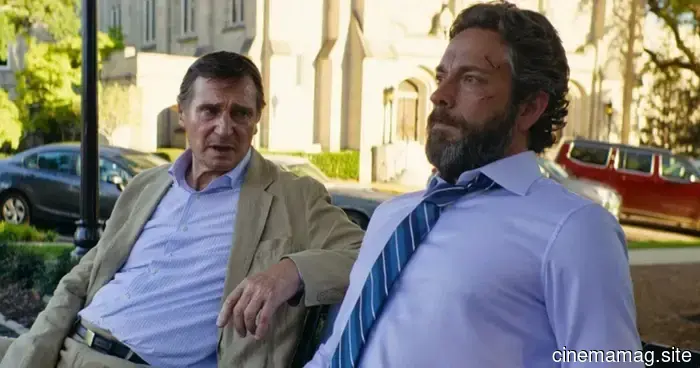 Trailer for the action thriller The Fix featuring Liam Neeson and Zachary Levi.
Briarcliff Entertainment has unveiled a trailer for The Fix, the forthcoming action thriller directed by Guy Moshe (Bunraku). The story revolves around a team of former CIA operatives who are troubled by a past mission…
Trailer for the action thriller The Fix featuring Liam Neeson and Zachary Levi.
Briarcliff Entertainment has unveiled a trailer for The Fix, the forthcoming action thriller directed by Guy Moshe (Bunraku). The story revolves around a team of former CIA operatives who are troubled by a past mission…
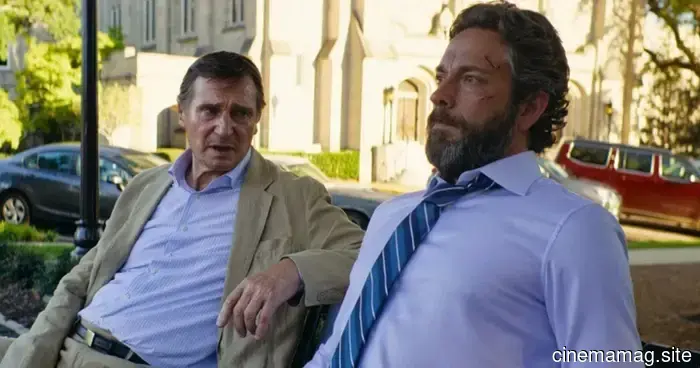 Trailer for the action thriller The Fix featuring Liam Neeson and Zachary Levi.
Briarcliff Entertainment has unveiled a trailer for The Fix, an upcoming action thriller directed by Guy Moshe (Bunraku). The story centers around a team of former CIA operatives who are troubled by a past mission…
Trailer for the action thriller The Fix featuring Liam Neeson and Zachary Levi.
Briarcliff Entertainment has unveiled a trailer for The Fix, an upcoming action thriller directed by Guy Moshe (Bunraku). The story centers around a team of former CIA operatives who are troubled by a past mission…
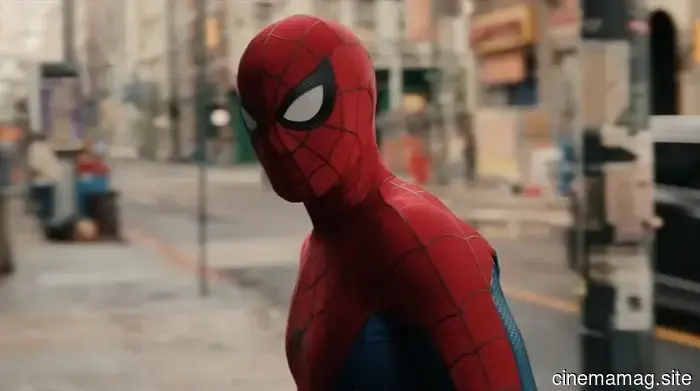 In the final trailer for Spider-Man: Brand New Day, Peter Parker battles for a world that no longer remembers him.
With only two weeks remaining until Spider-Man returns to theaters for the first time since the $1.9 billion-grossing No Way Home, Sony Pictures and Marvel Studios have released the final trailer...
In the final trailer for Spider-Man: Brand New Day, Peter Parker battles for a world that no longer remembers him.
With only two weeks remaining until Spider-Man returns to theaters for the first time since the $1.9 billion-grossing No Way Home, Sony Pictures and Marvel Studios have released the final trailer...
Will Christopher Nolan's The Odyssey be the final classic epic ever made?
Christopher Nolan has created a stunning, primarily practical, classic epic with The Odyssey. Will it ever be replicated? The Odyssey has been in development for years, with eager anticipation from fans of Nolan...