
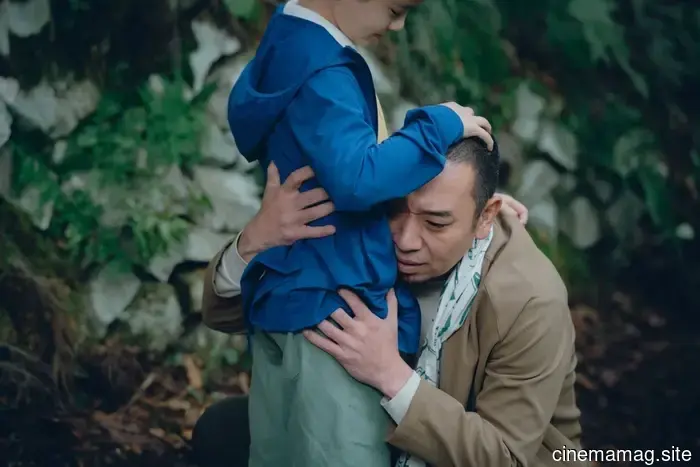
Sheep in the Box Review: Hirokazu Koreeda's Charming Sci-Fi Tale Falls Short
Stanley Kubrick never succeeded in adapting the short story "Supertoys Last All Summer Long" during his lifetime; however, when the project was handed to Steven Spielberg, it became evident that a futuristic interpretation of the tale as a modern Pinocchio was the best direction. Hirokazu Koreeda has drawn inspiration from A.I.: Artificial Intelligence, finding a way into the typically sterile domain of dystopian science fiction through Antoine de Saint-Exupéry’s The Little Prince. In this story, the narrator is requested by the young prince to illustrate a sheep inside a box, failing repeatedly until he simply draws an empty square where one can envision a sheep.
Primarily viewed from the parents' side rather than their artificially created son’s perspective, Koreeda’s Sheep in the Box seeks to tackle familiar science fiction themes surrounding android identity and consciousness. It raises the significant question of whether it’s possible to move past grief and establish an emotional bond with a device that only mirrors a deceased loved one. This ground has been tread many times before and seems somewhat outdated, as it does not delve into the darker aspects of this world. We don’t typically turn to Koreeda for a cynical view on technology; in fact, his inherent humanism may make him the least suitable filmmaker for this narrative at this time.
Architect Otone (Haruka Ayase) and construction worker Kensuke (Daigo Yamamoto) are still in mourning for their son Kakeru (Rimu Kawaki), whose death has just marked its second anniversary. At Kakeru's funeral, the grieving parents were approached by RE:Birth, a company that creates humanoid replicas of loved ones lost “in accidents or crimes.” Two years later, they remain eligible for a complimentary trial. Although Kensuke is hesitant, he accompanies Otone, and they are convinced after meeting a lifelike replica that belongs to another grieving mother at the company’s office. All they need to do to regain their son is submit family pictures and complete a questionnaire—Koreeda's screenplay avoids any concrete details, remaining broad and vague, even when we witness the technicians constructing the bot in flashbacks. This might have been acceptable if the ensuing family drama were more compelling once their "son" returned home. However, it also feels underdeveloped, with the main tension (Kensuke's resentment towards this new "Roomba" in their house) resolved almost immediately after it’s introduced, once he finds out that the Kakeru robot shares his son’s ability to memorize every station on Tokyo’s Enoden train line.
Not even thirty minutes in, and after a happy domestic life has been reestablished—where every other family member reacquaints with Kakeru, dismissing any existential concerns almost instantly when conflict threatens to arise—Koreeda’s screenplay begins to have characters reference the themes he’s interested in through overly dramatic dialogue instead of organically exploring them in the story. It pauses for a character to ponder “who do the dead belong to?” without that idea adding any depth to the formulaic family drama or reshaping it into something darker than a mere wish-fulfillment narrative. Nevertheless, Sheep in the Box contains visual motifs suggesting that Koreeda approached this subject matter thoughtfully, using Otone's profession as an architect to imply a home life just as artificial as the son she longs to welcome back. However, Koreeda doesn't naturally lean into the welcome cynicism that an instinctive human desire to reconnect with a loved one could entail, except for a few gestures. While he succeeded in this with his underrated noir The Third Murder, which does not seek out flickers of hope in an unusually brutal murder mystery, he remains within his comfort zone here, leading to a narrative that is not only unoriginal but also profoundly naive.
The second half of Sheep in the Box introduces a group of homeless android children, reminiscent of the abandoned kids in his 2004 masterpiece Nobody Knows, who kidnap the family’s cat Othello to draw Kakeru into joining them in the margins of society, where they won’t be viewed as mere memories but as living beings. This aspect represents both the greatest risk and the largest failure in a sci-fi story that otherwise hesitates to delve into specific details of its near-future setting, and this singular high concept doesn't add any further depth to the existential themes. The notion of AI sentience is overly familiar for a director so disinterested in science fiction as a genre, unable to push the concept beyond surface-level discussions due to a lack of engagement. This frustration is compounded by the fact that he tackled similar themes far more effectively in his 2009 film Air Doll, establishing himself as one of the most reliable contemporary filmmakers on narratives surrounding both biological and nuclear families, yet a glass-half-full mindset prevents him from fully realizing the material’s potential.
Returning to the inciting incident: a company that consistently intrudes on the funerals of families who have lost young
Other articles
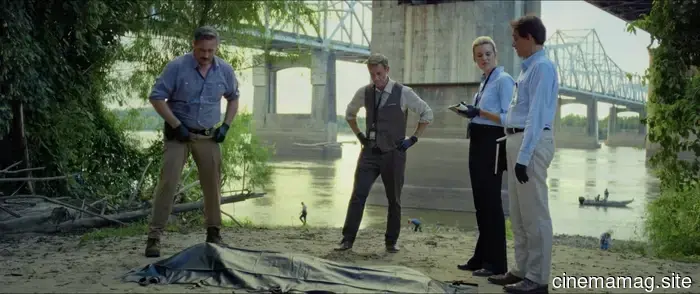 Trailer for the crime thriller The Girl in the River featuring Maggie Grace, Devon Sawa, Tiffany Haddish, and Ralph Macchio.
Samuel Goldwyn Films has released a poster and trailer for Brando Benetton's forthcoming crime thriller, The Girl in the River. The story centers on a criminologist and a forensic psychologist as…
Trailer for the crime thriller The Girl in the River featuring Maggie Grace, Devon Sawa, Tiffany Haddish, and Ralph Macchio.
Samuel Goldwyn Films has released a poster and trailer for Brando Benetton's forthcoming crime thriller, The Girl in the River. The story centers on a criminologist and a forensic psychologist as…
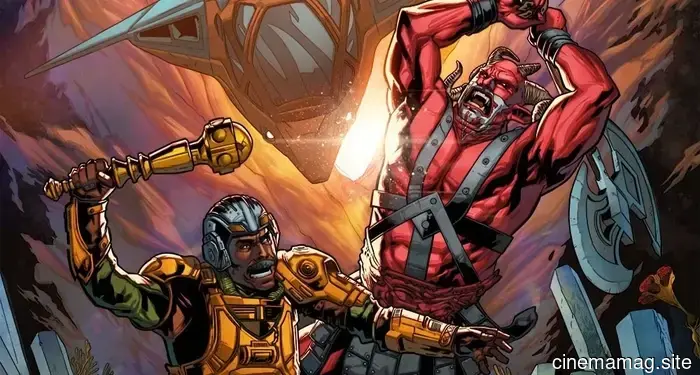 Comic Book Sneak Peek – He-Man and the Masters of the Universe: The Wings of Fate #2
Dark Horse Comics is set to release the second issue of its limited series, He-Man and the Masters of the Universe: The Wings of Fate, next week as part of the movie tie-in.
Comic Book Sneak Peek – He-Man and the Masters of the Universe: The Wings of Fate #2
Dark Horse Comics is set to release the second issue of its limited series, He-Man and the Masters of the Universe: The Wings of Fate, next week as part of the movie tie-in.
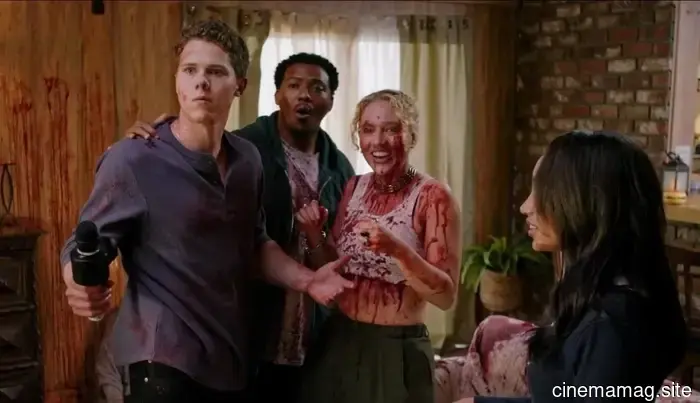 Blood-drenched trailer and visuals for the horror-comedy Bad Karaoke at FrightFest.
In anticipation of its world premiere at Tubi FrightFest this August, a trailer, poster, and images for the horror comedy Bad Karaoke have been released online. The movie follows a group of band members who come into possession of a karaoke machine...
Blood-drenched trailer and visuals for the horror-comedy Bad Karaoke at FrightFest.
In anticipation of its world premiere at Tubi FrightFest this August, a trailer, poster, and images for the horror comedy Bad Karaoke have been released online. The movie follows a group of band members who come into possession of a karaoke machine...
Sheep in the Box Review: Hirokazu Koreeda's Charming Sci-Fi Tale Falls Short
Stanley Kubrick could not successfully adapt the short story "Supertoys Last All Summer Long" during his lifetime; it was later given to Steven Spielberg, who realized that the most effective approach was to interpret the story of loneliness as a futuristic version of Pinocchio. Hirokazu Koreeda has continued in the vein of A.I: Artificial Intelligence.