

Exclusive: Japan Society Unveils October Series Featuring Shiguéhiko Hasumi: A Different Perspective on Cinema in America and Japan.
In a strong contender for the series of the year, New York’s Japan Society has allowed Shiguéhiko Hasumi––a critic, theorist, and scholar who also mentored Kiyoshi Kurosawa––to curate the programming. This initiative has led to the presentation of "Shiguéhiko Hasumi: Another History of the Movie in America and Japan," taking place from October 9 to 18. The series includes films from Kurosawa and Shinji Aoyama, as well as works by Robert Aldrich, Ozu, Naruse, Mizoguchi, Michael Mann, John Ford, and Ryusuke Hamaguchi, who remarked:
“It wouldn’t be an exaggeration to say that Hasumi has, in a way, shaped contemporary Japanese cinema, especially after the studio system’s decline. Understanding his contributions is crucial for grasping today's Japanese film landscape.”
Pedro Costa added even more praise:
“Hasumi-san’s observations are concrete and detailed: he elucidates the movement of an actor through a space, contemplates certain gestures or actions being accelerated or decelerated, and examines the balance of conflicting tensions within a sequence… He is the only writer whose approach resembles that of a filmmaker: he is one of us.”
Below are descriptions of each film (along with a live event) and ticket information:
**…All the Marbles (California Dolls)**
Saturday, October 18 at 5:30 PM
Directed by Robert Aldrich, 1981, 113 min., 35mm, color. Starring Peter Falk, Vicki Frederick, Laurene Landon. Imported 35mm Print. Aldrich’s last film is a surprisingly personal and humorous road movie centered on women’s sports. Falk plays the fast-talking, no-nonsense Harry Sears, the lackluster manager of the California Dolls, who bets on his team's last chance for success in a championship match in Reno, Nevada. The film combines Harry’s cheap theatrics and the Dolls’ talent, striving for sincerity through flawed, relatable characters who risk their futures for a faded American Dream, set against diners, budget motels, and vast highways. Drawing from Abe Polonsky’s script of John Garfield’s ’47 boxing film *Body and Soul*—a technique Aldrich previously used for *The Longest Yard*—the film culminates in a gripping final match. Hasumi reviewed it as “the most noble sports film since Raoul Walsh’s *Gentleman Jim*.”
**Beautiful New Bay Area Project**
「ビューティフル・ニュー・ベイエリア・プロジェクト」(Byu-tifuru Nyu Beieria Purojekuto)
Friday, October 10 at 9:30 PM
Directed by Kiyoshi Kurosawa, 2013, 29 min., DCP, color. Featuring Mao Mita, Tasuku Emoto, Jinsei Morishita. Commissioned by the Hong Kong International Film Festival, which invited four filmmakers to create shorts around the theme of "beautiful," Kurosawa presents unexpected results in this quirky romantic comedy turned action film. Amano (Tasuko Emoto), a young, disoriented executive, develops an infatuation for the beautiful laborer Takako after arriving at a bayside wharf to evaluate a development site. When Takako rebuffs him, she takes matters into her own hands when Amano reacts immaturely, leading to turmoil within a mundane Tokyo office setting. The film will screen with *Le Petit Chaperon rouge*, introduced by William Carroll.
**The Boston Strangler**
Thursday, October 16th at 9:00 PM
Directed by Richard Fleischer, 1968, 116 min., DCP, color. Starring Tony Curtis, Henry Fonda, George Kennedy. Fleischer’s 1968 procedural film depicts a dramatized account of the notorious Boston Strangler murders of the early ’60s. Law professor John Bottomly (Fonda), leads a new investigative bureau, chasing every lead while examining societal outcasts against Boston’s dreary backdrop. The film utilizes strikingly framed, split-screen techniques to create suspenseful sequences interspersed with jarring pans and zooms to heighten the anticipation of violence. Shifting into a psychological character study partially driven by Curtis' compelling portrayal, *The Boston Strangler* represents one of Fleischer’s most precise films—celebrated not only by Hasumi but also by Kiyoshi Kurosawa, who would later adopt a similar narrative structure in his chilling ’90s thriller *Cure*.
**Collateral**
Thursday, October 9 at 7:00 PM
Directed by Michael Mann, 2004, 120 min., 35mm, color. Featuring Tom Cruise, Jamie Foxx, Jada Pinkett Smith. Mann's intricate urban thriller occurs during a single restless night in
Other articles
 In *The Lost Bus*, the latest gripping and adrenaline-fueled disaster thriller by Paul Greengrass, a few electric sparks from a major power line ignite dry grasses, leading to an uncontrollable wildfire that devastatingly consumes Paradise, California. The town's name carries a tragic irony, as the horrific flames of the 2018 Camp Fire transformed this arid mountainous area into an unimaginable hell, resulting in 85 fatalities and incurring $13.5 billion in damages. Drawing from stories that surfaced amid the ruins, including accounts from Lizzie Johnson’s detailed narrative *Paradise: One Town’s Struggle to Survive an American Wildfire*, the film counters the destruction by focusing on an act of heroism through the lens of an underdog narrative that acts as a temporary comfort amidst the state’s otherwise grim and scorched reality.
There is much to illustrate in a natural disaster of this magnitude, and Greengrass, who co-wrote the script with Brad Inglesby, swiftly navigates through burned landscapes to various emergency services and response teams. However, the protagonist at the center of this overwhelming day in November is Kevin McKay (Matthew McConaughey), a school-bus driver who has recently returned to his hometown after burying his father. At the start of *The Lost Bus*, he is still grappling with his father’s death but faces even greater worries: his dog's cancer has progressed, his son is sick and refuses to talk to him, his mother struggles to care for herself, and his ex-wife criticizes his parenting over the phone. Compounding his troubles, he is short on money, unable to persuade his supervisor for extra shifts, and late for a required bus maintenance check. When smoke begins to billow, McKay's troubled situation and tardiness make him the sole driver capable of altering his route to rescue 23 stranded schoolchildren and their teacher, Mary Ludwick (America Ferrera), transporting them to safety. It poses a potential death trap, yet also presents an opportunity for redemption.
Greengrass possesses a remarkable talent for portraying disaster—the kind of dynamic, high-stakes action that continuously builds and evolves—which makes it easy to overlook how few directors manage to do it effectively. In the past, Greengrass pioneered a new wave of action films with his handheld, shaky-camera style in blockbuster hits like *The Bourne Supremacy* and *The Bourne Ultimatum*. This approach transitioned into a series of docudramas and nonfiction thrillers, including *United 93*, *Captain Phillips*, and *July 22*. Although his frenetic and jarring style (which may not appeal to everyone) has fallen out of favor in recent years, he developed a visual language that captured the intense, real-world experiences of various terror groups and those rising to confront them.
In this case, the adversary is nature itself, and Greengrass finds his stride after setting up the necessary context and backstories. He has honed the formula for dynamic characters, providing them with enough background and personality that the audience feels invested when they encounter harrowing situations. There are ample moments here to keep viewers engaged—close calls and near escapes that emphasize the school bus’s cumbersome mechanics amid congested traffic and chaotic intersections. The unpredictability of the flames adds to the tension, overwhelming the windows and floors, causing the children on board to panic or fall silent in fear. Greengrass keeps the audience on edge not through manipulative drama, but by knowing when to cut, when to slow down, and when to go full throttle.
This blend of technique is an art form in itself. However, much of its effectiveness hinges on the characters navigating the disaster. Greengrass is fortunate to have McConaughey, who seems naturally suited for intense situations. As a rare movie star who can don dirt and a baseball cap to fit seamlessly into a blue-collar community, McConaughey conveys the horror through the windshield with a slack-jawed demeanor, ultimately emerging as a decisive leader. He complements Ferrera, who joins the bus somewhat unaware of the impending firestorm while maintaining her composure for the sake of her students. Capturing that dynamic can be challenging, but the film shines brightest when both characters are compelled to step outside their established roles—to scout the fire, secure resources, take the wheel, or calm the frightened children. In a scenario that risks exaggerating clumsiness or anxiety to heighten the stakes, it’s refreshing to see two characters adapt to their surroundings with determined and believable efforts. Greengrass recognizes that the situation is already dire; he doesn’t need to fabricate unnecessary theatrics for emotional impact.
One of Greengrass's most impactful decisions is to personify the wildfire, incorporating point-of-view shots using a windswept camera that rushes through mountains, across power lines, and over bustling roads. He frames the flames as the true antagonist of the film, lending a more
Originating from the wartime screenings organized by Mirsad Purivatra and Izeta Građević in the early '90s, no festival around the globe embodies its history like the Sarajevo Film Festival. The city was still under siege when residents started evading sniper fire to reach the basement of the Apollo theatre for
In *The Lost Bus*, the latest gripping and adrenaline-fueled disaster thriller by Paul Greengrass, a few electric sparks from a major power line ignite dry grasses, leading to an uncontrollable wildfire that devastatingly consumes Paradise, California. The town's name carries a tragic irony, as the horrific flames of the 2018 Camp Fire transformed this arid mountainous area into an unimaginable hell, resulting in 85 fatalities and incurring $13.5 billion in damages. Drawing from stories that surfaced amid the ruins, including accounts from Lizzie Johnson’s detailed narrative *Paradise: One Town’s Struggle to Survive an American Wildfire*, the film counters the destruction by focusing on an act of heroism through the lens of an underdog narrative that acts as a temporary comfort amidst the state’s otherwise grim and scorched reality.
There is much to illustrate in a natural disaster of this magnitude, and Greengrass, who co-wrote the script with Brad Inglesby, swiftly navigates through burned landscapes to various emergency services and response teams. However, the protagonist at the center of this overwhelming day in November is Kevin McKay (Matthew McConaughey), a school-bus driver who has recently returned to his hometown after burying his father. At the start of *The Lost Bus*, he is still grappling with his father’s death but faces even greater worries: his dog's cancer has progressed, his son is sick and refuses to talk to him, his mother struggles to care for herself, and his ex-wife criticizes his parenting over the phone. Compounding his troubles, he is short on money, unable to persuade his supervisor for extra shifts, and late for a required bus maintenance check. When smoke begins to billow, McKay's troubled situation and tardiness make him the sole driver capable of altering his route to rescue 23 stranded schoolchildren and their teacher, Mary Ludwick (America Ferrera), transporting them to safety. It poses a potential death trap, yet also presents an opportunity for redemption.
Greengrass possesses a remarkable talent for portraying disaster—the kind of dynamic, high-stakes action that continuously builds and evolves—which makes it easy to overlook how few directors manage to do it effectively. In the past, Greengrass pioneered a new wave of action films with his handheld, shaky-camera style in blockbuster hits like *The Bourne Supremacy* and *The Bourne Ultimatum*. This approach transitioned into a series of docudramas and nonfiction thrillers, including *United 93*, *Captain Phillips*, and *July 22*. Although his frenetic and jarring style (which may not appeal to everyone) has fallen out of favor in recent years, he developed a visual language that captured the intense, real-world experiences of various terror groups and those rising to confront them.
In this case, the adversary is nature itself, and Greengrass finds his stride after setting up the necessary context and backstories. He has honed the formula for dynamic characters, providing them with enough background and personality that the audience feels invested when they encounter harrowing situations. There are ample moments here to keep viewers engaged—close calls and near escapes that emphasize the school bus’s cumbersome mechanics amid congested traffic and chaotic intersections. The unpredictability of the flames adds to the tension, overwhelming the windows and floors, causing the children on board to panic or fall silent in fear. Greengrass keeps the audience on edge not through manipulative drama, but by knowing when to cut, when to slow down, and when to go full throttle.
This blend of technique is an art form in itself. However, much of its effectiveness hinges on the characters navigating the disaster. Greengrass is fortunate to have McConaughey, who seems naturally suited for intense situations. As a rare movie star who can don dirt and a baseball cap to fit seamlessly into a blue-collar community, McConaughey conveys the horror through the windshield with a slack-jawed demeanor, ultimately emerging as a decisive leader. He complements Ferrera, who joins the bus somewhat unaware of the impending firestorm while maintaining her composure for the sake of her students. Capturing that dynamic can be challenging, but the film shines brightest when both characters are compelled to step outside their established roles—to scout the fire, secure resources, take the wheel, or calm the frightened children. In a scenario that risks exaggerating clumsiness or anxiety to heighten the stakes, it’s refreshing to see two characters adapt to their surroundings with determined and believable efforts. Greengrass recognizes that the situation is already dire; he doesn’t need to fabricate unnecessary theatrics for emotional impact.
One of Greengrass's most impactful decisions is to personify the wildfire, incorporating point-of-view shots using a windswept camera that rushes through mountains, across power lines, and over bustling roads. He frames the flames as the true antagonist of the film, lending a more
Originating from the wartime screenings organized by Mirsad Purivatra and Izeta Građević in the early '90s, no festival around the globe embodies its history like the Sarajevo Film Festival. The city was still under siege when residents started evading sniper fire to reach the basement of the Apollo theatre for
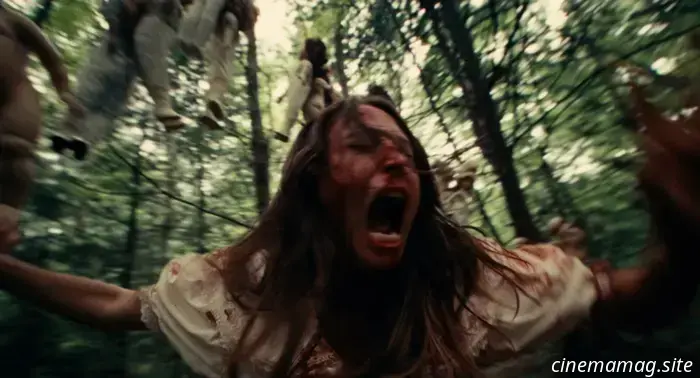 Folk horror film Dolly releases trailer in anticipation of its world premiere at Fantastic Fest.
Before its world premiere at Fantastic Fest later this month, a trailer has been released online for Rod Blackhurst's folk horror film, Dolly. The story centers on a young woman's battle for survival after being kidnapped by a crazed creature. The cast includes Fabianne Therese, Seann William Scott, Ethan Suplee, and Max the Impaler. Check […]
Folk horror film Dolly releases trailer in anticipation of its world premiere at Fantastic Fest.
Before its world premiere at Fantastic Fest later this month, a trailer has been released online for Rod Blackhurst's folk horror film, Dolly. The story centers on a young woman's battle for survival after being kidnapped by a crazed creature. The cast includes Fabianne Therese, Seann William Scott, Ethan Suplee, and Max the Impaler. Check […]
 Mars Attracts launches on Steam Early Access.
Today, Outlier Games has unveiled their much-anticipated park management simulation, Mars Attracts, which is now available on Steam Early Access. Create the ultimate theme park for Martians while sacrificing humanity in this delightfully wicked tycoon game. Check out the new trailer below to glimpse what players can expect […]
Mars Attracts launches on Steam Early Access.
Today, Outlier Games has unveiled their much-anticipated park management simulation, Mars Attracts, which is now available on Steam Early Access. Create the ultimate theme park for Martians while sacrificing humanity in this delightfully wicked tycoon game. Check out the new trailer below to glimpse what players can expect […]
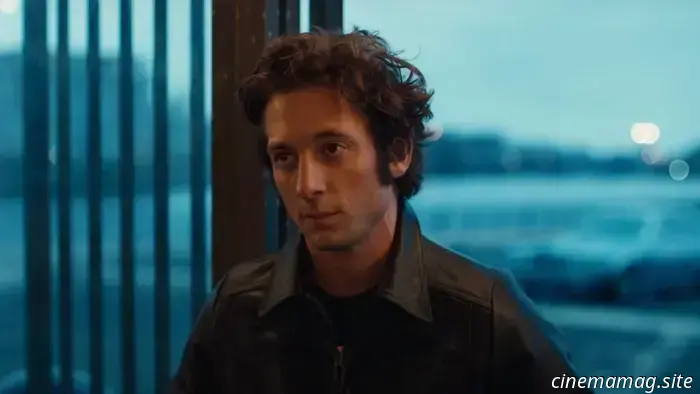 In the trailer for 'Springsteen: Deliver Me From Nowhere,' Jeremy Allen White is portrayed as 'Searching for Something Genuine.'
In the latest Springsteen: Deliver Me From Nowhere trailer, The Bear actor Jeremy Allen White embodies the Boss at a pivotal moment in his career: during
In the trailer for 'Springsteen: Deliver Me From Nowhere,' Jeremy Allen White is portrayed as 'Searching for Something Genuine.'
In the latest Springsteen: Deliver Me From Nowhere trailer, The Bear actor Jeremy Allen White embodies the Boss at a pivotal moment in his career: during
 After last week's initial images, Lionsgate has released five posters for the upcoming thriller The Housemaid, directed by Paul Feig, which stars Sydney Sweeney, Amanda Seyfried, Brandon Sklenar, and Michele Morrone. Check them out here... Directed by Paul Feig, the film immerses viewers in a distorted reality where perfection is just an illusion, and nothing is [...]
 Stephen Colbert Begins CBS's Emmys by inquiring, 'Is Anyone Recruiting?'
Stephen Colbert received a standing ovation at the Emmys as he presented the first award of the evening, jokingly asking the audience, "Is anyone hiring?"
Stephen Colbert Begins CBS's Emmys by inquiring, 'Is Anyone Recruiting?'
Stephen Colbert received a standing ovation at the Emmys as he presented the first award of the evening, jokingly asking the audience, "Is anyone hiring?"
Exclusive: Japan Society Unveils October Series Featuring Shiguéhiko Hasumi: A Different Perspective on Cinema in America and Japan.
In a recent addition to the race for series of the year, New York's Japan Society has granted complete freedom in programming to Shiguéhiko Hasumi––a critic, theorist, and scholar who has also mentored Kiyoshi Kurosawa. The outcome is Shiguéhiko Hasumi: Another History of the Movie in America and Japan, scheduled to take place from October 9 to 18 and