
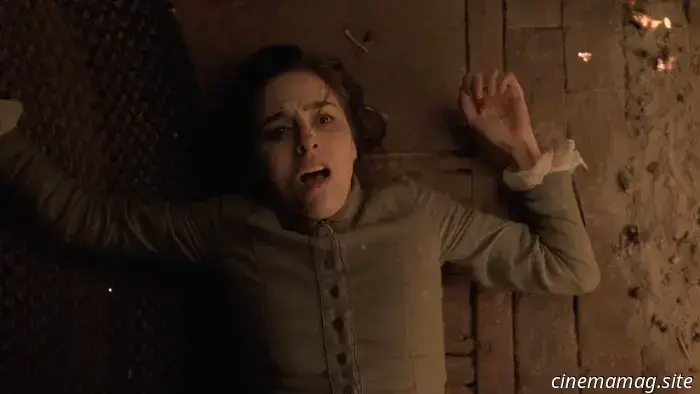
How We Filmed Our Victorian Ghost Story 'The Traveler' in NYC on a Budget— and Imitated a Fire
Matthew Scheffler is the writer-director of “The Traveler,” a ghost story set to screen this weekend at FilmQuest, where nothing is quite as it seems. In the following piece, he shares the challenges he faced regarding locations during the film's production and how he and his team overcame them.—M.M.
As a field producer on HBO’s Last Week Tonight with John Oliver, I was often faced with seemingly impossible tasks. Each week, I would wait for scripts to arrive, often on Thursday or Friday, and then have just 48 to 72 hours to produce, shoot, and edit segments to air on Sunday. Succeeding in such a demanding environment can create a false sense of security, leading one to believe that any project is achievable.
When I embarked on writing and directing “The Traveler,” a Victorian ghost story filmed in New York City boasting over 60 VFX shots, pyrotechnics, and a limited budget, I was unaware of the challenges ahead — and how much HBO’s funding had previously assisted me in accomplishing seemingly miraculous feats.
Location Challenges (And Everything That Went Wrong)
“The Traveler” 1st AD Hans Augustave, center, alongside writer-director Matthew Scheffler, right.
Set in the late 1800s, “The Traveler” follows a widow who is plagued by a supernatural entity during her time of mourning in her isolated farmhouse. The film demanded not only period-appropriate outdoor settings but also a living room with a functional fireplace, an office, a kitchen, and the ability to connect all three in a continuous shot.
To complicate matters, we couldn't afford to house our cast and crew, which restricted our location search to a 90-minute drive from New York City.
Like many writers creating expectations outside their budget, I had not anticipated the difficulties in finding the right location. Having grown up in New England, I knew numerous people with old houses, which led us to initially approach friends and family for filming locations.
However, that quickly turned problematic. No reasonable person resides in an unrenovated colonial home with brick ovens, untreated floorboards, and no electrical wiring. While wall plugs can be hidden, my aunt’s unfortunate Moroccan backsplash proved far more challenging for VFX to remove (sorry, Deb).
Historical Venues Can Be Difficult Landlords
Our next move was to explore filming at historic homes in New York, as they would retain their period look and come fully furnished. With our limited budget, we couldn’t afford to dress an entire space, making reliance on existing furniture and props critical.
I reached out to film commissions in Nassau County, the Hudson Valley, and New Jersey for suggestions while also searching online for overlooked options. Initially, several locations appeared promising, eager to host a film project… until they understood what that would entail.
Historic houses are often managed by individuals with a fervent, even obsessive, love for history. During a site visit, one curator informed me that a 300-year-old Bible in the house could not be touched, moved, or even looked at. He promptly ended the scouting session.
Museums prioritize preservation and control, whereas film sets are inherently chaotic. Managing dozens of people in compact spaces, coupled with heavy equipment operating on tight schedules, can lead to disorder, which is a difficult gap to bridge. For five years, we encountered refusal from every historic site between Freehold, New Jersey, and Portsmouth, New Hampshire.
The Staten Island Breakthrough
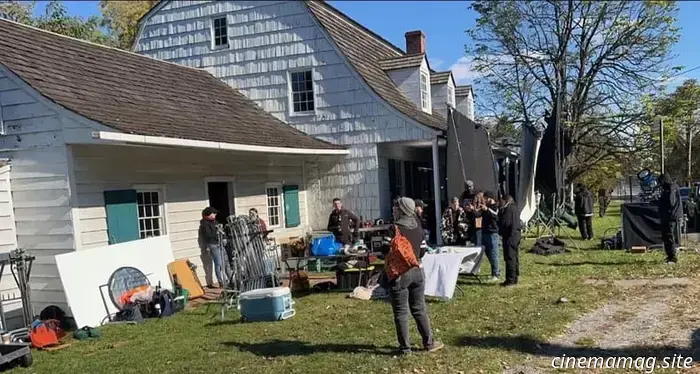
On the set of “The Traveler,” courtesy of the filmmakers.
Running out of options and facing a rapidly approaching shooting schedule, I turned to a location manager friend (thanks to Brad Reichel) for assistance. He suggested Historic Richmond Town on Staten Island, a place he had visited with his children.
Fortunately for us, they were eager to re-enter the film industry to create new revenue and viewed a self-funded short film as an ideal starting point.
The layout wasn’t what I had envisioned. The house was situated just 32 feet from one of Staten Island’s busiest streets, with over a thousand cars passing by each hour. To make matters worse, the fireplace, central to the story, was non-functional.
Yet, we needed to adapt.
The Nonexistent Fireplace
Our production designer, Amber Unkle, appreciated the space. However, our director of photography, Fletcher Wolfe, was concerned about the continuous stream of car lights glaring through the windows — about 17 every minute. To address this, we rented a 30-foot stage backdrop to place outside the house. This served as both quick tenting for nighttime shoots and a way to diffuse the harsh daylight during interior scenes, softening the light and obscuring the fabric’s odd pattern.
The most significant obstacle, however, was the inoperable fireplace. Our main character spends much of the film by the fire — lighting it, tending to it, and eventually burning her belongings within it.
As production approached, everyone wanted to know how we intended to deal

Other articles
 Exclusive Trailer for the New Restoration of Sherman Alexie's The Business of Fancydancing
Making its debut at the Sundance Film Festival in 2002, acclaimed Native American author and screenwriter Sherman Alexie's first feature film, The Business of Fancydancing, has been restored and is set to hit theaters next month. The film represents what Alexie referred to as a “tribal, sovereign, and literary approach to filmmaking”—a highly collaborative effort that
Exclusive Trailer for the New Restoration of Sherman Alexie's The Business of Fancydancing
Making its debut at the Sundance Film Festival in 2002, acclaimed Native American author and screenwriter Sherman Alexie's first feature film, The Business of Fancydancing, has been restored and is set to hit theaters next month. The film represents what Alexie referred to as a “tribal, sovereign, and literary approach to filmmaking”—a highly collaborative effort that
 The 12 Must-See Films of 1975, a Year That Transformed Everything
The films from 1975 rank among the greatest ever created.
The 12 Must-See Films of 1975, a Year That Transformed Everything
The films from 1975 rank among the greatest ever created.
How We Filmed Our Victorian Ghost Story 'The Traveler' in NYC on a Budget— and Imitated a Fire
Matthew Scheffler serves as the writer and director of "The Traveler," a ghost story where nothing is as it appears, which is set to be screened this weekend at FilmQuest. In the work