
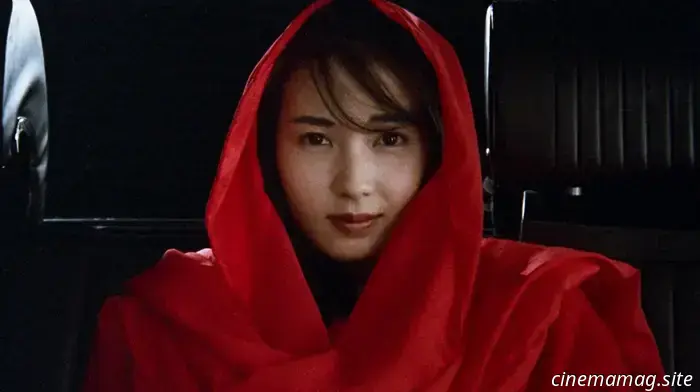
Mamoru Oshii’s first live-action film, The Red Spectacles, is a bewildering sci-fi experiment.
When not solely acting as a creator of imagery, Mamoru Oshii primarily functions as a worldbuilder. Regarded as one of Japan's leading multimedia genre filmmakers, his artistic approach emphasizes "worldview, story, characters," resulting in the development of remarkable alternate realities—imaginative futures, divergent histories, and wholly unfamiliar dreamscapes—that he frequently feels the need to revisit over time. Although less renowned than the cyberpunk realms of Ghost in the Shell, Patlabor, and Avalon—each of which he has returned to for sequels and spinoffs that expand their narratives and philosophical questions—the captivating “Kerberos saga” stands out as an alternative history project that encompasses numerous films, novels, radio dramas, and manga over several decades.
The central concept of “Kerberos”—subtly embedded in background elements and supplementary materials—presents a witty take on speculative historical materialism: it posits that in a timeline where Germany triumphed over Japan in World War II, Japan's 20th-century experience would not have varied significantly. Subjected to nuclear devastation, occupation, Western influence, and coerced incorporation into a somewhat more authoritarian form of global capitalism, this version of Japan confronts the rise of urban crime and radical resistance provoked by its new lifestyle in the most genre-appropriate manner: through the establishment of an elite team of militarized, mechanized supercops to maintain order in Tokyo’s streets with an iron fist. The most formidable and fiercely committed warriors in Japan, these "wolves" are described as "loving justice" and "hating evil" so intensely that they often clash with more bureaucratic government entities and the public, largely due to their penchant for destroying public property and undertaking extrajudicial killings in the name of law and order. These are the saga’s supposed "heroes."
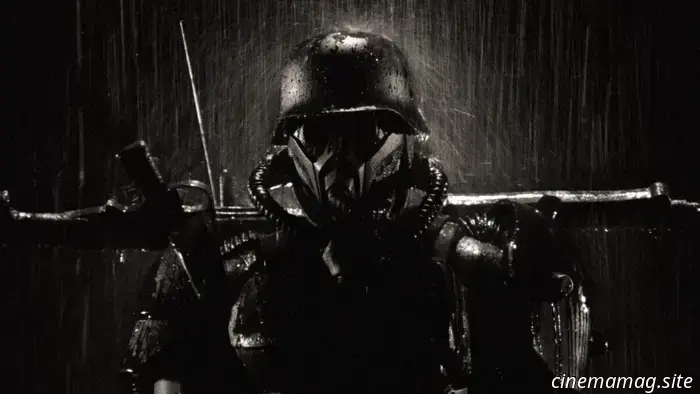
The “Kerberos Panzer Cops” are outfitted in the most recognizable sets of fascist-themed power armor since Darth Vader: rounded, jet-black metallic plates adorned with rivet-like spikes on their chests and shoulders, belt-fed light machine guns carried in hand and fired from the hip, mini riot shields attached to their arms, and Nazi-style stahlhelm helmets above gas masks with glowing crimson eyes. The visually striking yet unsettling appearance of the Kerberos cop plays a significant role in maintaining the enduring cult status of the franchise’s most popular and sole animated film, the 1999 feature Jin-Roh: The Wolf Brigade—directed by Hiroyuki Okiura and based on a screenplay by Oshii—a grim, violent political thriller that epitomizes the aesthetics of gritty realism in animation to a remarkable extent.
The Red Spectacles—the origin of the Kerberos saga and Mamoru Oshii’s 1987 live-action debut—will be familiar to fans of Jin-Roh for the initial ten minutes. The film opens with a flurry of explanatory intertitles and a barrage of action that is played so earnestly against its clearly restricted budget that it almost borders on absurdity: in the 1990s, the Japanese government turns against the Kerberos cops due to a scandal involving the killing of a civilian over a minor infraction. Refusing to disarm—because they love justice too dearly!—Kerberos ultimately attempts a failed uprising against their own government. Its three elite members—Koichi Todome (Shigeru Chiba), Midori Washio (Machiko Washio), and Soichiro Toribe (Hideyuki Tanaka)—make a final stand at an abandoned warehouse by Tokyo Bay, with Koichi eventually leaving his two injured companions behind at their urging to escape via evac helicopter with the last Kerberos "protect gear" armor suit. He vows to return one day and ensure true justice is served.
From this straightforward introduction, the film unexpectedly transitions into one of the most peculiar bait-and-switch tactics ever, moving from a conventional genre thriller to a surrealist, Brechtian satire that is so flippant and convoluted it makes Oshii’s earlier work—the enigmatic, delicate Angel’s Egg—appear akin to Disney productions.
When Koichi returns to Tokyo with an enigmatic suitcase in tow, he finds the city has changed drastically. The film stock transitions from vibrant colors to stark black and white; he quickly realizes he is out of place amidst the barren, blocky, textureless architecture and eerily quiet, empty streets enveloped in perpetual dark. On posters and billboards, the face of a mysterious woman (Mako Hyodo, who voiced the protagonist in Angel’s Egg) gazes at Koichi with an inquisitive and accusatory expression reminiscent of Big Brother. Shot in tight quarters, with angular asymmetric framing and bare soundstage interiors, The Red Spectacles stands as the most claustrophobic film by the typically expansive Oshii.
The appearance of other people in this nightmarish Tokyo does not make it anymore welcoming. In his quest to find missing comrades, Ko
Other articles
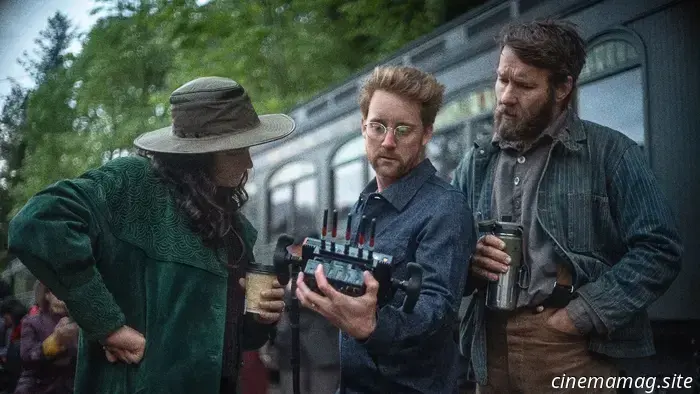 Train Dreams director Clint Bentley discusses natural lighting, narrative shaping, and the real-life influences behind the film.
Seen through the perspective of wandering logger Robert Granier (Joel Edgerton), Train Dreams follows America's evolution from a land of pioneers to an industrialized country during the first half of the 20th Century. Clint Bentley and Greg Kwedar, who have been writing partners for a long time, alternate in directing their projects: Kwedar was at the helm for Transpecos in 2016 and Sing Sing last year.
Train Dreams director Clint Bentley discusses natural lighting, narrative shaping, and the real-life influences behind the film.
Seen through the perspective of wandering logger Robert Granier (Joel Edgerton), Train Dreams follows America's evolution from a land of pioneers to an industrialized country during the first half of the 20th Century. Clint Bentley and Greg Kwedar, who have been writing partners for a long time, alternate in directing their projects: Kwedar was at the helm for Transpecos in 2016 and Sing Sing last year.
 Take an initial look at the Red Sonja New Year’s Special 2025.
Next month, the She-Devil with a Sword will welcome the new year as Dynamite Entertainment publishes Red Sonja New Year’s Special 2025, and you can preview the one-shot ahead of its release…
Take an initial look at the Red Sonja New Year’s Special 2025.
Next month, the She-Devil with a Sword will welcome the new year as Dynamite Entertainment publishes Red Sonja New Year’s Special 2025, and you can preview the one-shot ahead of its release…
Mamoru Oshii’s first live-action film, The Red Spectacles, is a bewildering sci-fi experiment.
When he isn't solely focused on creating images, Mamoru Oshii is primarily a worldbuilder. As one of Japan's leading multimedia genre directors, his creative philosophy of “worldview, story, characters” has resulted in the development of visionary alternate realities—possible futures, different pasts, and entirely foreign dream landscapes—that he frequently feels a need to revisit over time.