

At the start of the 1969 film On Her Majesty’s Secret Service, George Lazenby, stepping in for Sean Connery’s instantly recognizable James Bond, looks directly at the audience, grins, and remarks, “This never happened to the other fella.” There has long been intense debate among Bond enthusiasts about whether Bond is the same character across various films, even when played by different actors, or if he is merely a codename. The actual truth is of little significance, but imagine witnessing the last thoughts of Sean Connery’s James Bond as he is replaced by a new face, both on and off the screen. Envision the surreal dream that might unfold as he fades into obscurity, struggling to recall the faces of his lovers amidst a flurry of fractured memories, including the one who tried to kill him last. By blending these images in your mind, you’re beginning to grasp the essence of Bruno Forzani and Hélène Cattet’s latest film, Reflection in a Dead Diamond.
This married duo's latest sensory experience follows former spy John D. (Fabio Testi, who bears a striking resemblance to Sean Connery) as he spends his last days in a lavish hotel. Soon, he becomes captivated by his neighbor, a woman who brings to mind a lost love. As he observes her, he finds himself entangled in a conspiracy that seems connected to her and a diamond. Or is it? Could it all be the fantasy of an elderly man in decline? The specifics of Reflection in a Dead Diamond are secondary; Forzani and Cattet focus on the aesthetics of James Bond (alongside OSS films and Danger: Diabolique) to explore the nuances of memory. The diamond acts as a metaphor for how fragmented minds reconstruct their pasts. They cleverly weave in elements of Bond mythology, both onscreen and off: John D.’s great love is a woman named Serpentik, portrayed by different actresses, and he encounters posters and novels that depict him yet feature another actor in the role—all illustrating memory loss in a distinctively Forzani and Cattet manner.
Reflection in a Dead Diamond is a mesmerizing sensory journey. Visually stunning, it pays homage to numerous cinematic influences while distinctly maintaining their unique style. The film also marks their most playful work to date. While it’s not a spoof, it playfully pokes fun at spy film tropes. They ventured into action filmmaking with an exhilarating car chase through the winding European hills and an intense bar fight. Reflection in a Dead Diamond doesn’t indicate a shift in tone but rather shows the filmmakers in their element.
Before its release, I had the opportunity to discuss the film with them, exploring the idea of “cinematic orgasms” and their efforts to maintain their voices while honoring their favorite filmmakers. Their collaborative dynamic extends beyond film, as they eagerly complete each other’s thoughts.
[Hélène Cattet joined the interview midway.]
The Film Stage: Your films are intriguing because, in less capable hands, they might be reduced to mere pastiche. You both clearly pay tribute to cinematic worlds that precede you, yet your work undeniably feels unique. How have you achieved this balance while preserving your distinct voice?
Bruno Forzani: It’s about several factors. Primarily, we draw on the distorted memories of the films we've seen. We start with a concept and then select genres that best express that theme. For instance, with Amer and Strange Color, we focused on elements of fantasy, desire, and the body, with Giallo being the ideal genre to convey that. Reflection in a Dead Diamond centers on individuals who cherish beauty yet ultimately ruin it—a man who loved the world yet caused destruction. We saw James Bond as a fitting entry point, having spent 50 years attempting to save the world but perhaps making it worse instead. So, the subject comes first, followed by the genre; for us, it's not really pastiche since we use the genre to tell our stories.
In Amer, there’s a scene of the girl walking past bikers, inspired by a Pinku Eiga film by Masuru Konuma. After seeing a documentary about him, we recalled a sequence where a woman walked in front of the Yakuza. In our memory, that scene felt extensive and filled with tension. However, when we revisited it for Amer, it turned out to be very brief—only three seconds. In our recollection, it transformed into something entirely different, elongated and amplified, resulting in the scene in our film.
The title, Reflection in a Dead Diamond, not only evokes a forgotten Bond tale but also perfectly captures the film’s exploration of fractured memories. How did you arrive at that title?
BF: Exactly that: we constructed the film like a diamond, featuring multiple layers. Depending on your perspective, you see different images and reflections. We drew inspiration from Satoshi Kon, particularly his writings in Perfect Blue and Millennium Actress
Other articles
.jpg) 4K Ultra HD Bewertung – Caught Stealing (2025)
Caught Stealing, 2025. Directed by Darren Aronofsky. Featuring Austin Butler, Regina King, Zoë Kravitz, Matt Smith, Liev Schreiber, Vincent D’Onofrio, Benito Martínez Ocasio, Griffin Dunne, and Carol Ka…
4K Ultra HD Bewertung – Caught Stealing (2025)
Caught Stealing, 2025. Directed by Darren Aronofsky. Featuring Austin Butler, Regina King, Zoë Kravitz, Matt Smith, Liev Schreiber, Vincent D’Onofrio, Benito Martínez Ocasio, Griffin Dunne, and Carol Ka…
 The 13 Best TV Finales We've Ever Witnessed, Listed in Order
Here are the 13 best TV finales we've experienced.
The 13 Best TV Finales We've Ever Witnessed, Listed in Order
Here are the 13 best TV finales we've experienced.
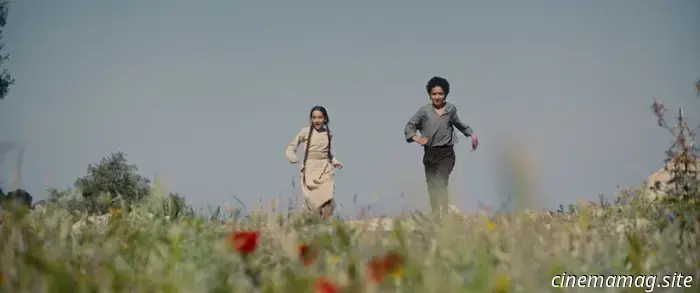 Exclusive Palestine 36 Poster and Clip: Palestine’s Submission for the Oscars Portrays a Grand Story of Resistance
Exclusive Palestine 36 Poster and Clip: Palestine’s Submission for the Oscars Portrays a Grand Story of Resistance
Exclusive Palestine 36 Poster and Clip: Palestine’s Submission for the Oscars Portrays a Grand Story of Resistance
 Pre-orders are now open for the G.I. Joe Classified Series Arctic Assault H.I.S.S.
If you didn't get a chance to participate in Hasbro's initial G.I. Joe Classified Series HasLab project and have a void in your Cobra ranks for a HISS tank, you're in luck (assuming you're okay with a repainted version)...
Pre-orders are now open for the G.I. Joe Classified Series Arctic Assault H.I.S.S.
If you didn't get a chance to participate in Hasbro's initial G.I. Joe Classified Series HasLab project and have a void in your Cobra ranks for a HISS tank, you're in luck (assuming you're okay with a repainted version)...
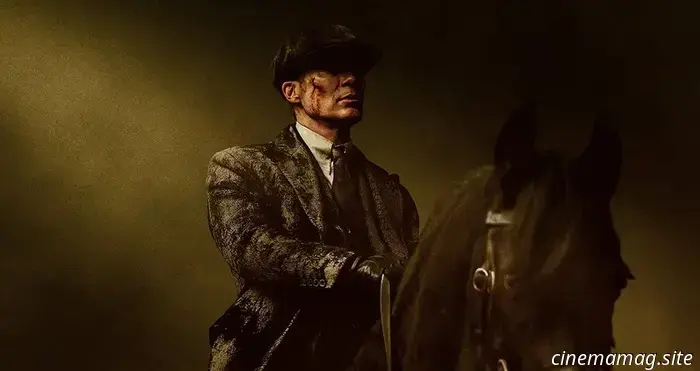 Netflix has scheduled the release of Peaky Blinders: The Immortal Man for March.
Netflix has made an official announcement regarding the March release of Peaky Blinders: The Immortal Man, both in theaters and on streaming. This film serves as the big-screen continuation of Steven Knight's highly praised TV series, featuring Oscar-…
Netflix has scheduled the release of Peaky Blinders: The Immortal Man for March.
Netflix has made an official announcement regarding the March release of Peaky Blinders: The Immortal Man, both in theaters and on streaming. This film serves as the big-screen continuation of Steven Knight's highly praised TV series, featuring Oscar-…
 Meilleur casino en ligne 2026 : le classement des 10 premiers !
Découvrez notre choix des meilleurs casinos en ligne ! Un comparatif des 10 sites les plus performants du moment, basé sur des critères de sélection établis par des experts !
Meilleur casino en ligne 2026 : le classement des 10 premiers !
Découvrez notre choix des meilleurs casinos en ligne ! Un comparatif des 10 sites les plus performants du moment, basé sur des critères de sélection établis par des experts !
At the beginning of 1969’s On Her Majesty’s Secret Service, George Lazenby, who took over from Sean Connery's legendary portrayal of James Bond, gazes at the camera, smiles, and remarks, “This never happened to the other fella.” There has long been a debate among Bond enthusiasts regarding whether Bond is indeed the same character across different films, with various actors portraying him.