
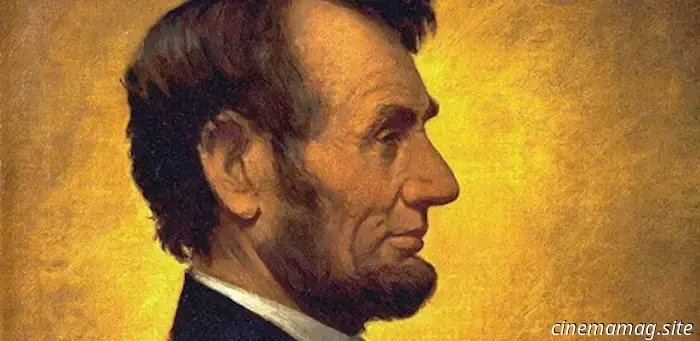
5 Unpleasant Facts About Abraham Lincoln That Are Often Overlooked
Abraham Lincoln is considered an American hero, albeit a flawed one. As we honor him, it is essential to recognize some harsh realities that reflect the era in which our 16th president lived.
Lincoln took a courageous and bold stance for his time, and indeed, he was more progressive than many of his white peers.
However, it is crucial to understand our nation’s true history rather than just the most uplifting aspects. Below are some uncomfortable truths about Lincoln that complement his commendable qualities.
Lincoln Prioritized Preserving the Union Over Ending Slavery
Lincoln’s primary objective during his presidency, which commenced just before the Civil War in 1861, was to maintain the Union—not to emancipate slaves.
Christopher Bonner, a historian at the University of Maryland, states in Netflix’s documentary Amend: “Lincoln recognizes that slavery is wrong, which is a commendable start. Yet he asserts that if he could save the Union without freeing any slaves, he would do it.”
Smith explains that Lincoln was focused on restoring the South and would do whatever it took to achieve victory, even if it meant sacrificing Black Americans.
You don’t have to take the documentary’s word for it. In a letter dated August 22, 1862, Lincoln wrote: “If I could save the Union without freeing any slave, I would do so; and if I could save it by freeing all the slaves, I would do it; and if I could save it by freeing some and leaving others alone, I would also do that.”
He Did Not Always Consider People of Color as Equals
According to Columbia University historian Eric Foner, in 1861, Lincoln invited a group of African American leaders to the White House, but instead of discussing racial equality, he emphasized their inferiority.
In Amend, Pedro Pascal reads Lincoln’s words from that day: “In my judgment, your race suffers the greatest wrong inflicted on any people. But even when you cease to be slaves, you remain far from being on an equal footing with the white race.”
Lincoln Attributed the Civil War to Black Americans
In the same address, Lincoln went on to state: “Consider what we know to be the truth; without your race among us, there could not be war.”
This can also be validated through primary sources, such as “Lincoln’s Address on Colonization to a Deputation of Colored Men.”
Lincoln Intended to Relocate Freed Black Americans to a Colony in Central America
Lincoln expressed: “There is an unwillingness among our people, harsh as it may be, for you, free colored people, to remain with us. Therefore, it is better for both of us to be separate. The place I envision for a colony is Central America.”
At one point, Lincoln sought to completely remove Black people from the U.S.
Bonner notes that Lincoln's actions aimed to address the unsettling perception among Black individuals that they might not truly belong in this country. He acknowledged that while equality is the nation’s ideal, actual racial equality was unlikely, urging acceptance of this reality.
Further Information
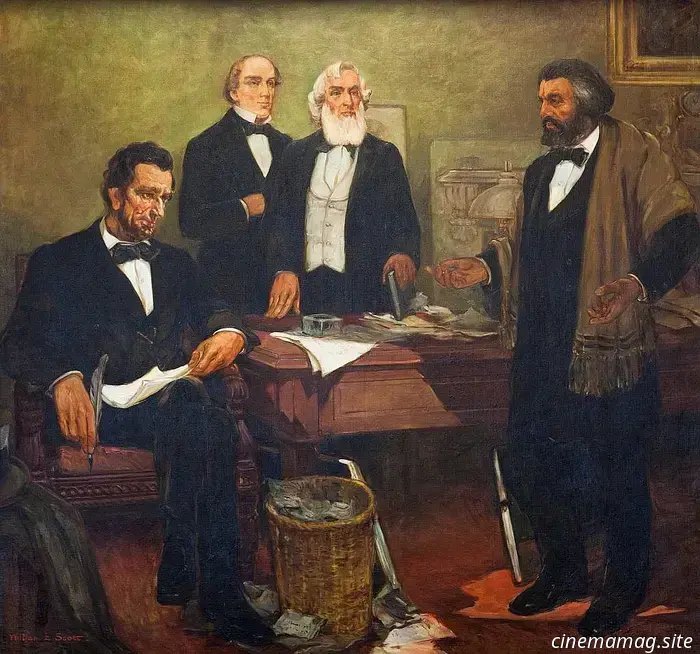
A mural depicting Abraham Lincoln and Frederick Douglass, painted by William Edouard Scott, is located at the Recorder of Deeds building, constructed in 1943.
Frederick Douglass, the renowned abolitionist who shared his experiences as a formerly enslaved person throughout the country, was infuriated with Lincoln, according to Bonner.
His strategy was to persuade Lincoln that he needed Black Americans to secure victory in the war, thereby encouraging white Americans to recognize Black Americans as equals.
Douglass argued that Lincoln could not win the war without abolishing slavery and emphasized that Black men were vital to the war effort, stating that those who would be freed must fight. His reasoning was that if Black men sacrificed their lives for the country, they deserved citizenship. (The painting above illustrates him advocating for Black men to be allowed to fight for the Union Army.)
Bonner points out, “Douglass was convinced they would demonstrate their citizenship, merit rights, and achieve legal equality.”
The Primary Reason Abraham Lincoln Signed the Emancipation Proclamation? To Win the War
Douglass' approach succeeded; although Lincoln could not yet picture the United States as a biracial society, as Foner highlights, “his views would shift significantly over time.”
Foner further explains, “The Emancipation Proclamation was issued as a military strategy. It was intended to help win the war.”
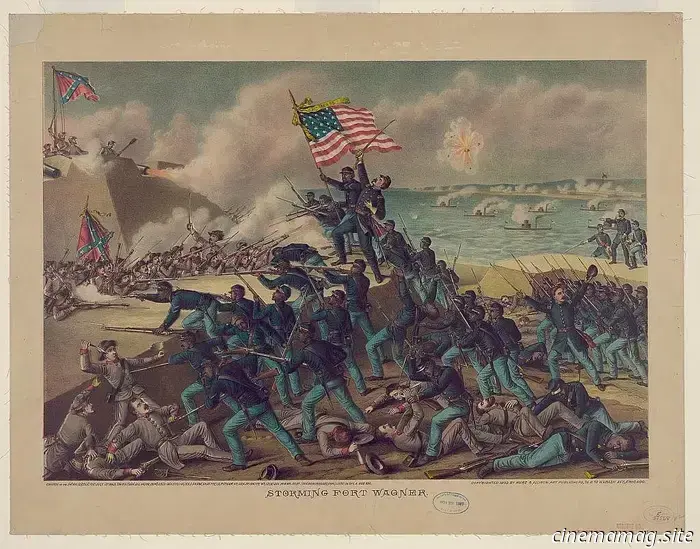
The painting shows the 54th Massachusetts Regiment, the first all-Black Union regiment, fighting for their country and freedom.
Disagree?
You are welcome to express your objections in the comments and share sources. We appreciate open discussions about our nation’s history.
Thank You for Reading This List of Undiscussed Unflattering Facts About Abraham Lincoln
Other articles
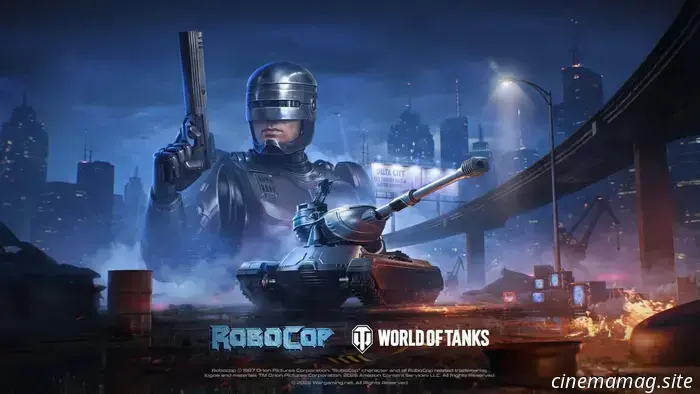 RoboCop to enforce the law in World of Tanks with a new special Battle Pass.
Wargaming has announced that the legendary RoboCop will be introduced to World of Tanks in a unique, limited-time partnership starting on January 15th. This event will continue until January 29th, allowing players to...
RoboCop to enforce the law in World of Tanks with a new special Battle Pass.
Wargaming has announced that the legendary RoboCop will be introduced to World of Tanks in a unique, limited-time partnership starting on January 15th. This event will continue until January 29th, allowing players to...
 The trailer and poster for the sci-fi thriller The Infinite Husk have been released.
Chroma has unveiled a trailer for The Infinite Husk, an upcoming sci-fi thriller directed by Aaron Silverstein. The film follows an alien consciousness in exile as it embarks on a perilous mission to E…
The trailer and poster for the sci-fi thriller The Infinite Husk have been released.
Chroma has unveiled a trailer for The Infinite Husk, an upcoming sci-fi thriller directed by Aaron Silverstein. The film follows an alien consciousness in exile as it embarks on a perilous mission to E…
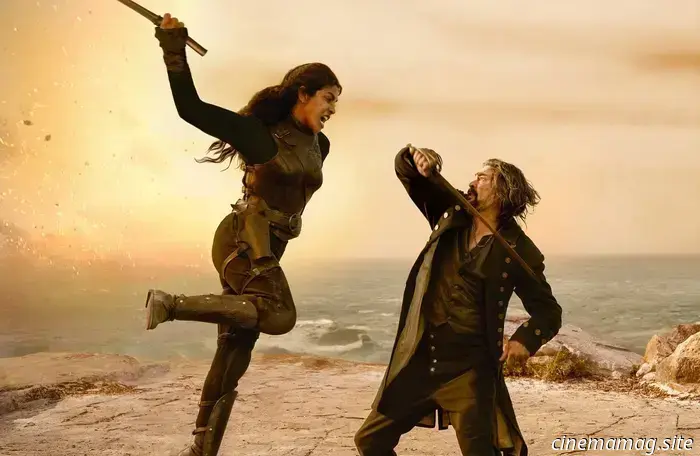 Get your first glimpse of the swashbuckling action thriller The Bluff featuring Priyanka Chopra Jonas.
Amazon MGM Studios has unveiled a series of first-look images from Frank E. Flowers' action-adventure film The Bluff. The movie stars Priyanka Chopra Jonas in the role of Ercell, a former pirate...
Get your first glimpse of the swashbuckling action thriller The Bluff featuring Priyanka Chopra Jonas.
Amazon MGM Studios has unveiled a series of first-look images from Frank E. Flowers' action-adventure film The Bluff. The movie stars Priyanka Chopra Jonas in the role of Ercell, a former pirate...
 Exclusive Interview – Greenland 2: An Interview with Migration Director Ric Roman Waugh
Robert Kojder converses with Ric Roman Waugh, the director of Greenland 2: Migration… If you've watched a film featuring Gerard Butler, there's a strong possibility that you have also seen one directed by Ric Roman…
Exclusive Interview – Greenland 2: An Interview with Migration Director Ric Roman Waugh
Robert Kojder converses with Ric Roman Waugh, the director of Greenland 2: Migration… If you've watched a film featuring Gerard Butler, there's a strong possibility that you have also seen one directed by Ric Roman…
.jpg) Blu-ray Review – Sorority Babes in the Slimeball Bowl-O-Rama (1988)
Sorority Babes in the Slimeball Bowl-O-Rama, 1988. Directed by David DeCoteau. Featuring Andras Jones, Linnea Quigley, Robin Stille, Brinke Stevens, George ‘Buck’ Flower, Hal Havins, John Stuart Wildman…
Blu-ray Review – Sorority Babes in the Slimeball Bowl-O-Rama (1988)
Sorority Babes in the Slimeball Bowl-O-Rama, 1988. Directed by David DeCoteau. Featuring Andras Jones, Linnea Quigley, Robin Stille, Brinke Stevens, George ‘Buck’ Flower, Hal Havins, John Stuart Wildman…
5 Unpleasant Facts About Abraham Lincoln That Are Often Overlooked
Abraham Lincoln was an American icon — though not without his flaws. While we honor him, it's also important to recognize certain harsh realities that represent the era in which he lived.