
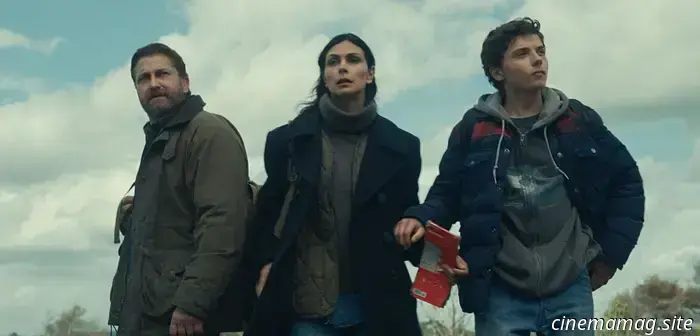
Exclusive Interview – Greenland 2: An Interview with Migration Director Ric Roman Waugh
Robert Kojder interviews Ric Roman Waugh, the director of Greenland 2: Migration…
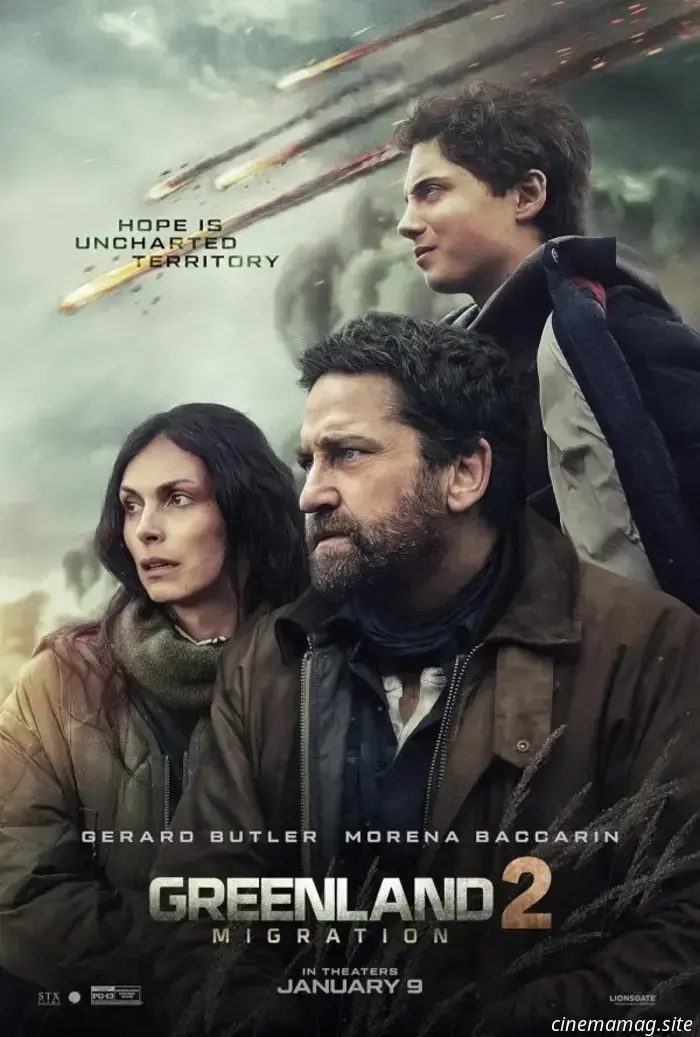
If you’ve seen a movie featuring Gerard Butler, there’s a high likelihood that you’ve also watched one directed by Ric Roman Waugh. He can be considered a muse for the filmmaker, as they have collaborated on various action-driven projects, each distinct yet sharing a focus on the human experience alongside spectacle. One of those films is Greenland, a character-centered disaster movie released during the pandemic, depicting a comet approaching Earth and instigating an extinction-level event.
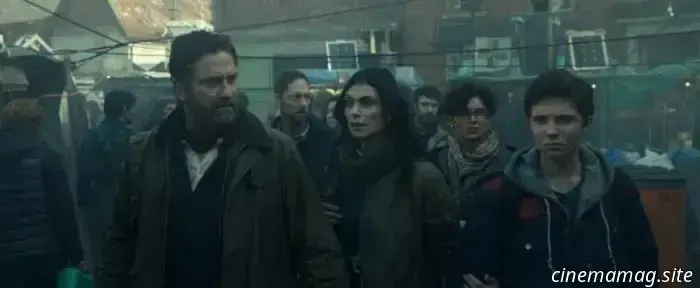
That film was a hopeful and intense experience, much like its sequel, Greenland 2: Migration, which follows the Garrity family and other survivors living underground as they embark on yet another treacherous adventure filled with high stakes and tension. The visual effects are once again brilliantly executed, and the film is packed with action and emotional depth. The noteworthy aspect is its release amidst a more robust theatrical landscape.
It was a pleasure to speak with Ric Roman Waugh (now for the second time, having previously discussed Kandahar, which also starred Gerard Butler), and we revisited our mutual appreciation for the communal cinema experience. We also talked about the thought process involved in imagining the aftermath of such a comet, with real-world parallels, and explored father-son dynamics, with Jojo Rabbit breakout Roman Griffin Davis now portraying Gerard Butler’s on-screen son. Engaging with Ric is genuinely enjoyable (he clearly has a passion for his work, typically releasing a film annually), so please enjoy the interview below:
This movie is fantastic; it offers both spectacle and emotion.
Thank you, Robert.
We chatted a couple of years back regarding Kandahar.
I remember!
Yes! I recall our connection over our love for the theatrical experience. Greenland was released during the unusual landscape of 2020 when theaters were technically open, yet few people felt comfortable returning. How does it feel for Migration to be receiving a wide release in a healthier theatrical environment?
It’s incredible. What’s interesting is how the two films essentially cap what happened to our theatrical experience. Greenland was intended for IMAX and Dolby Vision... we were all set to go, and then the pandemic hit and everything was halted. I was fortunate that Adam Fogelson was bold enough not to follow the trend of postponing releases but instead went full steam ahead. We secured a significant streaming deal with HBO, attracting a lot of viewers as we navigated the next five years trying to restore the theatrical business. Now, it’s really thriving. It feels great to have a movie made for the theatrical experience. I appreciate you, Robert, for bringing this up because it will be enjoyable to experience it with an audience and, hopefully, invoke that sense of human connection we aimed for in the first film amidst a large-scale story.
Speaking of which, the visual effects are notably impressive throughout. There must have been considerable pressure regarding how the impact zone of Clarke should appear when the characters finally arrive. What conversations did you have with your visual effects team about that depiction?
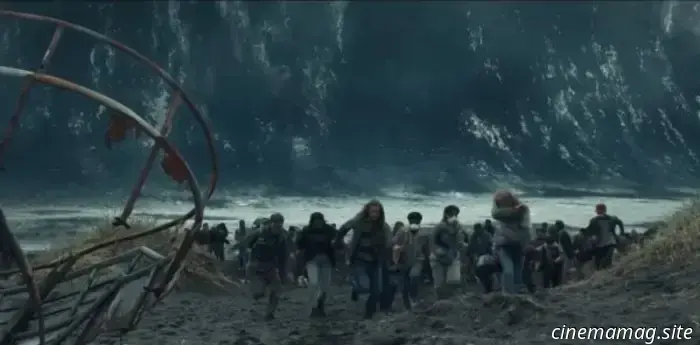
I always aim for authenticity. We’re dealing with theories from millions of years ago regarding the first extinction event. Simultaneously, we examine modern advancements that, without proper safeguards, could lead to our destruction. We referenced Chernobyl and the consequences of radiation leaks. We also looked at the devastating fires in Australia at that time and how long it took for nature to recover. Additionally, we focused on the Younger Dryas event from 12,500 years ago, with theories about another comet impacting the polar ice cap, resulting in a 400-foot rise in sea levels, shaping various types of topography through erosion.
It was exciting to shake things up and create a new world based on as many scientific facts and theories as we could while also taking cinematic liberties where necessary. In the end, every species has had to migrate to survive since the dawn of time—leaving the safety of a bunker and traversing land and water, confronting war zones, even altering the landscape of the English Channel. It was enjoyable to create these distinct environments that felt real, original, and new, reminiscent of past explorers pondering what lay ahead.
Thank you for highlighting the scientific research behind this. I was curious about how much effort went into it. This is a hopeful film, which is intriguing given the apocalyptic setting that parallels our real-world issues. You seem aware of this, as reflected in your mentions of war zones.
Every film I create is told from the inside out, focusing on the characters’ perspectives and their internal journeys. Other films, like those directed by Roland Emmerich, approach the story from the outside in, emphasizing epic scope and various characters and vignettes. In contrast, my focus is on emotional integrity—what emotional journey are my characters on? What challenges do they face? The human experience: the first film dealt more with man versus man,
Other articles
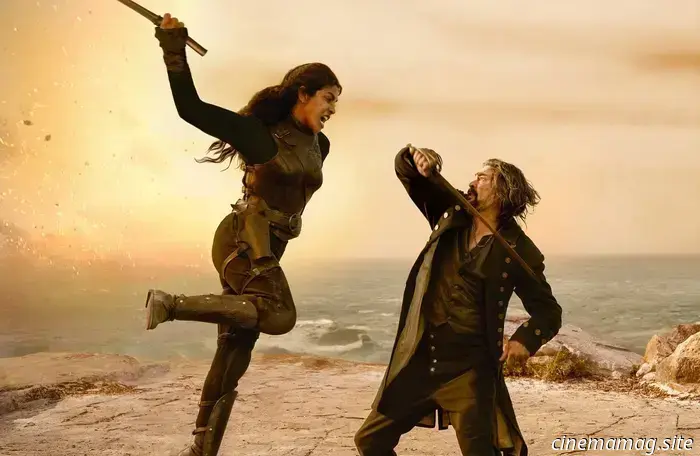 Get your first glimpse of the swashbuckling action thriller The Bluff featuring Priyanka Chopra Jonas.
Amazon MGM Studios has unveiled a series of first-look images from Frank E. Flowers' action-adventure film The Bluff. The movie stars Priyanka Chopra Jonas in the role of Ercell, a former pirate...
Get your first glimpse of the swashbuckling action thriller The Bluff featuring Priyanka Chopra Jonas.
Amazon MGM Studios has unveiled a series of first-look images from Frank E. Flowers' action-adventure film The Bluff. The movie stars Priyanka Chopra Jonas in the role of Ercell, a former pirate...
.jpg) Blu-ray Review – Sorority Babes in the Slimeball Bowl-O-Rama (1988)
Sorority Babes in the Slimeball Bowl-O-Rama, 1988. Directed by David DeCoteau. Featuring Andras Jones, Linnea Quigley, Robin Stille, Brinke Stevens, George ‘Buck’ Flower, Hal Havins, John Stuart Wildman…
Blu-ray Review – Sorority Babes in the Slimeball Bowl-O-Rama (1988)
Sorority Babes in the Slimeball Bowl-O-Rama, 1988. Directed by David DeCoteau. Featuring Andras Jones, Linnea Quigley, Robin Stille, Brinke Stevens, George ‘Buck’ Flower, Hal Havins, John Stuart Wildman…
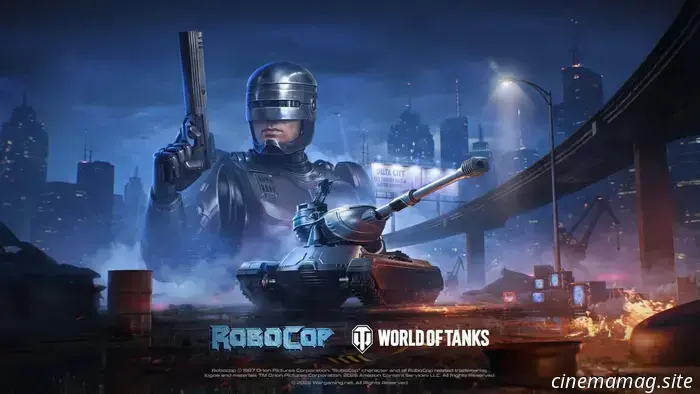 RoboCop to enforce the law in World of Tanks with a new special Battle Pass.
Wargaming has announced that the legendary RoboCop will be introduced to World of Tanks in a unique, limited-time partnership starting on January 15th. This event will continue until January 29th, allowing players to...
RoboCop to enforce the law in World of Tanks with a new special Battle Pass.
Wargaming has announced that the legendary RoboCop will be introduced to World of Tanks in a unique, limited-time partnership starting on January 15th. This event will continue until January 29th, allowing players to...
 The trailer and poster for the sci-fi thriller The Infinite Husk have been released.
Chroma has unveiled a trailer for The Infinite Husk, an upcoming sci-fi thriller directed by Aaron Silverstein. The film follows an alien consciousness in exile as it embarks on a perilous mission to E…
The trailer and poster for the sci-fi thriller The Infinite Husk have been released.
Chroma has unveiled a trailer for The Infinite Husk, an upcoming sci-fi thriller directed by Aaron Silverstein. The film follows an alien consciousness in exile as it embarks on a perilous mission to E…
 5 Unpleasant Facts About Abraham Lincoln That Are Often Overlooked
Abraham Lincoln was an American icon — though not without his flaws. While we honor him, it's also important to recognize certain harsh realities that represent the era in which he lived.
5 Unpleasant Facts About Abraham Lincoln That Are Often Overlooked
Abraham Lincoln was an American icon — though not without his flaws. While we honor him, it's also important to recognize certain harsh realities that represent the era in which he lived.
Exclusive Interview – Greenland 2: An Interview with Migration Director Ric Roman Waugh
Robert Kojder converses with Ric Roman Waugh, the director of Greenland 2: Migration… If you've watched a film featuring Gerard Butler, there's a strong possibility that you have also seen one directed by Ric Roman…