
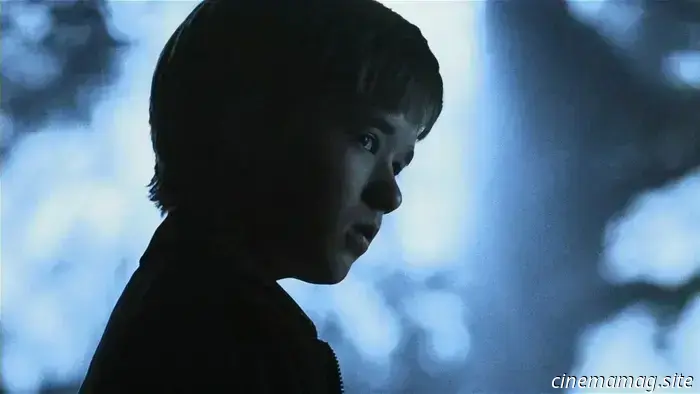
Eli Friedberg’s Top 10 First-Time Viewings of 2025
In the wake of The Film Stage’s collective list of the top 50 films of 2025, our contributors are presenting their individual top 10 selections as part of our year-end review.
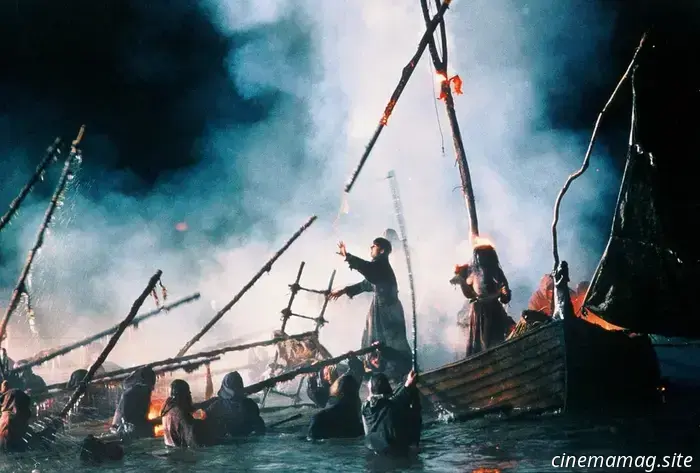
10. The Navigator: A Medieval Odyssey (Vincent Ward, 1988)
It’s rare, after watching countless movies over a lifetime, to stumble upon something so bizarre and otherworldly that it truly feels like an artifact from another dimension. Vincent Ward’s eccentric 80s fantasy adventure has familiar reference points; its premise of medieval English peasants inadvertently stepping through a time portal to 1980s New Zealand might evoke the absurdity of Terry Gilliam or the campy flair of Highlander, but Ward boldly infuses it with an intense focus on medieval themes and a wistful post-Christian longing reminiscent of Bergman or Tarkovsky, combined with the epic style of Ridley Scott. The historical context immediately imparts a sense of alienness to contemporary viewers with its meticulously authentic costumes, settings, dialects, music, and superstitions: the protagonists interpret visions believed to be sent by Jesus to a prophetic boy, and the film’s operatic audiovisual style frames these visions as serious and genuine as the characters perceive them. When they arrive in "our" world on a divinely announced quest, the narrative flips, presenting modernity—streetlights, highways, televisions, submarines—as equally inscrutable, awe-inspiring, and terrifying to farmers and artisans from six centuries ago. This approach is memorable, as Ward demonstrates a profound contemplation of how a 1300s metalworker would intellectualize and emotionally react to a contemporary auto body shop and its workers. It's a profound inquiry into reconciling vast ethnic and cultural memories, exploring the marvels and menaces of the present with wide-eyed wonder. Plus, it's an exhilarating adventure film, adding to its appeal.
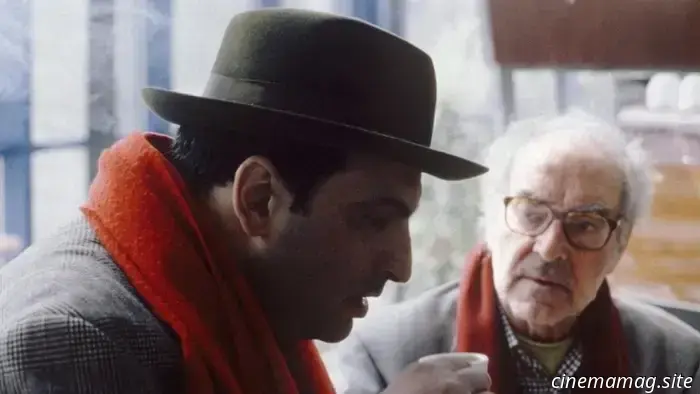
9. Notre Musique (Jean-Luc Godard, 2004)
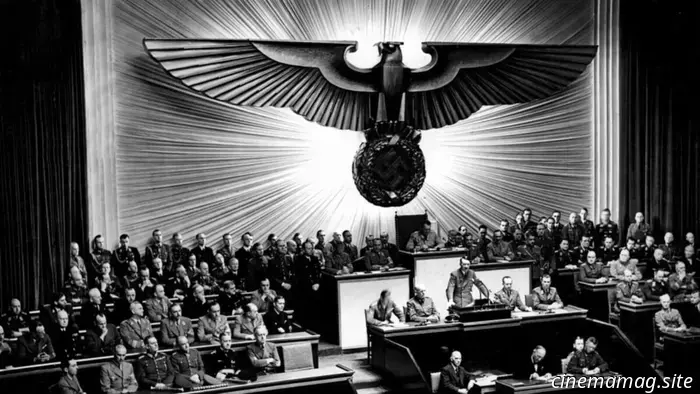
I’ve never hidden my indifference to Godard’s earlier works; I find his groundbreaking stylistic innovations largely academic, coupled with a snobbish blend of obscure irony and didacticism that, to me, feels more like pretentious hipsterism than true intellectual sophistication. Therefore, it’s surprising that Notre Musique, his somber and visually striking reflection on war, peace, and the lost dreams of utopia at the beginning of the 21st century, resonates with me as it does. The film’s themes are intricate—structured as a Dante-inspired triptych beginning with the “hell” of historical atrocities captured on film, characterizing the present as “purgatory” through a dense web of images and dialogues surrounding a Sarajevo-based international peace conference that ranges across film theory, semiotics, colonialism, the Bosnian War, and the Israeli-Palestinian conflict. Its effectiveness lies in Godard’s most open-hearted and uncertain tone, a prayer for peace that recognizes its ambiguity about what peace truly is or where it can be found in a world marred by violence.
Chantal Akerman once stirred controversy by accusing both the film and Godard of antisemitism, and though her claims bear weight, the criticism complicates the self-contradictory fabric interwoven within the film’s dialectical structure; critiques voiced by various characters about oversimplifying the Other could also apply to the film itself. Godard, fulfilling dual roles as director and actor, often leans towards introspective ambiguity behind the camera while adopting a didactic tone in front of it. “Truth has two faces,” states Palestinian poet Mahmoud Darwish in a striking monologue, and the film indeed functions as a cinematic exploration of binaries and contradictions—art versus violence, peace versus war, East versus West, European versus indigenous, analog versus digital, documentary versus fiction—that culminate in paradoxes, encapsulating the dizzying dual consciousness experienced in the postmodern age. Godard contends that binaries, borders, and conventional editing techniques fail to adequately portray a world filled with diverse perspectives and a contradictory humanity. His work embodies both antisemitism and philosemitism, parochialism and inclusivity, condescension and humility, spirituality and secularity, hope and despair, sentimentality and intellect, beauty and horror, sophistry and profundity. Ironically, it summarizes European thought—its critique and its concern. This marks a period in Godard’s career where he adeptly translates his unruly, inquisitive consciousness and array of cinematic influences into mesmerizing poetry, proving to be perhaps his most sincere example.
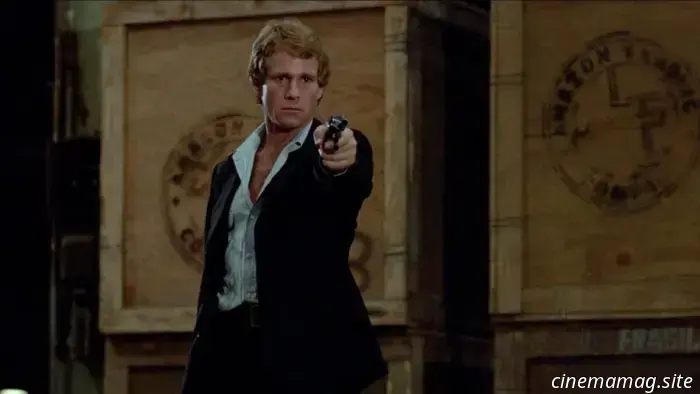
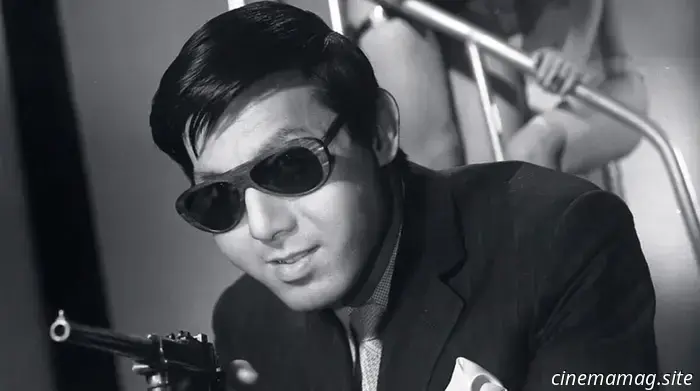
8. The Driver (Walter Hill, 1978)
Speaking of a limbo state! In the nocturnal capitalist landscape of The Driver, characters lack names; they’re defined by verbs, and if they push themselves hard enough, superlatives. This is literal: the film’s obsessively Process-driven characters have no names—just job titles (The Driver, The Detective, The


Other articles
 Exclusive Interview – Actor Pacharo Mzembe talks about his new sci-fi film Space/Time.
Actor Pacharo Mzembe has gained recognition for his versatile performances in film, television, and theatre, including roles in NBC’s popular series La Brea, Paramount Pictures’ Love and Monsters, and Amazon Prime’s Nautilus. H…
Exclusive Interview – Actor Pacharo Mzembe talks about his new sci-fi film Space/Time.
Actor Pacharo Mzembe has gained recognition for his versatile performances in film, television, and theatre, including roles in NBC’s popular series La Brea, Paramount Pictures’ Love and Monsters, and Amazon Prime’s Nautilus. H…
 Trailer for the mystery-thriller The Huntsman featuring Shawn Ashmore, Garret Dillahunt, and Elizabeth Mitchell.
Epic Pictures has unveiled a trailer for the forthcoming mystery thriller The Huntsman, directed by Kyle Kauwika Harris. The film is adapted from Judith Sanders' novel of the same title, with Shawn Ashmore playing the role of an IC…
Trailer for the mystery-thriller The Huntsman featuring Shawn Ashmore, Garret Dillahunt, and Elizabeth Mitchell.
Epic Pictures has unveiled a trailer for the forthcoming mystery thriller The Huntsman, directed by Kyle Kauwika Harris. The film is adapted from Judith Sanders' novel of the same title, with Shawn Ashmore playing the role of an IC…
Eli Friedberg’s Top 10 First-Time Viewings of 2025
In line with The Film Stage's compilation of the top 50 films of 2025, our contributors are presenting their individual top 10 lists as part of our year-end reflections. 10. The Navigator: A Medieval Odyssey (Vincent Ward, 1988) After watching thousands of films throughout one’s life, it's rare to encounter something as peculiar and otherworldly as this.