
Frankenstein Director Guillermo del Toro Believes We've Misunderstood the Romantics
Guillermo del Toro expresses that our perception of the Romantic literary movement is often overly simplistic, particularly regarding the classic Mary Shelley novel that inspired his film Frankenstein.
Del Toro aimed to capture the reckless and at times destructive essence of Shelley’s era in the initial segment of his Best Picture-nominated film, which ultimately evolves into a narrative about forgiveness.
“When people think of the Romantics, they envision Fabio carrying a woman,” the director remarked during a Q&A with film journalist Elvis Mitchell at the Sundance Film Festival on Monday. “In reality, they were almost like punks.”
“They were also consumed by obsession,” Mitchell noted. “They were fixated on the belief that none of them would live past 30, throwing themselves into every word they wrote, every dream—”
“Every experience,” del Toro added.
He then recounted the tumultuous story of poet Percy Bysshe Shelley and Mary Wollstonecraft Godwin, who would later write Frankenstein and marry Shelley.
“Just to remind everyone: Percy Shelley was married when he met 16-year-old Mary Shelley, and he swiftly fell deeply in love with her, as did she. When obstacles arose for their romance, he climbed the steps, broke into her room with a bottle of laudanum, urging her to ‘drink this and die,’ and then brandished a gun, threatening, ‘I’ll blow my brains out right now.’ That’s the essence of the romantics.”
Ultimately, they eloped instead. However, their struggles continued.
“They faced immense tragedy—three miscarriages in a row, the suicide of his wife,” del Toro elaborated.
According to del Toro, Shelley penned Frankenstein following these miscarriages, which might relate to the novel’s theme of creating life without conventional birth.
Percy Bysshe Shelley was 22 when he began his relationship with Mary. He passed away before reaching 30, while she lived to be 53.
Guillermo del Toro on Remaining Faithful to the Romantics in Frankenstein
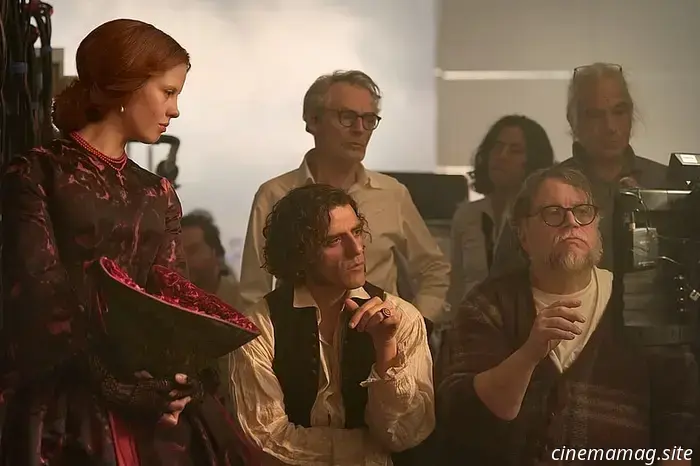
(From left) Mia Goth as Elizabeth, Cinematographer Dan Laustsen, Oscar Isaac as Victor Frankenstein, and writer-director Guillermo del Toro with crew members on the set of Frankenstein. Photo credit: Ken Woroner/Netflix © 2025.
Historically, many portrayals of Dr. Victor Frankenstein have depicted him as emotionless and grim; however, Guillermo del Toro sought to present him as a Byronic hero—characters crafted by Romantic author Lord Byron, who are typically talented and ambitious but deeply flawed and dismissive of tradition. Del Toro’s Dr. Frankenstein, portrayed by Oscar Isaac, embodies both charm and villainy, swiftly moving and shattering bodies in his quest to create a new one.
The Romantics also informed del Toro’s conceptualization of The Creature, played by Jacob Elordi in an Oscar-nominated role.
Unlike the bolt-necked Frankenstein from James Whale’s films of the 1930s, characterized by Boris Karloff, Elordi’s Creature is both grotesque and beautiful.
As del Toro has previously mentioned in a cover story from MovieMaker regarding him and Frankenstein, his adaptation ultimately tells a tale of forgiveness, drawing inspiration from the life of Christ. He recalls first connecting religion and film, beauty and suffering as a young child.
“At seven years old, I watched the original James Whale film one Sunday after church,” he shared with Mitchell. “I was raised in a very strict Catholic manner—by ‘strict,’ I mean my grandmother was like Carrie’s mom. She would place bottle caps upside down in my shoes to make me bleed for Jesus.
“I was a spokesperson for the Virgin Mary. I was an altar boy. One day, following church on a Sunday, I discovered that monster movies were shown on TV all day. I watched this incredible film, and in that moment, I found Jesus: when Boris Karloff crosses the threshold, he became my Messiah.”
Main image: Elvis Mitchell, left, and Guillermo del Toro at The Elvis Mitchell Suite at Sundance 2026, by Moviemaker. For more coverage of Sundance 2026, click here.
Other articles
 How Pirate Films Influenced a New Type of Digital Adventure - MovieMaker Magazine
Pirates have been a box office sensation for nearly a century. Errol Flynn was brandishing swords and flashing his charming smile in the 1930s, and here I am,
How Pirate Films Influenced a New Type of Digital Adventure - MovieMaker Magazine
Pirates have been a box office sensation for nearly a century. Errol Flynn was brandishing swords and flashing his charming smile in the 1930s, and here I am,
 13 Awesome Movies from the 2000s That Only the Cool Kids Recall
Here are some 2000s films that only the cool kids recall, ranging from Aquamarine to Not Another Teen Movie.
13 Awesome Movies from the 2000s That Only the Cool Kids Recall
Here are some 2000s films that only the cool kids recall, ranging from Aquamarine to Not Another Teen Movie.
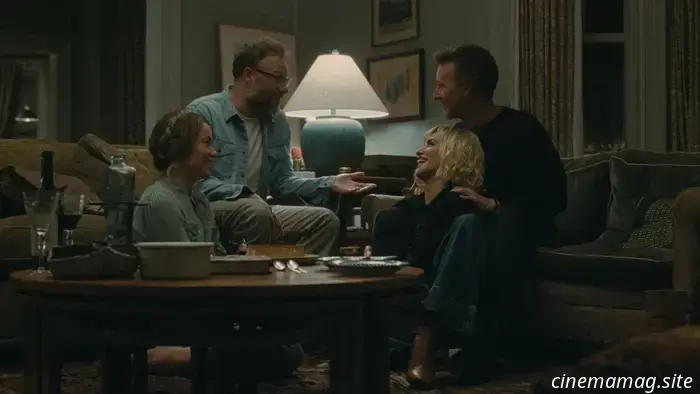 Sundance Review: The Invite is an Outstanding Romantic Comedy
One of the highlights of Sundance is witnessing a film generate so much excitement that it becomes the main topic of conversation at the festival. As demand for seats rises, an exhilarating atmosphere surrounds those screenings. Similarly, gaining entry to a screening of Celine Song’s Past Lives turned into a formidable challenge, just as
Sundance Review: The Invite is an Outstanding Romantic Comedy
One of the highlights of Sundance is witnessing a film generate so much excitement that it becomes the main topic of conversation at the festival. As demand for seats rises, an exhilarating atmosphere surrounds those screenings. Similarly, gaining entry to a screening of Celine Song’s Past Lives turned into a formidable challenge, just as
 An Exclusive Look at the Newest Street Fighter Film - MovieMaker Magazine
While many of us know the exceptionally popular Street Fighter arcade game, the origins of this franchise can be traced back to 1987. Since
An Exclusive Look at the Newest Street Fighter Film - MovieMaker Magazine
While many of us know the exceptionally popular Street Fighter arcade game, the origins of this franchise can be traced back to 1987. Since
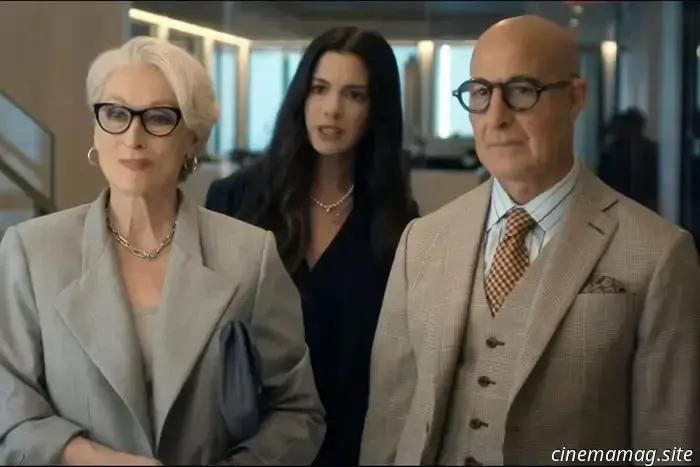 The runway makes a comeback in the trailer for The Devil Wears Prada 2.
Miranda Priestly and Andy Sachs come together again in the official trailer for The Devil Wears Prada 2, offering us a glimpse of Emily Blunt's return, along with Miranda's former assistant, who is now a rival…
The runway makes a comeback in the trailer for The Devil Wears Prada 2.
Miranda Priestly and Andy Sachs come together again in the official trailer for The Devil Wears Prada 2, offering us a glimpse of Emily Blunt's return, along with Miranda's former assistant, who is now a rival…
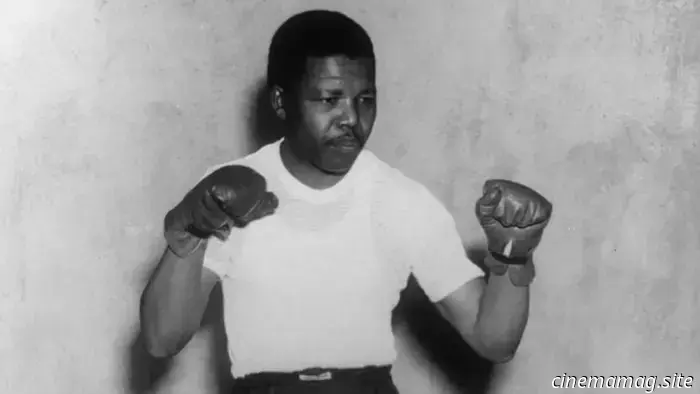 Antoine Fuqua Brings to Light Nelson Mandela's 27 Lost Years in Troublemaker
For 27 years, the white apartheid regime in South Africa sought to separate Nelson Mandela from the outside world, detaining him as a political prisoner — mainly in the
Antoine Fuqua Brings to Light Nelson Mandela's 27 Lost Years in Troublemaker
For 27 years, the white apartheid regime in South Africa sought to separate Nelson Mandela from the outside world, detaining him as a political prisoner — mainly in the
Frankenstein Director Guillermo del Toro Believes We've Misunderstood the Romantics
Guillermo del Toro claims that our perception of the Romantic literary movement is overly idealized, which gave rise to the classic novel by Mary Shelley that served as inspiration.