
Sundance Review: Hot Water Provides a Unique Perspective on a Well-Known Genre
Taking a genre known to Sundance audiences and crafting something unique, if not entirely innovative, Ramzi Bashour’s road-trip drama *Hot Water* uncovers subtle humor in the disconnect between two characters who, despite sharing a home and DNA, feel estranged from each other.
Layal (Lubna Azabal) is a Lebanese professor residing in Indiana, where she teaches an Arabic class to students who seem to frustrate her at every opportunity. She is on edge and doing her utmost to maintain composure. Recently, she has taken an interest in her well-being by swimming, quitting smoking, and attempting to meditate in her car between classes. Her 17-year-old son, Daniel (played by 25-year-old Daniel Zolghadri), has just been expelled from school following an altercation at a hockey game, leaving Layal feeling desperate. The film opens with Daniel in the hospital, recovering from a concussion and other injuries.
Because Daniel is unable to fly to his father in Santa Cruz, his mother agrees to drive him halfway from Indiana to Colorado. Their journey is marked by multiple stops and some confusion over regional customs, such as the meaning of "chicken-fried steak." When Daniel’s father, Anton, is unable to meet them in Colorado, he connects them with an old friend, Sasha (Dale Dickey), who takes them to a hot spring and shares a thought-provoking quote: “God does not count against you time spent in hot water.”
Shot in various locations across the Midwest, Las Vegas, and California, *Hot Water* was inspired by a road trip Bashour took after studying abroad in the U.S. It encapsulates a sense of longing for one’s homeland. With a restrained tone that often finds humor in Layal’s determined and compulsive behavior, it effectively utilizes its settings, imbuing the narrative with a distinct sense of both place and dislocation. Layal maintains ties to her community in Beirut, including caring for a sick mother, while living abroad.
Despite references to difficulties concerning the father, Anton (who has wrestled with his own issues and may not be in the best position to fulfill his parental role), the film mostly relegates these challenges to the past, allowing traumas to surface only in casual dialogue. Much remains unspoken as Layal copes with the present. The dynamics of academia are alluded to, particularly in an early scene with an disgruntled student, but *Hot Water* does not clarify whether she faces additional stress due to the economic realities of contingent faculty work. The film shines in its quieter moments in Indiana, depicting Layal as she displays authentic anxiety.
*Hot Water* contains no grand declarations or transformative experiences, especially for Daniel, who departs from his friends with little resistance. The film primarily aligns with Layal as she balances roles of mother, caregiver, and daughter—while grappling with her feelings about being thousands of miles from home. Despite the road montages and occasional conflicts, it predominantly feels like Layal's hazy recollection of trying to do the right thing.
Beautifully yet simply captured by Rebuilding cinematographer Alfonso Herrera Salcedo, who thoughtfully portrays rest areas, motels, diners, and roads, *Hot Water* offers enough of a twist on the estranged parent-child road-trip narrative to hold interest. Yet, one wishes it explored the depths of these characters and performers further. *Hot Water* is warm but too reserved to fully delve into the poignant feelings of homesickness or the desire for a true home that road films like *Nomadland* have tackled. At one point, Layal urges Daniel to bid farewell to their home in Indiana, a suggestion he dismisses as silly. Daniel’s experiences around the world have left him jaded, which strains his relationships with both parents and his sense of community—a poignant outcome that leads to well-meaning actions with inevitable repercussions. Bashour’s script puts the heavy lifting on Azabal and Zolghadri, and the film flourishes largely due to their nuanced and often humorous performances.
*Hot Water* made its debut at the 2026 Sundance Film Festival.
Other articles
 6 One-Night-Stand Thrillers That Go Beyond Fatal Attraction
Casey Chong presents a collection of one night stand thrillers for your viewing list… There’s an intriguing aspect to thrillers that weave in one night stand themes that makes them a recurring appeal…
6 One-Night-Stand Thrillers That Go Beyond Fatal Attraction
Casey Chong presents a collection of one night stand thrillers for your viewing list… There’s an intriguing aspect to thrillers that weave in one night stand themes that makes them a recurring appeal…
 13 Awesome Movies from the 2000s That Only the Cool Kids Recall
Here are some 2000s films that only the cool kids recall, ranging from Aquamarine to Not Another Teen Movie.
13 Awesome Movies from the 2000s That Only the Cool Kids Recall
Here are some 2000s films that only the cool kids recall, ranging from Aquamarine to Not Another Teen Movie.
 Comic Book Sneak Peek – Teenage Mutant Ninja Turtles x Godzilla #3
IDW Publishing will issue Teenage Mutant Ninja Turtles x Godzilla #3 on Wednesday, and we have the official preview of this issue available for you; check it out… A long time ago, the Foot Clan was established…
Comic Book Sneak Peek – Teenage Mutant Ninja Turtles x Godzilla #3
IDW Publishing will issue Teenage Mutant Ninja Turtles x Godzilla #3 on Wednesday, and we have the official preview of this issue available for you; check it out… A long time ago, the Foot Clan was established…
 An Exclusive Look at the Newest Street Fighter Film - MovieMaker Magazine
While many of us know the exceptionally popular Street Fighter arcade game, the origins of this franchise can be traced back to 1987. Since
An Exclusive Look at the Newest Street Fighter Film - MovieMaker Magazine
While many of us know the exceptionally popular Street Fighter arcade game, the origins of this franchise can be traced back to 1987. Since
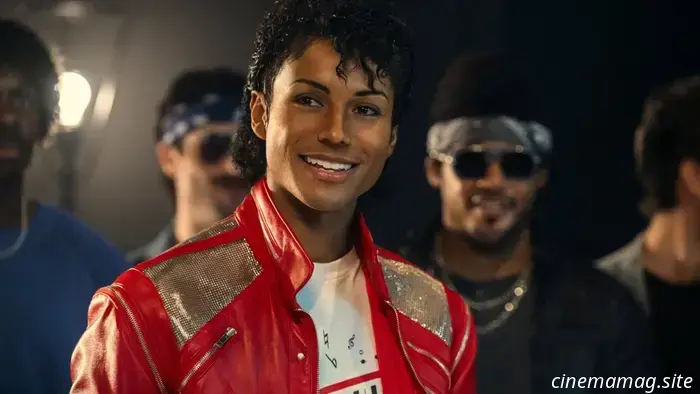 The biopic about Michael Jackson, titled "Michael," has released a new trailer and promotional posters.
Lionsgate has unveiled a new trailer and posters for Antoine Fuqua's forthcoming biopic, Michael, which depicts the life of the King of Pop, both on and off the stage.
The biopic about Michael Jackson, titled "Michael," has released a new trailer and promotional posters.
Lionsgate has unveiled a new trailer and posters for Antoine Fuqua's forthcoming biopic, Michael, which depicts the life of the King of Pop, both on and off the stage.
 Sundance Review: The Invite is an Outstanding Romantic Comedy
One of the highlights of Sundance is witnessing a film generate so much excitement that it becomes the main topic of conversation at the festival. As demand for seats rises, an exhilarating atmosphere surrounds those screenings. Similarly, gaining entry to a screening of Celine Song’s Past Lives turned into a formidable challenge, just as
Sundance Review: The Invite is an Outstanding Romantic Comedy
One of the highlights of Sundance is witnessing a film generate so much excitement that it becomes the main topic of conversation at the festival. As demand for seats rises, an exhilarating atmosphere surrounds those screenings. Similarly, gaining entry to a screening of Celine Song’s Past Lives turned into a formidable challenge, just as
Sundance Review: Hot Water Provides a Unique Perspective on a Well-Known Genre
By utilizing a genre familiar to Sundance viewers and crafting something uniquely different, albeit not completely original, Ramzi Bashour’s road-trip drama Hot Water uncovers subtle humor through two characters who feel completely estranged from one another despite their shared home and DNA. Layal (Lubna Azabal) is a Lebanese professor residing in Indiana, where she teaches an Arabic class to her students.