
Sundance Review: Rock Springs Presents a Bold Ghost Story
Rock Springs operates within a typical genre framework—a family relocates to a house in a town inhabited by peculiar individuals and soon finds themselves haunted by spirits—while delving into deeper themes surrounding the immigrant experience and offering a Buddhist perspective on the afterlife.
Structured in chapters from various viewpoints, the film begins with Grace (Aria Kim), a young girl who hasn't spoken since her father's death months earlier. She dreams of him in her nightmares, which unfold in a stark vision of an underworld filled with dirt mounds and enveloping darkness. Her mother, Emily (Kelly Marie Tran), is concerned about her daughter's silence, while her Chinese mother-in-law frets over the new home's single bathroom.
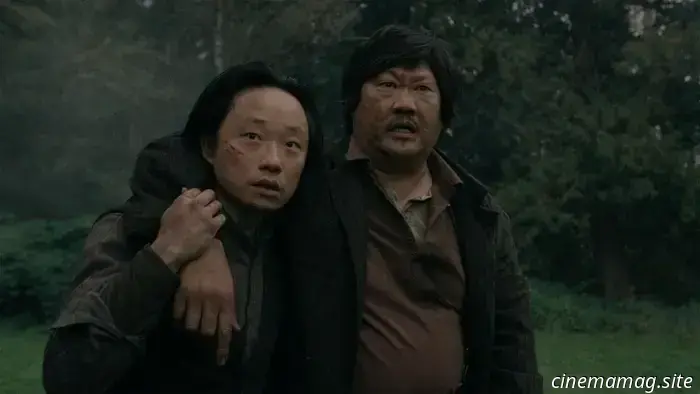
This initial chapter captures the confusion of being a young child in an unfamiliar place without friends. It culminates in a jump scare, but before viewers learn what happens next, the second chapter transports us back to Rock Springs in 1885. We observe Chinese miners gambling after work in a cabin. He Yew (Jimmy O. Yang) talks about cutting off his braid to Ah Tseng (Benedict Wong), an act of assimilation that Tseng advises against, reflecting on his own regret for having cut his hair. Tseng encourages the miners to look at the sky whenever they feel homesick, imagining they are back in China.
Rock Springs effectively conveys the relationships among the miners and their connection to the new country. The scene's bittersweet atmosphere is shattered when white miners attack the village. The intensity of the violence escalates, as the action shifts from the burning village to the forest, with the fleeing survivors pursued by the white townsfolk throughout the night. Text at the film's conclusion reveals that the Rock Springs Massacre was a real historical event in which at least 28 Chinese miners lost their lives.
The following segment, viewed from the mother’s perspective, reveals some limitations in the film's shifting viewpoints and non-linear format. The revelation that a scream from behind a closed door during the opening act belongs to the mother reacting to her husband's ghost feels like clever plotting for its own sake. After this opening ends with a suspenseful moment of the daughter being pulled into the woods by the creature, the film spends significant time on the 1885 flashback that illustrates the creature’s origin—effectively depicted through a time-lapse of dead bodies merging. While audiences may find their patience tested as the film jumps back again, the scenes featuring the creature lurking in the woods are visually striking, occasionally revealing an eye peering through foliage or a hand that withdraws when the mother turns to look.
The conclusion of Rock Springs is both narratively and thematically coherent but feels somewhat abrupt, as the threat posed by the monster is resolved too easily. Nevertheless, with its imaginative creature design, compelling underworld visuals, and ambitious flashback sequences, the film skillfully explores the immigrant experience within a traditional horror narrative.
Rock Springs made its debut at the 2026 Sundance Film Festival.
Other articles
.jpg) Film Review – Solo Mio (2026)
Solo Mio, 2026. Directed by Charles Kinnane and Daniel Kinnane. Featuring Kevin James, Alyson Hannigan, Kim Coates, Jonathan Roumie, Julie Ann Emery, Nicole Grimaudo, Julee Cerda, Alessandro Carbonara, and others.
Film Review – Solo Mio (2026)
Solo Mio, 2026. Directed by Charles Kinnane and Daniel Kinnane. Featuring Kevin James, Alyson Hannigan, Kim Coates, Jonathan Roumie, Julie Ann Emery, Nicole Grimaudo, Julee Cerda, Alessandro Carbonara, and others.
.jpg) Film Review – The Moment (2026)
The Moment, 2026. Directed by Aidan Zamiri. Features Charli XCX, Alexander Skarsgård, Rosanna Arquette, Hailey Benton Gates, Jamie Demetriou, Rachel Sennott, Kate Berlant, Rish Shah, Kylie Jenner, Isa…
Film Review – The Moment (2026)
The Moment, 2026. Directed by Aidan Zamiri. Features Charli XCX, Alexander Skarsgård, Rosanna Arquette, Hailey Benton Gates, Jamie Demetriou, Rachel Sennott, Kate Berlant, Rish Shah, Kylie Jenner, Isa…
 Film Review – Dracula (2025)
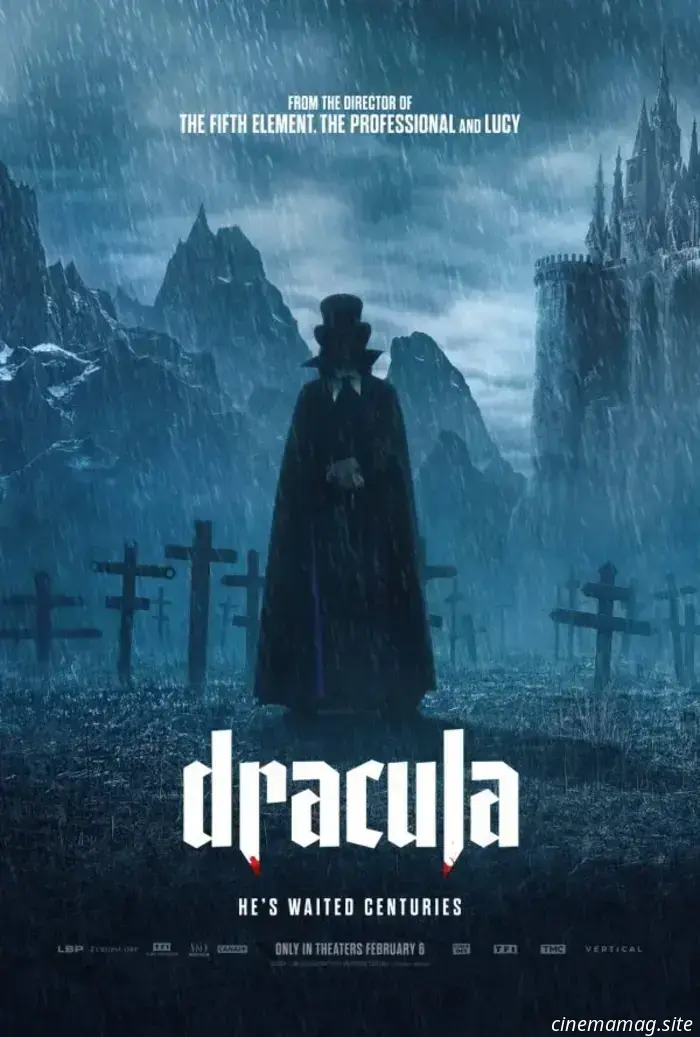
Dracula, 2025. Written and directed by Luc Besson. Featuring Caleb Landry Jones, Zoë Bleu, Christoph Waltz, Matilda De Angelis, Ewens Abid, Guillaume de Tonquédec, David Shields, Bertrand-Xavier Corbi, and others.
Film Review – Dracula (2025)
Dracula, 2025. Written and directed by Luc Besson. Featuring Caleb Landry Jones, Zoë Bleu, Christoph Waltz, Matilda De Angelis, Ewens Abid, Guillaume de Tonquédec, David Shields, Bertrand-Xavier Corbi, and others.
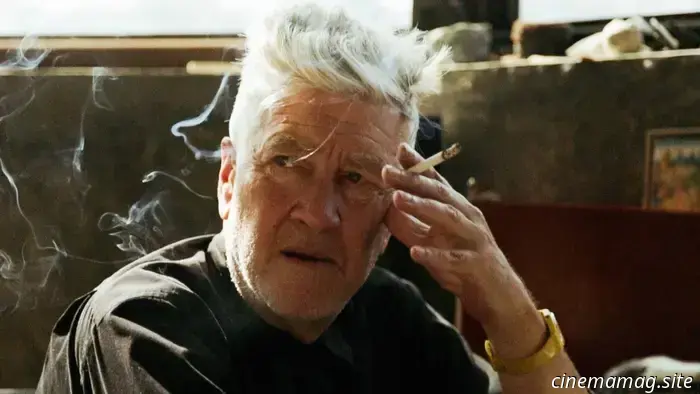 David Lynch's scripts for Unrecorded Night, intended to feature Toby Jones, will be published.
It has been more than a year since the legendary David Lynch left this world, and in his absence, he left behind several unfinished projects. The most significant one was Unrecorded Night, a series that was supposed to be made by Netflix but was scrapped when the pandemic struck. Although specifics about the plot are limited, it was intended to include
David Lynch's scripts for Unrecorded Night, intended to feature Toby Jones, will be published.
It has been more than a year since the legendary David Lynch left this world, and in his absence, he left behind several unfinished projects. The most significant one was Unrecorded Night, a series that was supposed to be made by Netflix but was scrapped when the pandemic struck. Although specifics about the plot are limited, it was intended to include
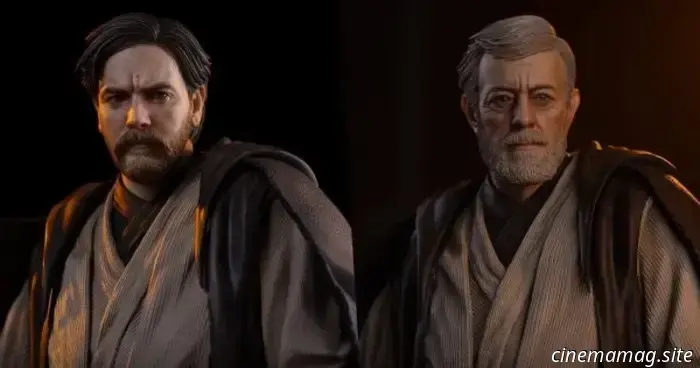 Iron Studios has revealed the Star Wars Legacy Replica statue of Obi-Wan Kenobi, complete with signatures.
Iron Studios has revealed its Star Wars Legacy Replica statue of Obi-Wan Kenobi, featuring interchangeable heads modeled after the looks of both Alec Guinness and Ewan McGregor.
Iron Studios has revealed the Star Wars Legacy Replica statue of Obi-Wan Kenobi, complete with signatures.
Iron Studios has revealed its Star Wars Legacy Replica statue of Obi-Wan Kenobi, featuring interchangeable heads modeled after the looks of both Alec Guinness and Ewan McGregor.
Sundance Review: Rock Springs Presents a Bold Ghost Story
Rock Springs operates within a well-known genre structure—a family relocates to a house in a town populated by unusual residents and soon finds themselves haunted by spirits—while delving into profound concepts regarding the immigrant experience and examining a Buddhist perspective on the afterlife. The film is divided into chapters, each offering a different viewpoint, beginning with Grace (Aria).