
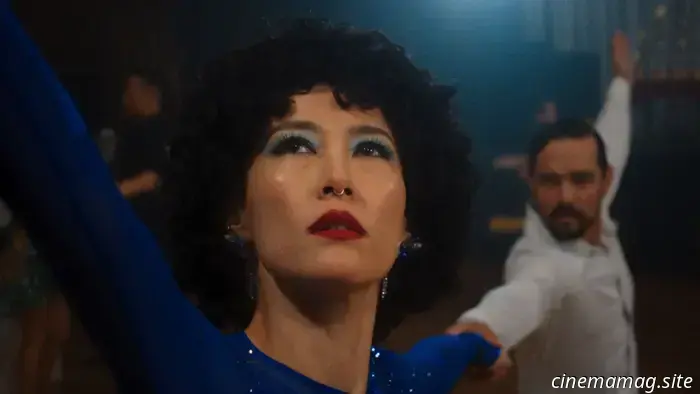
Sundance Review: Ha-chan, Shake Your Booty! Will Take You by Surprise
In dance, leading with assurance is essential. Your partner seeks your direction and expects you to respond to them instinctively, moving without hesitation. There is a necessity for stability, reliability, and flawless timing. Fortunately, Josef Kubota Wladyka’s entertaining and seemingly lighthearted third feature, Ha-chan, Shake Your Booty!, embodies all these qualities exceptionally well.
The title character, Ha-chan (portrayed by the sequined, septum-pierced, and afro-permed Rinko Kikuchi), is married to her dance partner Luis (played by Alejandro Edda). This cross-cultural duo is perfectly harmonized, captivating as they glide across Tokyo’s ballroom floors. Cinematographer Daniel Satinoff skillfully captures their movements, alternating between slow motion and quick cuts as they navigate the dance floor, absorbed in their own world. It’s enough to elevate you, and for Luis, it actually does—only for him to abruptly return to reality.
The film opens with a level of emotional efficiency reminiscent of Pixar. After Luis’ unfortunate accident, Haru is left grieving, seated at the dining table they once shared, now dark and solitary. Luis’ Mexican family has conflicting opinions on how to handle his remains. Feeling outnumbered, Haru sinks into her sorrow, finding no way to express it. She even skips her own 46th birthday celebration. This marks a new chapter in her life—indeed, the film is punctuated by Tarantino-style title cards that give it a graphic novel vibe—but she’s not ready to embrace it. Her friends, Hiromi and Yuki (played by energetic variety show star YOU and gentle-faced Yoh Yoshida), urge her to return to dancing. After all, a new and attractive instructor has arrived in town!
Fedir (Alberto Guerra) certainly fits the bill of attractive in the most photogenic sense—the camera captures him much like it does the trio. It’s here that Wladyka’s film begins to find its footing. Every romantic comedy cliché is acknowledged, but the narrative perspective is unabashedly—at times even confrontationally—female. Ha-chan is chaotic, and she has every right to be. She is grappling with grief, alongside the varying expectations of courtship between different cultures. Fedir is also married and non-monogamous. While some aspects might initially seem predictably Sundance, they culminate in character development that feels both thoroughly contemporary and refreshingly sincere.
Kikuchi, a born romantic lead, possesses a magnetic presence; her performance is self-assured, emotionally complete, and vibrantly alive. Wladyka clearly admires her, having created Ha-chan with his own Japanese mother in mind, allowing Kikuchi to take the reins while the film follows suit. Her reactions in their dynamic are consistently at the forefront. A film that unabashedly and compassionately centers a Japanese woman's sexuality in such a manner feels nothing short of groundbreaking. Ha-chan, Shake Your Booty! embraces its protagonist wholeheartedly, encouraging spectators to share in that affection.
But what about Luis? Haru's sorrow and guilt lurk whenever she returns to their home, where their vinyl record collection decorates the walls filled with shared memories. He remains present in spirit—but quite literally, as he appears to her as a costumed chibi mascot in the form of a crow. This whimsical quirk initially raises some eyebrows—it might feel reminiscent of Everything Everywhere All at Once—but it resonates more with the style of Apichatpong Weerasethakul once you ponder it. Luis’ new form aligns with Ha-chan’s internal landscape precisely because it contrasts with it. Unlike her sophisticated and adult new love interest, he is soft and nurturing, akin to a stuffed animal. As a crow, he symbolizes death, yet it doesn’t need to come across as menacing when the deceased is someone cherished. He disrupts her routine—he can barely fit through the door of her home. Ha-chan must learn to let go.
Outside of Ha-chan’s front door, Wladyka’s homage extends to the legacy of dance on screen and the introspective nature of performance. The film spirit nods to Masayuki Suo’s classic Shall We Dance?—the studio that served as a place of self-discovery for Koji Yakusho's salaryman transforms into Ha-chan’s therapeutic space of self-rediscovery. A delightful play-within-the-film scene, where Dirty Dancing is reimagined as a Japanese stage musical, evokes the metatextual delights of earlier works by Ryusuke Hamaguchi. A confrontation at a station, sparked by racist aggression, transforms into an enchanting Broadway dance sequence reminiscent of La La Land.
A true crowd pleaser, this film is an affection-filled tribute to its artistic influences and the ways they shape our perceptions—depicting how we view one another and ourselves when our hearts ignite and we feel

Other articles
 A new Doctor Who adventure sends The Ninth Doctor and Rose to Cloud Eight.
Big Finish has unveiled the newest audio adventure featuring Christopher Eccleston’s Doctor, titled The Ninth Doctor Adventures: Cloud Eight. This recent installment is penned by Lauren Mooney and Stew…
A new Doctor Who adventure sends The Ninth Doctor and Rose to Cloud Eight.
Big Finish has unveiled the newest audio adventure featuring Christopher Eccleston’s Doctor, titled The Ninth Doctor Adventures: Cloud Eight. This recent installment is penned by Lauren Mooney and Stew…
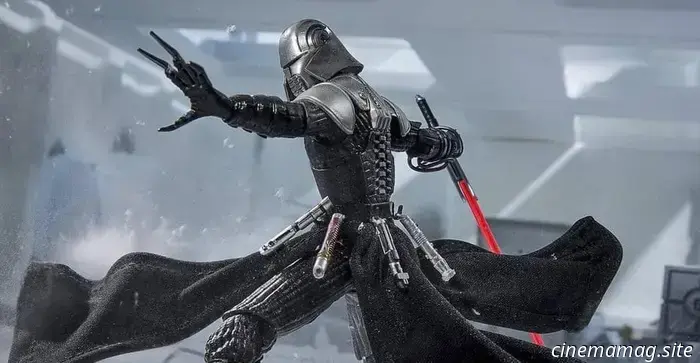 Hasbro has revealed the action figures of Lord Starkiller and Misty & Cav from Star Wars: The Black Series.
Hasbro has officially started pre-orders for two new releases in the Star Wars: The Black Series, including the Gaming Great Lord Starkiller figure from the popular video game Star Wars: The Force Unleashed.
Hasbro has revealed the action figures of Lord Starkiller and Misty & Cav from Star Wars: The Black Series.
Hasbro has officially started pre-orders for two new releases in the Star Wars: The Black Series, including the Gaming Great Lord Starkiller figure from the popular video game Star Wars: The Force Unleashed.
 The creature feature Bone Keeper has released a trailer.
Prior to its global debut at FrightFest Glasgow this March, a poster and trailer for Howard J. Ford’s monster horror film Bone Keeper have been unveiled. The story centers around six friends…
The creature feature Bone Keeper has released a trailer.
Prior to its global debut at FrightFest Glasgow this March, a poster and trailer for Howard J. Ford’s monster horror film Bone Keeper have been unveiled. The story centers around six friends…
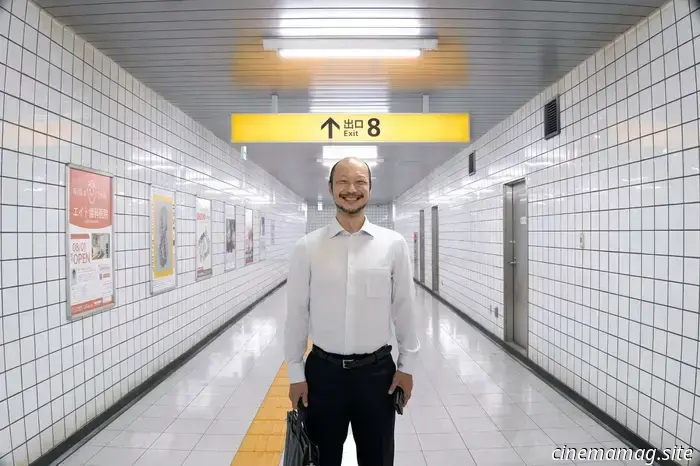 Exit 8 Trailer: Genki Kawamura’s Highly Praised Videogame Adaptation Launches in April
Mario, Mortal Kombat, Resident Evil, and Street Fighter are not the sole video game adaptations making their way to theaters this year. Genki Kawamura's Exit 8, inspired by the popular game, debuted at the Cannes Film Festival last year and subsequently showcased at Toronto, Sitges, Busan, and other festivals. It is now scheduled for release in the U.S. on April 10 by NEON.
Exit 8 Trailer: Genki Kawamura’s Highly Praised Videogame Adaptation Launches in April
Mario, Mortal Kombat, Resident Evil, and Street Fighter are not the sole video game adaptations making their way to theaters this year. Genki Kawamura's Exit 8, inspired by the popular game, debuted at the Cannes Film Festival last year and subsequently showcased at Toronto, Sitges, Busan, and other festivals. It is now scheduled for release in the U.S. on April 10 by NEON.
.jpg) Film Review – Jimpa (2025)
Jimpa, 2025. Created and helmed by Sophie Hyde. Featuring performances by Olivia Colman, John Lithgow, Aud Mason-Hyde, Daniel Henshall, Kate Box, Eamon Farren, Hans Kesting, Zoë Love Smith, Romana Vrede, Deborah Ken…
Film Review – Jimpa (2025)
Jimpa, 2025. Created and helmed by Sophie Hyde. Featuring performances by Olivia Colman, John Lithgow, Aud Mason-Hyde, Daniel Henshall, Kate Box, Eamon Farren, Hans Kesting, Zoë Love Smith, Romana Vrede, Deborah Ken…
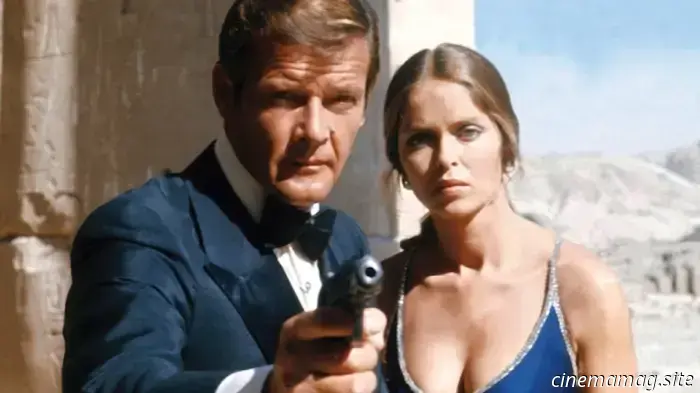 The 10 Highest-Grossing Movies of 1977 Ranked by Box Office Revenue
Here are the ten highest-grossing movies of 1977, a year that significantly marked the beginning of the blockbuster era, listed according to their box office earnings.
The 10 Highest-Grossing Movies of 1977 Ranked by Box Office Revenue
Here are the ten highest-grossing movies of 1977, a year that significantly marked the beginning of the blockbuster era, listed according to their box office earnings.
Sundance Review: Ha-chan, Shake Your Booty! Will Take You by Surprise
In dance, it is essential to lead with assurance. Your partner depends on your direction, and they need you to respond to them reflexively, moving instinctively without hesitation. This requires a firm footing, reliability, and perfect timing. Fortunately, Josef Kubota Wladyka’s entertaining and deceptively light-hearted third film, Ha-chan, Shake Your Booty! offers