
Christian Petzold's Miroirs No. 3 Mirrors Germany's History
One day, while at home with his ill four-year-old daughter, filmmaker Christian Petzold turned on a James Bond movie and noticed how captivated she was.
He has a theory about that: “James Bond can destroy everything,” Petzold reflects, “and he doesn’t have to clean it up.”
Petzold's latest film, Miroirs No. 3, is — like all of his works — focused on the aftermath. The German director has spent two decades of arthouse filmmaking delving into his nation's complex relationship with its harsh history.
Barbara (2012), for which he earned the Silver Bear for Best Director at the Berlin International Film Festival, tells the tale of an East German doctor attempting to escape to the West while being monitored by the Stasi. Similarly, Transit (2018), another critically acclaimed film at the Berlin International Film Festival, featured Franz Rogowski as a refugee in a contemporary fascist regime.
The somber themes of these films might lead one to think Petzold would epitomize the serious European director stereotype. However, much like his films, the writer-director exudes warmth and curiosity. Before our conversation has even fully begun, he offers me part of his raisin scone, commenting, “Betty might have made this!” as he breaks it.
Betty is a character in Miroirs, a film that explores the existential themes Petzold has long investigated. He is particularly interested in how individuals, especially women, manage to thrive amidst quietly desperate circumstances.
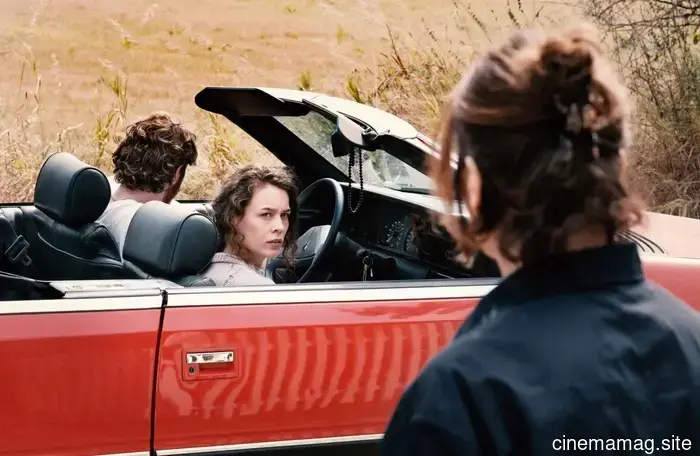
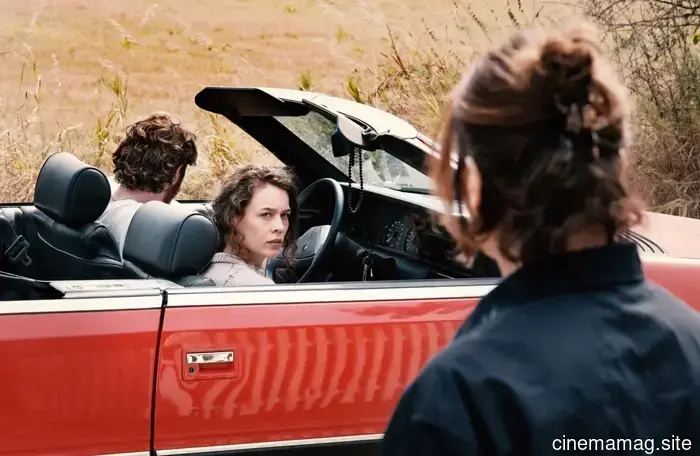
The film stars Paula Beer, a frequent collaborator of Petzold, as Laura, a young piano student who survives a car accident in the German countryside. Instead of returning to Berlin, she chooses to recuperate with Betty, a kind stranger portrayed by Barbara Auer. Together, they develop a surrogate mother-daughter bond as they restore Betty’s charming, albeit somewhat rundown, home.
Miroirs No. 3 Director Christian Petzold on Two Types of Cinema
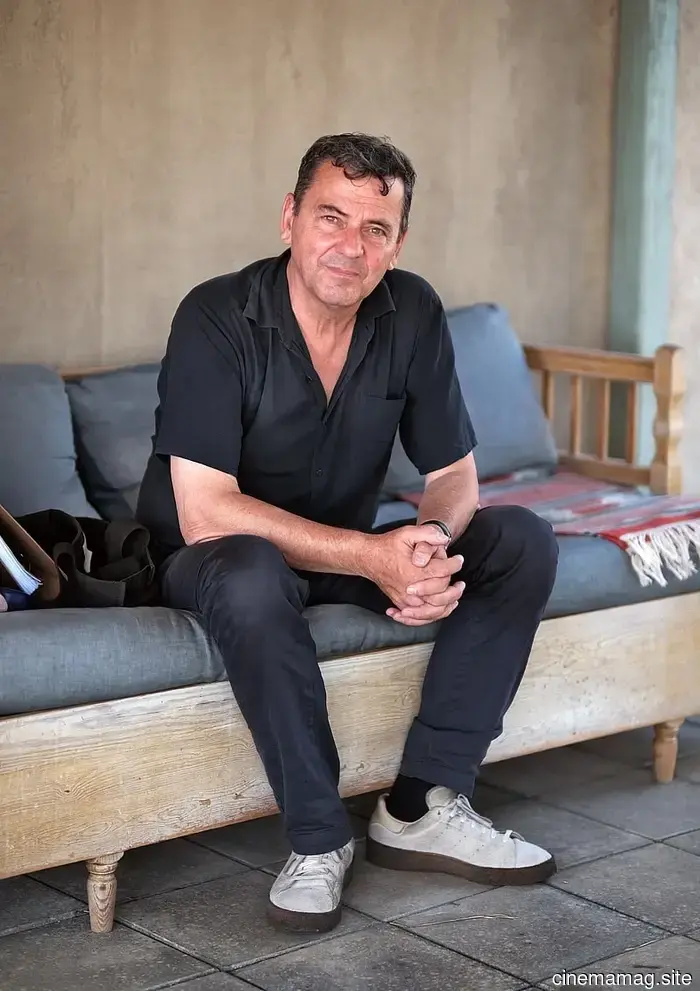
Miroirs No. 3 director Christian Petzold. Photo by Christian Schulz/ Schrammfilm
Miroirs examines the unspoken efforts that women make to hold everything together — a critique of the inherent waste of capitalist consumer culture — and illustrates how swiftly a home can deteriorate in the wake of tragedy.
“We now have two types of cinema,” Petzold remarks. “Cinema that seeks out dystopia, and cinema that seeks to repair.”
Miroirs fits into the latter category. Following its premiere at Cannes, some journalists were taken aback by what they interpreted as a detachment from current political issues. However, Petzold has become fatigued by didactic films that preach to viewers about beliefs they already share.
“After 1945, the English and the Americans entered Germany with a mission to reeducate us,” Petzold explains. “That legacy persists today — we have films where, from the very beginning, it’s clear who’s bad and who’s good. The characters deliver lines that sound like they were penned by journalists.”
Nevertheless, labeling Miroirs as apolitical would be a mistake: the specter of the past looms over every scene. History seeps into the unexpressed trauma that can be felt within Betty’s house, as well as in the rusted tractors at the car repair shop where Betty’s husband, Richard (Matthias Brandt), and son, Max (Enno Trebs), work.
The men generate income by removing GPS trackers from luxury cars and conduct their operations in a manner reminiscent of Petzold’s earlier films about survivors in authoritarian states.
“In the traditional structure, it would have been the father and son,” Petzold clarifies. “Something biblical. But Laura and Betty have reconstructed their world, which revolves around food, culture, books, and nature. You never see Betty and Richard’s room. The house bears no masculine imprints.”
Miroirs’ predecessor, Afire (2023), is another domestic drama where an idyllic setting is overshadowed by surrounding forest fires, embodying the fleeting nature of summer vacations.
Petzold has a tendency to create duologies and trilogies, which he attributes to a steadfast Protestant work ethic: “Protestants can’t enjoy anything. Every day working on Undine was wonderful, and once we finished editing the film, I thought to myself, ‘You can’t relish it now. You have to continue working.’ So I considered this merely the beginning of a series.”
It was Barbara Auer who suggested on the tenth day of shooting that air, rather than fire, was the primary element in Miroirs. While wind can indeed be a destructive force, it also possesses regenerative qualities: The German term lüften means “airing out a house” and is a common practice throughout the country.
Petzold drew inspiration from a wind-swept scene in Nuri Bilge C

Other articles
 New to Streaming: My Unwanted Friends, Pillion, Avatar: Fire and Ash, Wuthering Heights, and More
Every week, we spotlight the significant titles that have recently been added to streaming services in the United States. Take a look at this week's choices below and previous compilations here. 28 Years Later: The Bone Temple (Nia DaCosta) In 28 Years Later: The Bone Temple, the Jimmy gang returns, with Jack O’Connell in a role that strangely resembles
New to Streaming: My Unwanted Friends, Pillion, Avatar: Fire and Ash, Wuthering Heights, and More
Every week, we spotlight the significant titles that have recently been added to streaming services in the United States. Take a look at this week's choices below and previous compilations here. 28 Years Later: The Bone Temple (Nia DaCosta) In 28 Years Later: The Bone Temple, the Jimmy gang returns, with Jack O’Connell in a role that strangely resembles
 François Ozon discusses the existential themes in The Stranger, the portrayal of Arabs, and the influence of Bressonian acting techniques.
After almost 30 years in his feature filmmaking career, French writer-director François Ozon has explored various genres: screwball comedies, murder mystery musicals, erotic dramas, thrillers, political films, and more. For the first time, he has adapted a significant literary and philosophical text, Albert Camus’ The Stranger—featuring Benjamin Voisin as the perpetually elusive and tragically indifferent Meursault—which
François Ozon discusses the existential themes in The Stranger, the portrayal of Arabs, and the influence of Bressonian acting techniques.
After almost 30 years in his feature filmmaking career, French writer-director François Ozon has explored various genres: screwball comedies, murder mystery musicals, erotic dramas, thrillers, political films, and more. For the first time, he has adapted a significant literary and philosophical text, Albert Camus’ The Stranger—featuring Benjamin Voisin as the perpetually elusive and tragically indifferent Meursault—which
 Christian Petzold’s Miroirs No. 3 Mirrors Germany’s History
Director Christian Petzold of Memoirs No. 3 thinks there are two categories of cinema.
Christian Petzold’s Miroirs No. 3 Mirrors Germany’s History
Director Christian Petzold of Memoirs No. 3 thinks there are two categories of cinema.
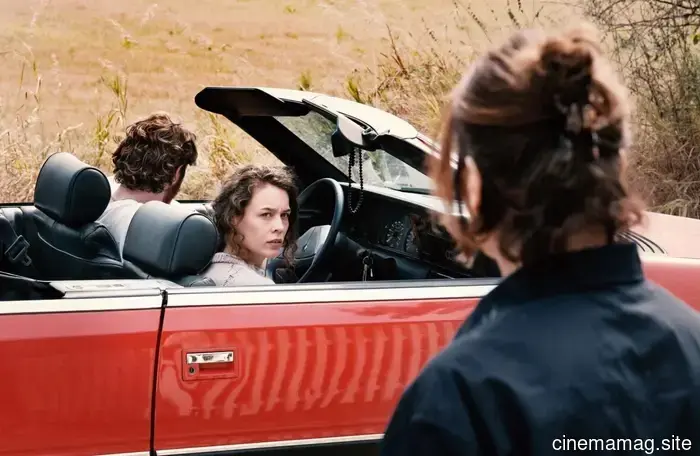 Christian Petzold's Miroirs No. 3 mirrors Germany's history.
Director Christian Petzold of Memoirs No. 3 believes that cinema can be categorized into two distinct types.
Christian Petzold's Miroirs No. 3 mirrors Germany's history.
Director Christian Petzold of Memoirs No. 3 believes that cinema can be categorized into two distinct types.
 Recently Added to Streaming: My Unwanted Friends, Pillion, Avatar: Fire and Ash, Wuthering Heights & Others
Every week, we showcase the significant titles that have recently arrived on streaming services in the United States. Take a look at this week's picks below and previous compilations here. **28 Years Later: The Bone Temple** (Nia DaCosta) In **28 Years Later: The Bone Temple**, the Jimmy gang returns, with Jack O’Connell playing a role that strangely reflects
Recently Added to Streaming: My Unwanted Friends, Pillion, Avatar: Fire and Ash, Wuthering Heights & Others
Every week, we showcase the significant titles that have recently arrived on streaming services in the United States. Take a look at this week's picks below and previous compilations here. **28 Years Later: The Bone Temple** (Nia DaCosta) In **28 Years Later: The Bone Temple**, the Jimmy gang returns, with Jack O’Connell playing a role that strangely reflects
 François Ozon discusses the existential themes in The Stranger, the portrayal of Arabs, and the acting style reminiscent of Bresson.
Approaching three decades into his career as a feature filmmaker, French writer-director François Ozon has explored a vast array of genres: screwball comedies, murder mystery musicals, erotic dramas, thrillers, political films, and beyond. Now, for the first time, he has taken on a significant literary and philosophical piece with an adaptation of Albert Camus' The Stranger, featuring Benjamin Voisin as the perpetually elusive and tragically indifferent Meursault, which
François Ozon discusses the existential themes in The Stranger, the portrayal of Arabs, and the acting style reminiscent of Bresson.
Approaching three decades into his career as a feature filmmaker, French writer-director François Ozon has explored a vast array of genres: screwball comedies, murder mystery musicals, erotic dramas, thrillers, political films, and beyond. Now, for the first time, he has taken on a significant literary and philosophical piece with an adaptation of Albert Camus' The Stranger, featuring Benjamin Voisin as the perpetually elusive and tragically indifferent Meursault, which
Christian Petzold's Miroirs No. 3 Mirrors Germany's History
Director Christian Petzold of Memoirs No. 3 thinks that there are two kinds of cinema.