

François Ozon discusses the existential themes in The Stranger, the portrayal of Arabs, and the influence of Bressonian acting techniques.
After nearly 30 years in his feature filmmaking career, French writer-director François Ozon has explored a wide range of genres, including screwball comedies, murder mystery musicals, erotic dramas, thrillers, and political films. Now, for the first time, he has adapted a significant literary and philosophical work, Albert Camus' The Stranger, featuring Benjamin Voisin as the elusive and tragically indifferent Meursault. This adaptation has received considerable acclaim in France, winning major awards such as the Lumière for Best Picture, Best Actor, and Best Cinematography.
Camus’ classic novel offers limited cinematic interpretation, posing a unique challenge for Ozon as he sought to convey the removed existentialism of its notorious protagonist on screen. His extensive experience shines through, underscoring why Ozon has become a defining figure in contemporary French cinema. In anticipation of the U.S. release this Friday, we spoke with Ozon about his approach to adapting and directing the film, the philosophical themes involved, and the modern updates he made to the narrative.
The Film Stage: You've adapted several books and plays into films, but this is your first Albert Camus adaptation. What inspired you to adapt The Stranger and engage with Camus in general?
François Ozon: If you’d asked me two years ago if I would adapt The Stranger, I would have replied, “No. Never.” This is a masterpiece of French literature and everyone in France has read it. Thus, there are many potential directors, as every reader imagines the direction of the story in their head. I never intended to adapt this book, especially not a masterpiece. In my previous adaptations, I typically chose lesser-known books or plays, which allowed me the freedom to create what I wanted. However, the idea for this adaptation arose from a previous project's failure.
I had aimed to create a different film with Benjamin Voisin, portraying a contemporary young man in France confronted by today’s absurdities, ultimately leading to his suicide. Unfortunately, we couldn't secure funding as people found the story too bleak. Yet, some who appreciated my script mentioned that it reminded them of The Stranger. This prompted me to revisit the book, which I hadn’t read since college, and I realized its profound modern relevance was far superior to my script. I asked Benjamin if he felt able to portray Meursault, a character so iconic in French literature, and he was enthusiastic, as was I—we were eager to collaborate. That's how the adaptation unfolded.
That’s quite a shift from two years ago to now. What’s your process for transforming something so abstract and philosophical into cinema?
I felt invigorated by the challenge because I appreciate the slowness and observational qualities in cinema. It was indeed a gamble to visualize the abstraction and inactivity present in the novel. However, I was genuinely thrilled about creating a cinematic interpretation of the text. One approach could have been relying heavily on voiceover, given that the novel is largely an inner monologue. Instead, I chose to craft a mostly silent film, particularly in the first part. I thought, “It could barely have any dialogue.” This challenge of mise-en-scène truly captivated me.
Would you describe yourself as an existentialist?
If existentialism involves questioning the meaning of life and the absurdity of the world, then yes, I would identify as such. In filmmaking, you constantly reflect on your experiences and ask yourself questions. So, in that sense, I would affirm I am an existentialist.
How do you connect with the existentialism of Meursault and his perception of life’s absurdities? Is his attitude or behavior something you see as extreme, or do you find it resonates with you?
I believe that at some point in our lives, we have all shared a connection with Meursault. We have experienced detachment from the world and been mere observers in our own existence. In the film, Meursault feels akin to the walking dead, almost like a zombie. Yet there’s a moment of explosive anger in his confrontation with the priest, where he challenges everything religion symbolizes, and in that instant, he is truly alive. Camus' message is not one of nihilism but of revolt, and I think I would not have pursued this film adaptation without the pivotal scene with the priest, where Meursault finally expresses his inner turmoil.
François Ozon. Photo by Leonidas Arvanitis.
How does your approach differ when a film engages with historical contexts, such as in Frantz, for example? Especially with a history rich in discomfort?
Yes, it was essential for me, prior to adapting the story, to comprehend the historical and political context of the late 1930s, especially since Camus wrote the book in 1939, which was published in France in 1942. Understanding the situation of Algeria at that time was crucial since it was considered part of France—essentially, two French departments. The reality of

Other articles
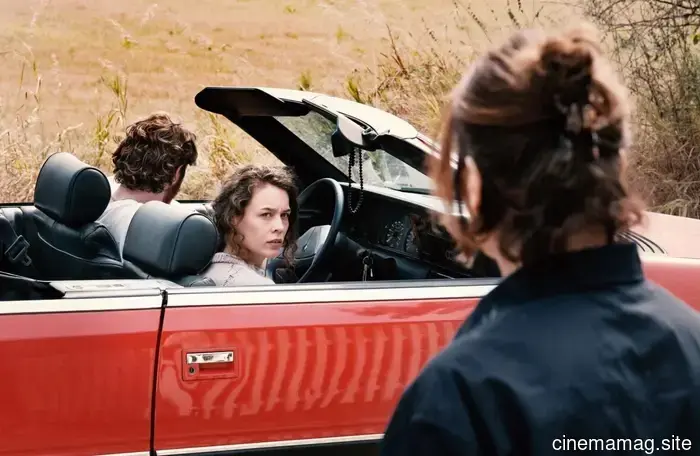 Christian Petzold's Miroirs No. 3 Mirrors Germany's History
Director Christian Petzold of Memoirs No. 3 thinks that cinema can be divided into two categories.
Christian Petzold's Miroirs No. 3 Mirrors Germany's History
Director Christian Petzold of Memoirs No. 3 thinks that cinema can be divided into two categories.
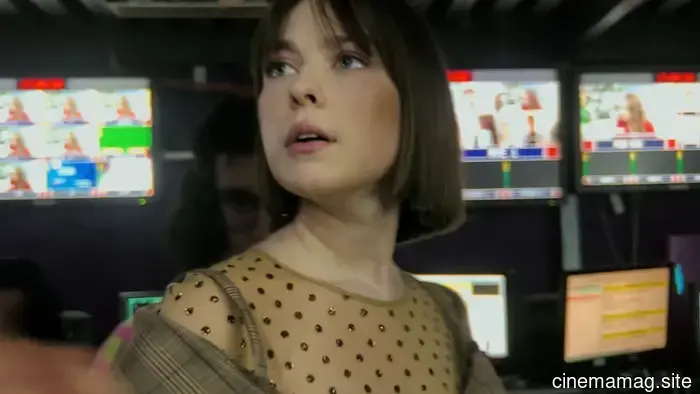 Recently Added to Streaming: My Unwanted Friends, Pillion, Avatar: Fire and Ash, Wuthering Heights & Others
Every week, we showcase the significant titles that have recently arrived on streaming services in the United States. Take a look at this week's picks below and previous compilations here. **28 Years Later: The Bone Temple** (Nia DaCosta) In **28 Years Later: The Bone Temple**, the Jimmy gang returns, with Jack O’Connell playing a role that strangely reflects
Recently Added to Streaming: My Unwanted Friends, Pillion, Avatar: Fire and Ash, Wuthering Heights & Others
Every week, we showcase the significant titles that have recently arrived on streaming services in the United States. Take a look at this week's picks below and previous compilations here. **28 Years Later: The Bone Temple** (Nia DaCosta) In **28 Years Later: The Bone Temple**, the Jimmy gang returns, with Jack O’Connell playing a role that strangely reflects
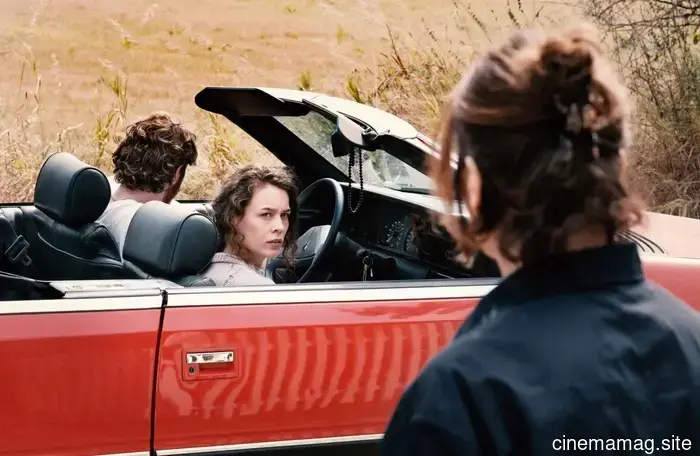 Christian Petzold's Miroirs No. 3 Mirrors Germany's History
Director Christian Petzold of Memoirs No. 3 thinks that there are two kinds of cinema.
Christian Petzold's Miroirs No. 3 Mirrors Germany's History
Director Christian Petzold of Memoirs No. 3 thinks that there are two kinds of cinema.
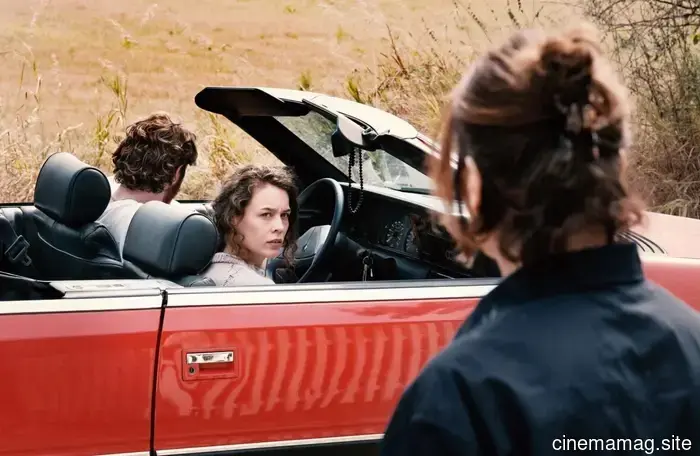 Christian Petzold's Miroirs No. 3 mirrors Germany's history.
Director Christian Petzold of Memoirs No. 3 believes that cinema can be categorized into two distinct types.
Christian Petzold's Miroirs No. 3 mirrors Germany's history.
Director Christian Petzold of Memoirs No. 3 believes that cinema can be categorized into two distinct types.
 NYC Weekend Preview: Tsai Ming-liang, Ken Jacobs, Gender Transgression, and More
NYC Weekend Watch is our weekly summary of repertory events. Museum of the Moving Image is showcasing a major retrospective of 2001 in cinema, featuring 35mm prints of What Time Is It There?, Waking Life, and The Lady and the Duke, along with screenings of Donnie Darko and That Old Dream That Moves. Japan Society is concluding its retrospective on the iconic Meiko Kaji this weekend. IFC Center will be presenting a double feature.
NYC Weekend Preview: Tsai Ming-liang, Ken Jacobs, Gender Transgression, and More
NYC Weekend Watch is our weekly summary of repertory events. Museum of the Moving Image is showcasing a major retrospective of 2001 in cinema, featuring 35mm prints of What Time Is It There?, Waking Life, and The Lady and the Duke, along with screenings of Donnie Darko and That Old Dream That Moves. Japan Society is concluding its retrospective on the iconic Meiko Kaji this weekend. IFC Center will be presenting a double feature.
 François Ozon discusses the existential themes in The Stranger, the portrayal of Arabs, and the acting style influenced by Bresson.
After nearly 30 years in his feature filmmaking career, French writer and director François Ozon has explored a wide range of genres: screwball comedies, murder mystery musicals, erotic dramas, thrillers, political films, and beyond. Now, he takes on a significant literary and philosophical piece for the first time with Albert Camus' The Stranger, featuring Benjamin Voisin as the enigmatic and tragically apathetic Meursault, which
François Ozon discusses the existential themes in The Stranger, the portrayal of Arabs, and the acting style influenced by Bresson.
After nearly 30 years in his feature filmmaking career, French writer and director François Ozon has explored a wide range of genres: screwball comedies, murder mystery musicals, erotic dramas, thrillers, political films, and beyond. Now, he takes on a significant literary and philosophical piece for the first time with Albert Camus' The Stranger, featuring Benjamin Voisin as the enigmatic and tragically apathetic Meursault, which
François Ozon discusses the existential themes in The Stranger, the portrayal of Arabs, and the influence of Bressonian acting techniques.
After almost 30 years in his feature filmmaking career, French writer-director François Ozon has explored various genres: screwball comedies, murder mystery musicals, erotic dramas, thrillers, political films, and more. For the first time, he has adapted a significant literary and philosophical text, Albert Camus’ The Stranger—featuring Benjamin Voisin as the perpetually elusive and tragically indifferent Meursault—which