

François Ozon discusses the existential themes in The Stranger, the portrayal of Arabs, and the acting style influenced by Bresson.
Almost three decades into his career as a feature filmmaker, French writer-director François Ozon has explored a vast array of genres: screwball comedies, musical murder mysteries, erotic dramas, thrillers, political films, and beyond. Now, for the first time, he has adapted an essential literary and philosophical text, Albert Camus' The Stranger, featuring Benjamin Voisin as the elusive and tragically indifferent Meursault. This adaptation has received considerable acclaim in France, winning major awards including the Lumière for Best Picture, Best Actor, and Best Cinematography.
Camus’ classic work offers little in terms of cinematic interpretation, presenting Ozon with the unique challenge of conveying the detached existentialism of its notorious protagonist onscreen. This challenge highlights Ozon's seasoned expertise, underscoring why the revered French director is considered central to anyone exploring contemporary French cinema. Ahead of the film's U.S. release this Friday, we spoke with Ozon about his approach to adapting and directing the film, the underlying philosophy, and the modifications he made for today's audience.
The Film Stage: You've adapted several books and plays into films, but this is your first adaptation of Albert Camus. What inspired you to adapt The Stranger and to work with Camus's material in general?
François Ozon: If you had asked me two years ago whether I would adapt The Stranger, I would have said, “No. Never.” It’s a masterpiece of French literature, and everyone in France has read it. There are so many potential directors since any reader becomes a director in their imagination while reading. My intention was not to adapt this book, especially a masterpiece. My previous adaptations had been of lesser-known works, which allowed me the freedom to interpret them as I wished. However, the idea for this adaptation arose from a setback.
I had intended to create a different film with Benjamin Voisin—a contemporary portrait of a young man in France confronting today’s absurdities, who ultimately commits suicide in the story. But we couldn't secure funding, as people found the narrative too difficult and tragic. Some who read my script remarked that it reminded them of The Stranger. This prompted me to revisit the book, which I hadn’t read since my college days. I found it noteworthy for its modern relevance and realized it surpassed my own script. I asked Benjamin if he felt capable of embodying Meursault, a highly iconic character in French literature. He was enthusiastic, and so was I—we were eager to collaborate. That's how this adaptation came to be.
That’s a rapid transition from two years ago to now. How do you transform something so abstract and philosophical into a film?
I was excited about this prospect because I appreciate slowness and observation in cinema. Indeed, it was a significant challenge to visualize the abstraction and lack of action present in the novel. Nonetheless, I found it thrilling to create a cinematic representation of this story. One potential approach could have been to utilize voiceover the entire time, as the novel is largely an inner monologue. However, I became more interested in crafting a film that is nearly silent, particularly in its first half. I thought at one point that it could feature almost no dialogue. That was a captivating challenge for me when thinking about mise-en-scène.
Would you consider yourself an existentialist?
If being an existentialist involves questioning the meaning of existence and the absurdity of life, then yes. When making films, you're constantly reflecting on your experiences and asking yourself questions. So in that sense, I would say yes—I align with existentialist thought.
How do you relate to Meursault's existentialism and his perception of life’s absurdities? Do you find his behavior or outlook to be extreme, or do you resonate with it?
I believe at some point in our lives, we have all embodied Meursault. We all experience moments when we feel detached from the world, when we’re not active participants in our own lives. Meursault is almost like a zombie in the film. However, by the end, his fury surfaces—particularly in the scene with the priest—against everything religion symbolizes, and in that moment, Meursault truly comes alive. Camus' message isn’t nihilism; it’s about revolt. I doubt I would have pursued this film had it not contained the climactic scene with the priest, where Meursault rages and reveals his true self.
François Ozon. Photo by Leonidas Arvanitis.
When approaching a film that centers on history or historical context, as with Frantz for example, how do you adapt your writing and directing style, especially with difficult subject matter?
It was crucial for me to grasp the historical and political backdrop of the late 1930s before adapting this work. Camus wrote the text in 1939, and it was published in France in 1942. I needed to comprehend what Algeria represented in that era, as Algeria was an

Other articles
 New to Streaming: My Unwanted Friends, Pillion, Avatar: Fire and Ash, Wuthering Heights, and More
Every week, we spotlight the significant titles that have recently been added to streaming services in the United States. Take a look at this week's choices below and previous compilations here. 28 Years Later: The Bone Temple (Nia DaCosta) In 28 Years Later: The Bone Temple, the Jimmy gang returns, with Jack O’Connell in a role that strangely resembles
New to Streaming: My Unwanted Friends, Pillion, Avatar: Fire and Ash, Wuthering Heights, and More
Every week, we spotlight the significant titles that have recently been added to streaming services in the United States. Take a look at this week's choices below and previous compilations here. 28 Years Later: The Bone Temple (Nia DaCosta) In 28 Years Later: The Bone Temple, the Jimmy gang returns, with Jack O’Connell in a role that strangely resembles
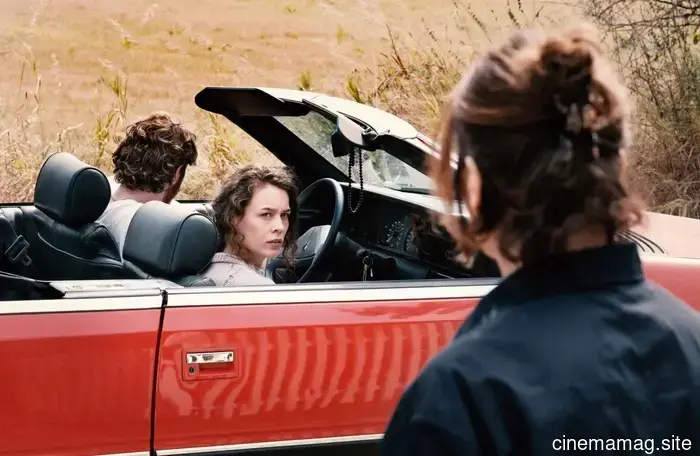 Christian Petzold's Miroirs No. 3 Mirrors Germany's History
Director Christian Petzold of Memoirs No. 3 thinks that there are two kinds of cinema.
Christian Petzold's Miroirs No. 3 Mirrors Germany's History
Director Christian Petzold of Memoirs No. 3 thinks that there are two kinds of cinema.
 François Ozon discusses the existential themes in The Stranger, the portrayal of Arabs, and the influence of Bressonian acting techniques.
After almost 30 years in his feature filmmaking career, French writer-director François Ozon has explored various genres: screwball comedies, murder mystery musicals, erotic dramas, thrillers, political films, and more. For the first time, he has adapted a significant literary and philosophical text, Albert Camus’ The Stranger—featuring Benjamin Voisin as the perpetually elusive and tragically indifferent Meursault—which
François Ozon discusses the existential themes in The Stranger, the portrayal of Arabs, and the influence of Bressonian acting techniques.
After almost 30 years in his feature filmmaking career, French writer-director François Ozon has explored various genres: screwball comedies, murder mystery musicals, erotic dramas, thrillers, political films, and more. For the first time, he has adapted a significant literary and philosophical text, Albert Camus’ The Stranger—featuring Benjamin Voisin as the perpetually elusive and tragically indifferent Meursault—which
 François Ozon discusses the existential themes in The Stranger, the portrayal of Arabs, and the acting style reminiscent of Bresson.
Approaching three decades into his career as a feature filmmaker, French writer-director François Ozon has explored a vast array of genres: screwball comedies, murder mystery musicals, erotic dramas, thrillers, political films, and beyond. Now, for the first time, he has taken on a significant literary and philosophical piece with an adaptation of Albert Camus' The Stranger, featuring Benjamin Voisin as the perpetually elusive and tragically indifferent Meursault, which
François Ozon discusses the existential themes in The Stranger, the portrayal of Arabs, and the acting style reminiscent of Bresson.
Approaching three decades into his career as a feature filmmaker, French writer-director François Ozon has explored a vast array of genres: screwball comedies, murder mystery musicals, erotic dramas, thrillers, political films, and beyond. Now, for the first time, he has taken on a significant literary and philosophical piece with an adaptation of Albert Camus' The Stranger, featuring Benjamin Voisin as the perpetually elusive and tragically indifferent Meursault, which
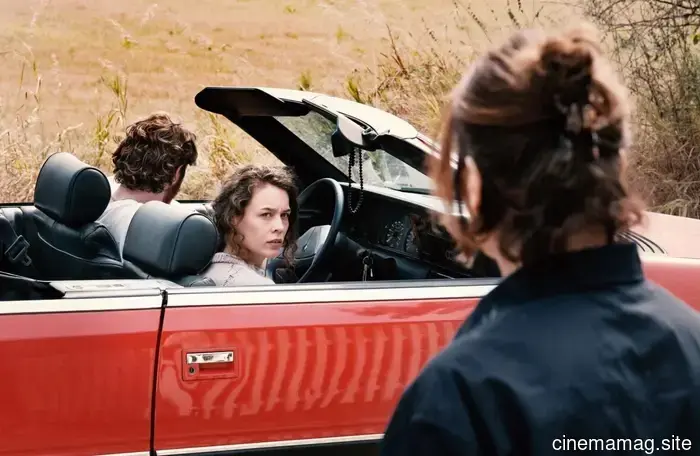 Christian Petzold's Miroirs No. 3 Mirrors Germany's History
Director Christian Petzold of Memoirs No. 3 thinks that cinema can be divided into two categories.
Christian Petzold's Miroirs No. 3 Mirrors Germany's History
Director Christian Petzold of Memoirs No. 3 thinks that cinema can be divided into two categories.
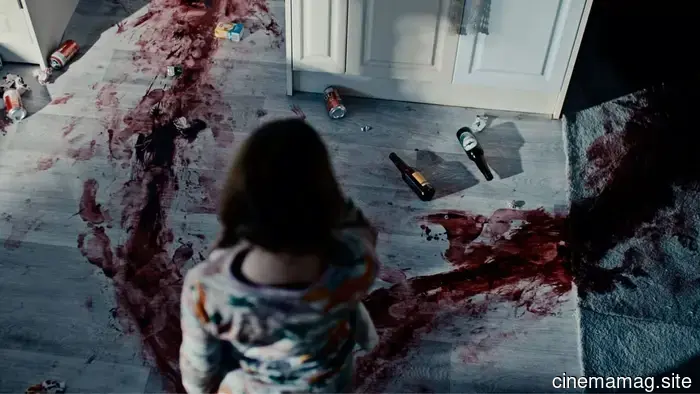 Claustrophobic survival horror game Shed releases its trailer and poster.
Black Mandala has unveiled a poster and trailer for the Australian survival horror film Shed, written and directed by Steven J. Mihaljevich. The film features Mani Shanks in the role of Mia, a 10-year-old girl who is inadvertently locked…
Claustrophobic survival horror game Shed releases its trailer and poster.
Black Mandala has unveiled a poster and trailer for the Australian survival horror film Shed, written and directed by Steven J. Mihaljevich. The film features Mani Shanks in the role of Mia, a 10-year-old girl who is inadvertently locked…
François Ozon discusses the existential themes in The Stranger, the portrayal of Arabs, and the acting style influenced by Bresson.
After nearly 30 years in his feature filmmaking career, French writer and director François Ozon has explored a wide range of genres: screwball comedies, murder mystery musicals, erotic dramas, thrillers, political films, and beyond. Now, he takes on a significant literary and philosophical piece for the first time with Albert Camus' The Stranger, featuring Benjamin Voisin as the enigmatic and tragically apathetic Meursault, which