

Clive Barker’s Hellraiser Universe: Aspirations, Overindulgence, and the Franchise That Might Have Been
Adam Page explores the Lament Configuration for a thorough examination of the Hellraiser franchise…
Let's discuss something that used to evoke real fear—not the cheap thrills of jump scares that come from a masked figure lurking in a closet. No, I’m referring to the kind of horror that makes you feel complicit in your own terror, the kind that suggests you might have desired this all along. That essence was embodied in Hellraiser. What transpired with it is a narrative that should be studied in film schools. I'm not suggesting it should serve strictly as a warning about sequels; rather, it serves as a case study in how something initially dangerous can be carefully, gradually, and bureaucratically stripped of its bite. Like witnessing a fine restaurant acquired by a hotel chain, swapping out the chef's artisanal pasta for something from a meal kit, yet keeping the same sign outside.
So take a seat. This is going to be painful, appropriately so.
We need to grasp what the original Hellraiser was upon its release in 1987. Clive Barker, a novelist, painter, and a unique artist who seemed to emerge from a more intriguing dimension, adapted his own novella, The Hellbound Heart, into a film with virtually no budget. It was filmed in a house in North London, which likely had better plumbing than the production could manage. The result was a horror movie unlike any that had come before it.
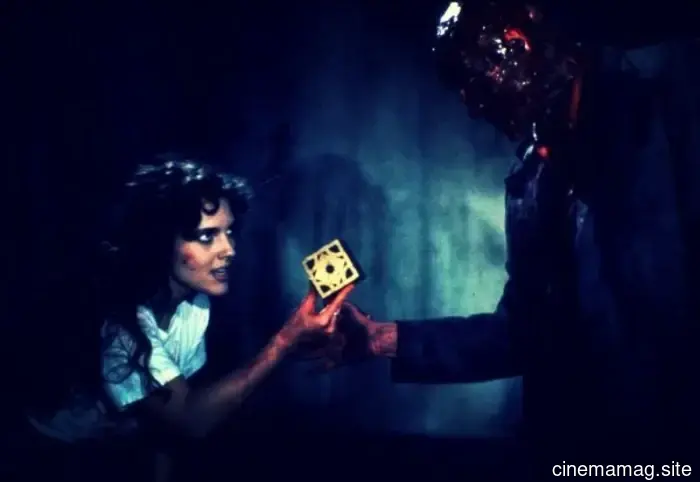
The premise was straightforward: there exists a puzzle box. Opening it summons creatures, beings immersed in sensation and blurring the lines between pain and pleasure. Pinhead, who is scarcely described in the novella, became one of the foremost icons of 20th-century horror. Doug Bradley portrayed him with a stillness and an aristocratic disdain that could send chills down your spine.
However, something that tends to get overlooked about the original film, lost amidst its iconic imagery, is that at its core, Hellraiser is a tale of desire, infidelity, and a perverted resurrection. Frank Cotton is a hedonist, one who has indulged in every earthly pleasure, seeking something beyond the ordinary. He discovers it in the puzzle box. This discovery literally destroys him, tearing him apart in a pleasure realm from another dimension. Julia, his brother’s wife, resurrects him by luring men to their home and killing them. Frank consumes their blood as he struggles to piece himself back together. It’s an undeniably bizarre and literature-rich narrative.
Pinhead and the Cenobites are almost peripheral to the story. They serve as supernatural enforcers, a cosmic collection agency asserting their claims. What makes them terrifying is not merely their intention to inflict harm, but their utter lack of comprehension regarding any objections. They exist entirely outside human moral standards and have transcended suffering to embody something unnameable in any language a human speaks.
Barker described them as “explorers in the further regions of experience.” This isn’t just a tagline; it reflects a theological concept.
Hellbound: Hellraiser II followed in 1988, still under Barker's influential eye. While he didn’t direct, he served as executive producer, and the screenplay adhered to the internal logic of the mythology. To be frank, it is ambitious in ways sequels rarely are. It delves deeper—quite literally, as we explore the intricate realm of Leviathan, the master of the Cenobites, a vast diamond-shaped entity that commands Hell like a malevolent corporate office.
The film takes risks and broadens the mythology, providing an origin story for Pinhead that enriches rather than diminishes his character. The revelation that Captain Spencer was a World War I officer who opened the box in a moment of despair is genuinely poignant. There’s a human dimension, even in Hell.
Hellbound isn't flawless. At times, it feels overstuffed and chaotic. Yet it takes its mythology earnestly and honors its structure. If the first film could be seen as Barker's manifesto, then this sequel is his world-building endeavor. Together, they lay the groundwork for what could have supported a decade of fascinating horror.
In hindsight, this marked the pinnacle.
Hellraiser III: Hell on Earth, released in 1993, is the point where we can observe the franchise's deliberate shift toward something different—ultimately becoming, in the business vernacular, “more commercial.”
Barker had largely distanced himself from production; he only received a “Clive Barker presents” credit. The studio, New World Pictures, and later Miramax, held onto the intellectual property and budget but forsook the philosophy. It was replaced with a misguided concept that fundamentally misunderstood what Hellraiser represented: the mistaken belief that Pinhead could be seen as a protagonist.
He is not a hero—he never was. He embodies the aftermath of what occurs when curiosity trumps self-preservation. Portraying him as the protagonist is akin to making cancer the central figure in a narrative about smoking.












Other articles
-action-figure-incoming-from-Hasbro.jpeg) Hasbro is set to release a Marvel Legends Series action figure of the Punisher in Hulkbuster Armor.
The year 2026 is significant for Frank Castle, featuring Marvel’s Special Presentation The Punisher: One Last Kill and a supporting part in Spider-Man: Brand New Day, allowing fans to soon...
Hasbro is set to release a Marvel Legends Series action figure of the Punisher in Hulkbuster Armor.
The year 2026 is significant for Frank Castle, featuring Marvel’s Special Presentation The Punisher: One Last Kill and a supporting part in Spider-Man: Brand New Day, allowing fans to soon...
 Clive Barker’s Hellraiser Universe: Aspirations, Extravagance, and the Franchise That Might Have Been
Adam Page unravels the Lament Configuration for an in-depth exploration of the Hellraiser franchise… Should we discuss something that was truly terrifying? Not in the way of jump scares, which are rather cheap…
Clive Barker’s Hellraiser Universe: Aspirations, Extravagance, and the Franchise That Might Have Been
Adam Page unravels the Lament Configuration for an in-depth exploration of the Hellraiser franchise… Should we discuss something that was truly terrifying? Not in the way of jump scares, which are rather cheap…
Clive Barker’s Hellraiser Universe: Aspirations, Overindulgence, and the Franchise That Might Have Been
Adam Page opens the Lament Configuration for an in-depth exploration of the Hellraiser franchise… Should we discuss something that used to be truly terrifying? Not in the way of jump scares, which are rather cheap…