
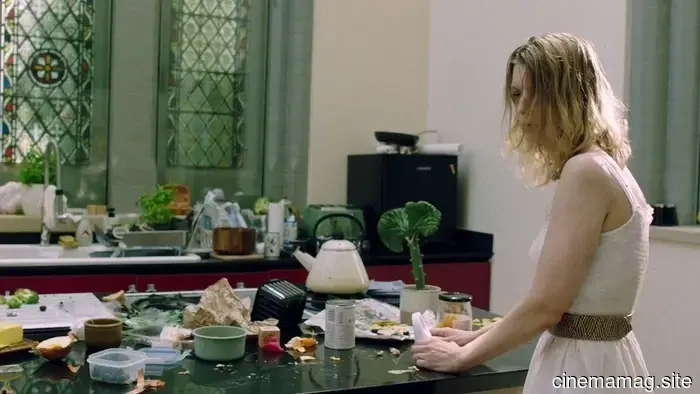
In 'Sleepeater,' Two Women Refuse the Caretaker Role — and Opt for Dad's House Instead.
“Sleepeater” director Amrita Acharia remarks that women are frequently assigned caregiver roles, whether they desire them or not — they are expected to take care of children, spouses, and aging parents alike.
In “Sleepeater,” lead characters Ahri and Matilda (performed by Jordan Alexandra and Amelia Clay) have little interest in caring for Ahri’s aging father (Emilio Doorgasingh). When he exhibits even minor signs of decline, they have him admitted to a facility and take over his modernist home, which they’ve been renovating together, committing to raising their new child there.
However, guilt starts to set in. And there are also numerous slugs. Their seemingly perfect life is disrupted by an unexpected sleeplessness.
The film is being screened today at the Poppy Jasper International Film Festival as a part of LGBTQ Day. We spoke with Acharia and her co-writer Max Krupski about themes of sleep, the decision not to worry about making characters likable, and finding an appropriate substitute for slugs.
Amrita Acharia and Max Krupski Discuss Creating ‘Sleepeater’
MovieMaker: I really like the title and did a bit of research — I found that sleep eating is a sleep disorder akin to sleepwalking, where someone eats while asleep, often without realizing it. However, this doesn’t seem to be the central theme of the film — at least not literally. Can you explain how you came up with the title?
Amrita Acharia: Max and I have both dealt with insomnia and its impacts on our physical and mental well-being. The title was conceived before the complete narrative was formed, based on Max's idea about two women caught in a continuous cycle of sleeplessness. The narrative connects to the guilt that gnaws at the women alongside the growing paranoia throughout the film.
Max Krupski: Yes, Amrita and I keep extensive lists of isolated moments or images that we develop into detailed stories. For “Sleepeater,” we found ourselves repeatedly drawn to the theme of guilt. The characters’ sleeplessness begins to erode their mental health and relationship uncontrollably. So, the title became both a literal and metaphorical representation in this context.
MovieMaker: Amrita, this is your second short film that addresses the challenges posed by aging parents. In your first short, “Carer,” a daughter feels overwhelmed by her mother’s care. In this film, a daughter (along with her partner) shuns that obligation. Can you share why this topic captivates you?
Amrita Acharia: Society often assumes caregiving roles for women, irrespective of individual circumstances. Opting to take "the best" route can invite judgment, guilt, and feelings of neglect. In “Sleepeater,” the choice leads to sleeplessness — whether viewed as a curse, guilt, or something else entirely. Ultimately, it’s less about the specific topic and more about depicting women in “unpalatable” situations that may disconcert viewers.
MovieMaker: We have been conditioned by past narratives to root for your protagonists since they fall into the traditional categories we typically cheer for: they are a loving couple and are young mothers. Yet, almost immediately, they make a seemingly cold decision to send the elderly father away and take control of the house they were renovating with him, despite his initial appearance of not needing professional care. As the story takes a darker turn, we empathize with their struggles while also considering the unfortunate fate of the man they've sent away. How did you navigate making them both sympathetic and unsympathetic, and how does this serve the story?
Amrita Acharia: Max and I generally seek to reveal the most truthful and human aspects of our characters, intentionally not avoiding their darker, less socially acceptable traits, particularly in women. Instead of concentrating on whether the characters are likable or if we can sympathize with them, our aim is to depict their actions and behaviors as both relatable and questionable.
I don't believe it's necessary for the audience to root for them to connect with the narrative or provoke an emotional response. If there is a perceived balance in how they are viewed as sympathetic or not, that largely depends on the viewer's personal connection to the characters and their circumstances — I think this balance is achieved by anchoring them in reality, unafraid of potential dislike.
Max Krupski: Sometimes people do wrong things; it’s part of being human. What matters is how one responds after making a mistake. We always said that if the couple could just find a moment of clarity to communicate honestly, they’d be alright. However, the guilt manifests as sleeplessness, isolating them and ultimately sealing their fate.
MovieMaker: Amrita, you have a flourishing acting career aside from directing. Yet, you haven't acted in your own films so far. Why do you prefer to keep these roles separate?
Amrita Acharia: I believe in never
Other articles
 In a Doctor Who adventure, the Ninth Doctor and Rose encounter a Pandemonium.
The Ninth Doctor Adventures: Pandemonium, a fresh adventure featuring the Ninth Doctor, is now available from Big Finish. This installment delivers total chaos to the Powell Estate. The past has b...
In a Doctor Who adventure, the Ninth Doctor and Rose encounter a Pandemonium.
The Ninth Doctor Adventures: Pandemonium, a fresh adventure featuring the Ninth Doctor, is now available from Big Finish. This installment delivers total chaos to the Powell Estate. The past has b...
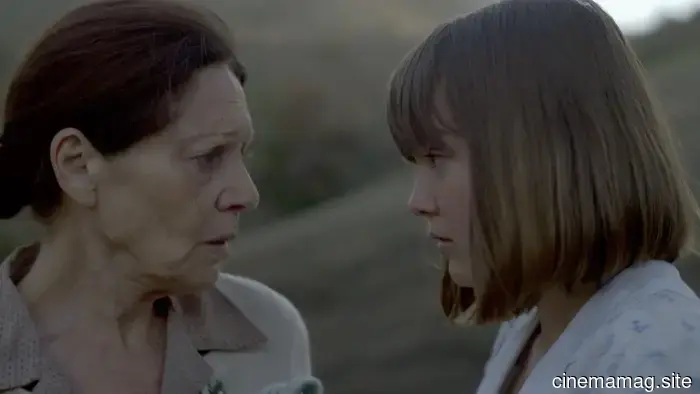 In the haunting narrative 'Lineage,' Michelle West uncovers family secrets.
Recently, Michelle West requested her Aunt Carol to share some family tales. What her aunt shared laid the foundation for West's intriguing new short film.
In the haunting narrative 'Lineage,' Michelle West uncovers family secrets.
Recently, Michelle West requested her Aunt Carol to share some family tales. What her aunt shared laid the foundation for West's intriguing new short film.
-.png) Top Online Casinos in Australia 2026: Five Best Real Money Casino Sites for Australians (Quick Withdrawals) -
In 2026, Australian players are moving beyond selecting casinos solely based on welcome bonuses. The key factor now lies in quick withdrawals and reliability.
Top Online Casinos in Australia 2026: Five Best Real Money Casino Sites for Australians (Quick Withdrawals) -
In 2026, Australian players are moving beyond selecting casinos solely based on welcome bonuses. The key factor now lies in quick withdrawals and reliability.
 Mondo introduces He-Man 2.0 as part of its sixth scale figure collection for Masters of the Universe.
Mondo has revealed its upcoming sixth scale figure for Masters of the Universe, introducing He-Man 2.0, a deluxe edition of the Champion of Eternia. This figure includes a variety of accessories, including interchangeable...
Mondo introduces He-Man 2.0 as part of its sixth scale figure collection for Masters of the Universe.
Mondo has revealed its upcoming sixth scale figure for Masters of the Universe, introducing He-Man 2.0, a deluxe edition of the Champion of Eternia. This figure includes a variety of accessories, including interchangeable...
.png) Best Online Casinos Australia 2026: Top 5 Australian Online Casinos Offering the Largest Welcome Bonuses (Verified)
For Australian users looking for the top online casinos, Wild Tokyo is notable for its quick withdrawals, excellent online pokies, and a
Best Online Casinos Australia 2026: Top 5 Australian Online Casinos Offering the Largest Welcome Bonuses (Verified)
For Australian users looking for the top online casinos, Wild Tokyo is notable for its quick withdrawals, excellent online pokies, and a
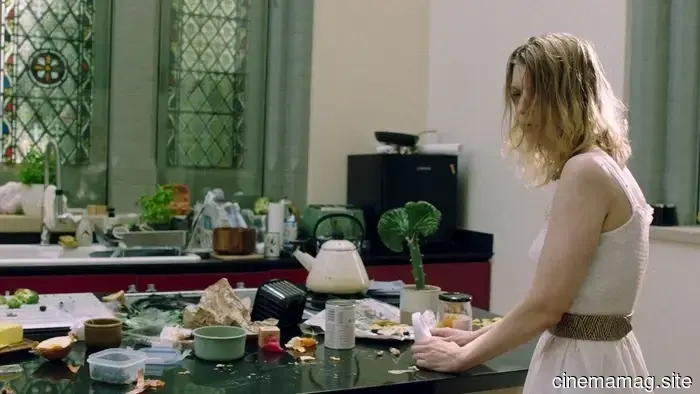 In 'Sleepeater,' Two Women Disavow the Caretaker Role — and Claim Their Father's House Instead
"Sleepeater" director Amrita Acharia observes that women frequently receive caregiver responsibilities, regardless of their desires — they are expected to provide care not only for
In 'Sleepeater,' Two Women Disavow the Caretaker Role — and Claim Their Father's House Instead
"Sleepeater" director Amrita Acharia observes that women frequently receive caregiver responsibilities, regardless of their desires — they are expected to provide care not only for
In 'Sleepeater,' Two Women Refuse the Caretaker Role — and Opt for Dad's House Instead.
"Sleepeater" director Amrita Acharia observes that women frequently find themselves in caregiver positions, regardless of their desire to be in such roles — they are expected to provide care for