
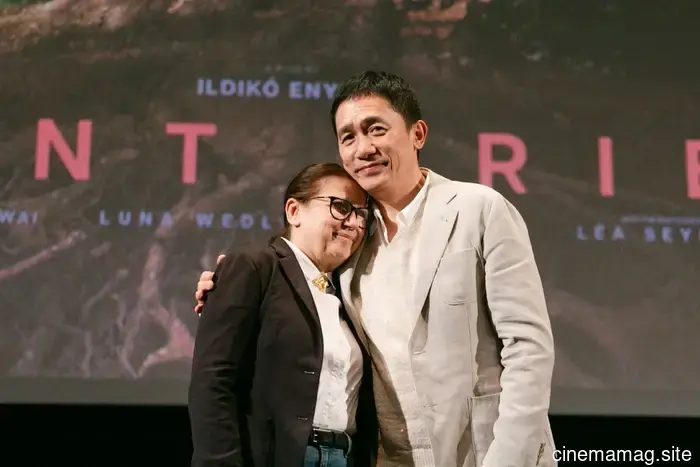
“Everything Happens by Chance”: Tony Leung Discusses His Silent Friend, Léa Seydoux, and Ryûsuke Hamaguchi
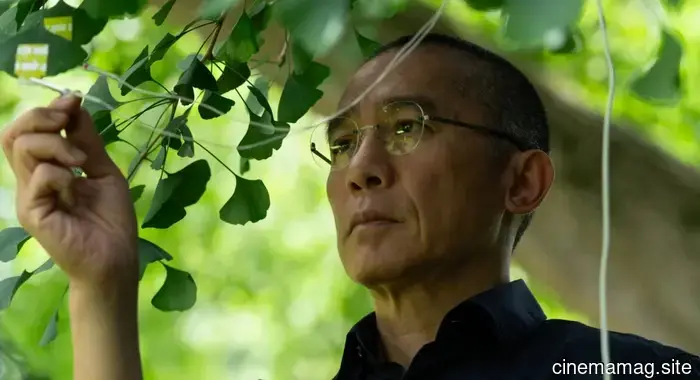
Loving contemporary cinema and having admiration for Tony Leung are almost synonymous. One need look no further than the recent retrospective at Film at Lincoln Center highlighting the actor's work: whether the selection was a programming triumph or simply a film that has been screened so frequently that it feels like every New Yorker has seen it, the film featured Leung, and consequently, securing tickets for the 268-seat Walter Reade theater turned out to be nearly impossible. This series coincided with Ildikó Enyedi’s Silent Friend, which provides, amidst a vast collection of films, one of Leung’s more subdued performances and, with his noticeably more mature appearance, serves as a poignant reminder of the decades he has dedicated to his craft.
Having spent more time observing Leung than nearly any other actor, I consider myself fortunate to have had the opportunity to sit down with him during his first trip to New York since the release of The Grandmaster in 2013. He speaks in a soft and kind manner, effortlessly shifting from deep contemplation to joyful laughter. (I suspect these traits are intrinsic to acting and cannot be cultivated.) For someone of his prominence, Leung is almost humorously devoid of arrogance—dressed in a dark Adidas tracksuit that emphasized his laid-back demeanor—and encourages a conversation free of pressure.
As you arrive toward the conclusion of Film at Lincoln Center’s retrospective, you've been acting since a young age, allowing us to witness your evolution from a man in his early 20s to where you are today. In Silent Friend, it was striking to see you—despite the assistance of a hair and makeup team—appearing and sounding your age of 60. Your body of work captures the journey of your face, physique, and voice as they have transformed over the years.
Tony Leung: I didn’t do this purposefully. [Laughs] I’m just fortunate: I began my career during the golden era of Hong Kong cinema. As a result, I had the opportunity to collaborate with various crews, directors, and explore diverse genres of films. But I never intentionally planned my career path. I didn’t outline my next steps.
Despite not having a specific plan, your career has been remarkable—not just in terms of the films but also the esteemed individuals you have worked alongside. To name just a few: Maggie Cheung, Leslie Cheung, Chow Yun-fat, the Five Tiger Generals. In this film, you act alongside Léa Seydoux. Your characters often experience silence and solitude, yet you are also very generous with your co-stars. What qualities do you look for in a scene partner? How do co-stars influence your performance?
It really depends on the partner you have. When there is trust and familiarity, improvisation becomes possible, allowing us to experiment in each scene. The dynamic you build with your partner is crucial; I think it plays a significant role. For instance, when Leslie and I worked together in Buenos Aires, we spent a lot of time together outside of filming. We learned tango, practiced Spanish, had dinners together—all to establish the unique relationship that mirrored our characters in the movie [Happy Together].
With Maggie, it’s essential to feel a genuine affection for your co-star [Laughs] to convey authenticity in your performances.
You can’t fake it.
Exactly, you cannot fake it. Audiences can sense whether you genuinely like your co-star or not. [Laughs] It’s impossible to hide. That’s how I approach my partnerships. But yes, after filming, you must remind yourself, “This is just a film.” You need to return to your own life.
In Silent Friend, your communication with Léa Seydoux primarily occurs through the computer. How did you prepare for that?
I first met her at the Venice Film Festival, and I found her to be incredibly charismatic. She’s an excellent actor. Prior to filming, we had one or two dinners in Marbach, Germany. During the shoot, we actually worked simultaneously on the same floor but in separate rooms, so we rehearsed together with the director. Since our relationship wasn't very intimate, it made things simpler to navigate, and I only knew her from a TED Talk, which made it easy to ask for help in understanding the nature of our characters’ relationship, which was somewhat superficial.
There was no need to overthink it. When we rehearsed and the director was satisfied with our dialogue, we returned to our respective spaces to shoot. It made the process smoother, as we didn’t have to invest too much time communicating since we were both outsiders to each other.
You have tackled romance, comedy, and action. Sometimes people overlook the fact that you have done some quite dark films, like Cyclo or The Longest Nite…
Lust, Caution.
…Bullet in the Head. Even the original ending of In the Mood for Love was deeply upsetting. Silent Friend is a softer
Other articles
 NYC Weekend Preview: Kazuhiko Hasegawa, Pynchonesque, Max and Richard Fleischer, the Pusher Trilogy, and More
NYC Weekend Watch is our weekly compilation of repertory screenings. Japan Society is showcasing Kazuhiko Hasegawa's Anarchic Ethos, which includes an extremely rare print of The Man Who Stole the Sun—my choice for one of the 10 greatest films of all time—along with his other directorial work, The Youth Killer, presented on 16mm film, and two screenwriting contributions. BAM will feature films by Orson Welles, Alan Rudolph, Paul
NYC Weekend Preview: Kazuhiko Hasegawa, Pynchonesque, Max and Richard Fleischer, the Pusher Trilogy, and More
NYC Weekend Watch is our weekly compilation of repertory screenings. Japan Society is showcasing Kazuhiko Hasegawa's Anarchic Ethos, which includes an extremely rare print of The Man Who Stole the Sun—my choice for one of the 10 greatest films of all time—along with his other directorial work, The Youth Killer, presented on 16mm film, and two screenwriting contributions. BAM will feature films by Orson Welles, Alan Rudolph, Paul
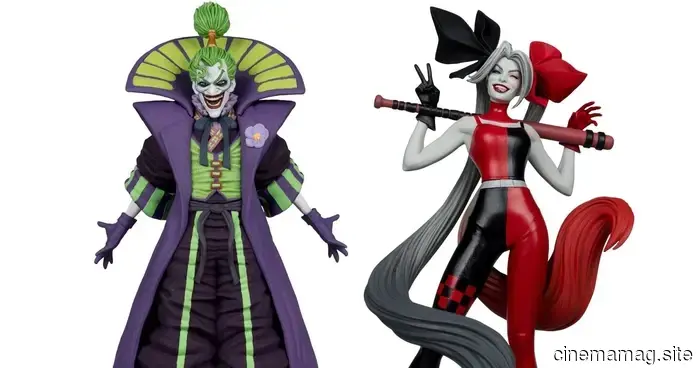 McFarlane Toys has revealed collectible statues of Lord Joker and Harley Quinn from DC Direct.
McFarlane Toys has officially revealed two new 1:10 scale DC Direct collectible statues: Lord Joker (The Demon King) from the 2018 animated film Batman Ninja and Harley Quinn inspired by th…
McFarlane Toys has revealed collectible statues of Lord Joker and Harley Quinn from DC Direct.
McFarlane Toys has officially revealed two new 1:10 scale DC Direct collectible statues: Lord Joker (The Demon King) from the 2018 animated film Batman Ninja and Harley Quinn inspired by th…
 This summer, anticipate the arrival of Marvel Snap Swimsuit Variant Covers.
Marvel Comics has revealed a collaboration with the popular card game Marvel Snap, featuring eight of its female heroes donning their summer swimwear for an exciting lineup of Marvel Snap swimwear.
This summer, anticipate the arrival of Marvel Snap Swimsuit Variant Covers.
Marvel Comics has revealed a collaboration with the popular card game Marvel Snap, featuring eight of its female heroes donning their summer swimwear for an exciting lineup of Marvel Snap swimwear.
 World of Tanks Modern Armor is set to launch a new Warriors event.
A completely new event is set to launch for World of Tanks Modern Armor on May 12th, where players will engage in combat under the banner of one of history's most powerful commanders. This event will run until June 1st, featuring the new Warri...
World of Tanks Modern Armor is set to launch a new Warriors event.
A completely new event is set to launch for World of Tanks Modern Armor on May 12th, where players will engage in combat under the banner of one of history's most powerful commanders. This event will run until June 1st, featuring the new Warri...
 Our 20 Most Anticipated Premieres at the 2026 Cannes Film Festival
It’s the most thrilling time of the year for any film lover: the Cannes Film Festival is about to begin next week, taking place from May 12th to 23rd. In preparation for the celebrations, we’ve compiled a list of what we’re eagerly anticipating. While we’re certain there will be plenty of surprises, as is the case every year, you can expect to find twenty films that will.
Our 20 Most Anticipated Premieres at the 2026 Cannes Film Festival
It’s the most thrilling time of the year for any film lover: the Cannes Film Festival is about to begin next week, taking place from May 12th to 23rd. In preparation for the celebrations, we’ve compiled a list of what we’re eagerly anticipating. While we’re certain there will be plenty of surprises, as is the case every year, you can expect to find twenty films that will.
 Fast Payout Casinos Australia 2026 | Which Online Casinos Offer Instant Payouts in Australia? View the Latest Updates.
In this article, we evaluate and rank the top online pokies casinos in Australia that offer instant withdrawals, utilizing important criteria such as Crypto Payout Velocity (CPV) and
Fast Payout Casinos Australia 2026 | Which Online Casinos Offer Instant Payouts in Australia? View the Latest Updates.
In this article, we evaluate and rank the top online pokies casinos in Australia that offer instant withdrawals, utilizing important criteria such as Crypto Payout Velocity (CPV) and
“Everything Happens by Chance”: Tony Leung Discusses His Silent Friend, Léa Seydoux, and Ryûsuke Hamaguchi
A passion for contemporary cinema and an appreciation for Tony Leung go hand in hand. A clear example of this is Film at Lincoln Center’s recent retrospective on the actor: whether it was a strategic choice in programming or a familiar film that seems to have been viewed by virtually every New Yorker, it featured Leung in the lead role, and