
Cannes Review: Na Hong-Jin’s Hope is a High-Energy Creature Film That Disappoints
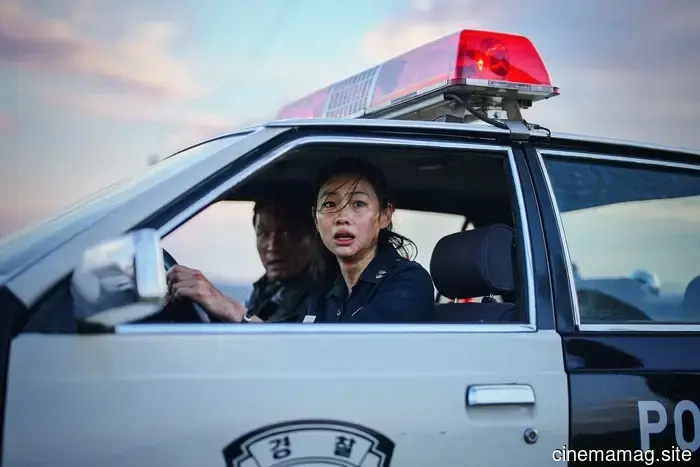
It's never truly nighttime in Hope Harbor—at least not while we’re there. The apocalyptic events of writer-director Na Hong-Jin’s highly anticipated film, Hope, unfold during a relentless, exhausting day-long chase involving a mismatched ensemble of small-town South Korean police, locals, and rural characters, creating a mix of heroic and humorous moments in this rambling creature-feature tale.
Police chief Bum-seok (Hwang Jung-min) is a stubborn, quick-tempered fool who believes he is a significant, influential figure in his rural area, if not the smartest person around, a mindset that colors his every remark as condescending. Similar to Joaquin Phoenix’s Sheriff Joe Cross, Bum-seok is convinced he knows more than everyone else, but the real punchline is on him. When farmers notify him about a cow's bizarre death—slashed and left uneaten—he rushes into an investigation that turns into a twisted pursuit. Suddenly, Bum-seok finds himself being hunted by an invisible predator that has wreaked havoc throughout Hope Harbor.
It takes a tension-filled 45 minutes for Na to disclose the enormous alien-demon responsible, a reveal that begins with interest but quickly shifts to willful ignorance for those hoping to enjoy the film without overly scrutinizing the poor quality of the CGI monster. The same duration is required for Bum-seok’s partner, Sung-ae (Hoyeon)—whose entrance elicited wild excitement from the audience—to turn the tide. However, this victory is short-lived. It quickly becomes apparent that the first creature is merely one of many, and as more citizens seek the assistance of the pair of cops, the film starts to stumble with overly long scenes, CGI flaws, and a weak screenplay reminiscent of Kevin Feige.
The simplest way to characterize Hope, while keeping most of its monster mysteries intact, is: Eddington meets Spielberg’s War of the Worlds meets Attack on Titan. Ironically, these clear and commendable influences possess what Hope struggles to achieve. Na’s personal project shares some elements with Ari Aster’s small-town humor. For example, a scene featuring a local ginseng gatherer who dramatically recounts the details of his experience when he first encountered one of the monsters in the woods is amusing. Yet, it doesn’t come close to Eddington's depth of character, narrative intricacy, or rich set of ideas across various political and thematic landscapes.
Like War of the Worlds, Hope features impressive set pieces and intense chase sequences. However, Spielberg's invasion film carries significant narrative weight—unlike the 1953 original—that builds stakes allowing audiences to engage and become immersed. Hope lacks this depth. Small hints of xenophobia peek out in Na's efforts to give the aliens a sense of humanity and tragic backstory. The scant symbolic gestures provide none of the spiritual and thematic richness found in his earlier work, particularly The Wailing.
What Hope does offer is a cinematographic approach that exudes creativity and thoughtfulness, showcasing production design that will leave viewers in awe. In this regard, DP Hong Kyung-pyo presents a wealth of breathtaking wide shots across the mountainous landscapes of Jeju Island. The cinematographer known for The Wailing, Burning, and Parasite innovatively reinterprets the ongoing chase with captivating, rapid camera movements, beautifully capturing Romania’s Retezek National Park's lush greens and towering trees. To create the village, production designer Lee Hwokyoung undertook a monumental task of constructing massive holes running through the wreckage of destroyed buildings, with streets strewn with disaster debris on an extraordinary Hollywood scale.
The alien beings (played by Michael Fassbender, Alicia Vikander, Taylor Russell, and Cameron Britton) were intricately motion-captured for their gigantic extraterrestrial performances, with faces mapped onto the imposing creatures. However, their expressions and somewhat imaginative designs are significantly hindered by basic CGI, rendering emotional moments unintentionally funny and action sequences ineffective. This serves as a stark example of what occurs when a production fails to allocate sufficient time, resources, or personnel to its visual effects teams.
As the new holder of the title for South Korea's most expensive film, Hope hints at the potential for a fresh international arthouse approach to a long-oversaturated sci-fi blockbuster subgenre. Although it may surpass a Marvel film in terms of cinematic craftsmanship, it offers little more in terms of storyline, character development, and depth. What starts as an engaging adventure into a monster mystery ultimately collapses as a mediocre creature feature that feels an entire hour too lengthy.
Hope debuted at the 2026 Cannes Film Festival and is set to be released this fall by NEON.
Other articles
-5-Leading-Instant-Withdrawal-Casinos-Reviewed-MovieMaker.png) Quick Payout Online Casinos in Australia (May 2026): A Review of 5 Top Casinos with Instant Withdrawals - MovieMaker
Looking for the top fast payout casinos in Australia? Your quest concludes here; our expert team has dedicated countless hours to testing and reviewing over 50 Australian establishments.
Quick Payout Online Casinos in Australia (May 2026): A Review of 5 Top Casinos with Instant Withdrawals - MovieMaker
Looking for the top fast payout casinos in Australia? Your quest concludes here; our expert team has dedicated countless hours to testing and reviewing over 50 Australian establishments.
 Top Australian Online Casinos for Real Money Gaming in 2026 - Leading Pokies & Quick Withdrawal Casino Sites -
The top online casinos in the Australian market for 2026 prioritize speed, trust, and genuine value over extravagant promotions. Players are now seeking quick withdrawals,
Top Australian Online Casinos for Real Money Gaming in 2026 - Leading Pokies & Quick Withdrawal Casino Sites -
The top online casinos in the Australian market for 2026 prioritize speed, trust, and genuine value over extravagant promotions. Players are now seeking quick withdrawals,
 Top Australian Online Slots for Real Money: 5 Most Reliable Casinos in Australia - Leading PayID Slots Selection -
Hello Aussie punters! Are you fed up with looking for the top online pokies casinos in Australia? No need to stress; we’re here to help you find the ideal option. Our
Top Australian Online Slots for Real Money: 5 Most Reliable Casinos in Australia - Leading PayID Slots Selection -
Hello Aussie punters! Are you fed up with looking for the top online pokies casinos in Australia? No need to stress; we’re here to help you find the ideal option. Our
 Cannes Review: Na Hong-Jin’s Hope Is a High-Octane Creature Film That Doesn’t Hit the Mark
In Hope Harbor, it’s always day as long as we are present. The apocalyptic happenings in writer-director Na Hong-Jin’s action-packed, eagerly awaited film unfold within a lengthy, exhausting, continuous chase that takes place over one day, featuring a mismatched group of small-town South Korean police officers, locals, and outcasts, a cast that varies from heroic to...
Cannes Review: Na Hong-Jin’s Hope Is a High-Octane Creature Film That Doesn’t Hit the Mark
In Hope Harbor, it’s always day as long as we are present. The apocalyptic happenings in writer-director Na Hong-Jin’s action-packed, eagerly awaited film unfold within a lengthy, exhausting, continuous chase that takes place over one day, featuring a mismatched group of small-town South Korean police officers, locals, and outcasts, a cast that varies from heroic to...
-5-Leading-Instant-Withdrawal-Casinos-Reviewed-MovieMaker.png) Fast Payout Online Casinos Australia (May 2026): A Review of 5 Top Casinos with Instant Withdrawals - MovieMaker
Looking for the top fast payout casinos in Australia? Your quest concludes here; our expert team has dedicated hours to testing and reviewing more than 50 Australian casinos.
Fast Payout Online Casinos Australia (May 2026): A Review of 5 Top Casinos with Instant Withdrawals - MovieMaker
Looking for the top fast payout casinos in Australia? Your quest concludes here; our expert team has dedicated hours to testing and reviewing more than 50 Australian casinos.
-5-Leading-Instant-Withdrawal-Casinos-Reviewed-MovieMaker.png) Fast Payout Online Casinos in Australia (May 2026): Review of 5 Top Casinos with Instant Withdrawals - MovieMaker
Looking for the top fast payout casinos in Australia? Your quest concludes here; our team of specialists has dedicated hours to testing and evaluating more than 50 Australian casinos.
Fast Payout Online Casinos in Australia (May 2026): Review of 5 Top Casinos with Instant Withdrawals - MovieMaker
Looking for the top fast payout casinos in Australia? Your quest concludes here; our team of specialists has dedicated hours to testing and evaluating more than 50 Australian casinos.
Cannes Review: Na Hong-Jin’s Hope is a High-Energy Creature Film That Disappoints
In Hope Harbor, it is never night, at least while we are present. The apocalyptic happenings of writer-director Na Hong-Jin's eagerly awaited film, Hope, take place during a relentless, exhausting day filled with a continuous chase, featuring a motley crew of small-town South Korean police, locals, and simple folk, an ensemble that includes heroic figures.