
Cannes Review: Na Hong-Jin’s Hope Is a High-Octane Creature Film That Doesn’t Hit the Mark
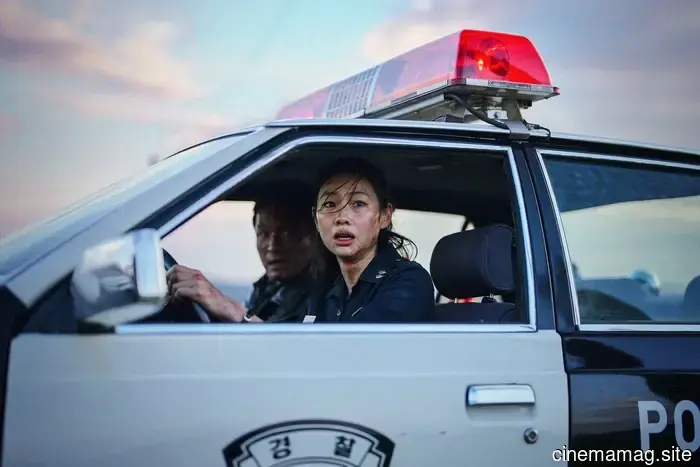
Hope Harbor is never really night. At least, not while we’re present. The apocalyptic events of writer-director Na Hong-Jin’s highly anticipated film, Hope, unfold during an exhausting, relentless day for a mismatched team of South Korean cops and locals, an eclectic mix that shifts from heroic to comedic in this outrageous creature-featurefantasy.
Police chief Bum-seok (Hwang Jung-min) is a stubborn, hotheaded fool who considers himself a significant authority in his rural area, as well as the smartest person around, resulting in a patronizing tone in everything he says. Similar to Joaquin Phoenix's Sheriff Joe Cross, Bum-seok believes he is wiser than everyone else, but the irony is on him. When a group of farmers reports the unusual death of a cow that has been brutally mutilated yet remains uneaten, he rushes into an investigation that turns into a reversed pursuit. Now, Bum-seok has become the target of an unknown, unseen predator that has ravaged every inch of Hope Harbor.
Na takes a suspenseful 45 minutes to introduce the colossal alien-demon behind the chaos, an unveiling that begins with intrigue but swiftly turns into willful ignorance for those who want to enjoy the film without fixating on the poor CGI quality of the monster in action. It also takes the same duration for Bum-seok’s colleague Sung-ae (Hoyeon), whose entrance elicited enthusiastic cheers from the audience, to come to the rescue. However, this relief is short-lived. The initial monster turns out to be just one among many, and as more citizens approach the two officers for assistance, Hope struggles with excessively lengthy sequences, flawed CGI, and a weak script that would suit Kevin Feige better.
A simple way to characterize Hope, while keeping the majority of its monster mysteries intact, is to say: Eddington meets Spielberg’s War of the Worlds meets Attack on Titan. The irony in these clear and worthy influences is that they encompass elements that Hope fails to achieve. Na’s passion project resonates with some of Ari Aster’s small-town humor, featuring a scene where a local ginseng hunter shares a ridiculous amount of detail about his bowel movement when he first encountered one of the monsters in the woods. Yet, it pales in comparison to Eddington‘s character development, narrative intricacies, and a rich collection of ideas spanning political and thematic realms.
Like War of the Worlds, Hope showcases remarkable set pieces and high-speed chase sequences. Nevertheless, there’s narrative depth in Spielberg’s invasion saga, similar to the original from 1953—a weight that elevates stakes in which audiences can engage and fully immerse themselves. In that respect, Hope is lacking. Faint traces of xenophobia are hinted at in Na’s effort to give the aliens a sense of soul and tragic narrative. However, the thinly veiled symbolism misses the spiritual depth and thematic richness seen in his earlier work, particularly in The Wailing.
What Hope does offer is a distinctive approach to cinematography that shines with creativity and thoughtfulness, capturing production design that will astonish viewers. Cinematographer DP Hong Kyung-pyo presents numerous stunning wide shots across Jeju Island’s picturesque mountain-village scenery. The brilliance behind The Wailing, Burning, and Parasite finds seemingly endless ways to reinvent the ongoing chase with dynamic, fast-paced camera work, showcasing the lush, mossy greens and towering trees of Romania’s Retezek National Park with remarkable artistry. To realize the village, production designer Lee Hwokyoung undertook a monumental task in crafting gigantic holes throughout the destroyed buildings, with streets strewn with disaster debris at an extraordinary, Hollywood-level scale.
The extraterrestrial beings (portrayed by Michael Fassbender, Alicia Vikander, Taylor Russell, and Cameron Britton) were carefully motion-captured for their massive otherworldly performances, with faces mapped onto massive creatures whose expressions and somewhat imaginative designs are considerably hindered by the basic CGI, rendering emotional moments amusing and action-packed sequences ineffective. This is a glaring example of what occurs when productions do not allocate sufficient time, budget, or personnel to their visual effects teams.
As the new record-holder for South Korea’s most-expensive film, Hope hints at a promising fresh arthouse approach to a long-exhausted subgenre within the sci-fi blockbuster realm. While it may showcase more cinematic craftsmanship than a Marvel film, it offers little in terms of story, character, and depth. What starts as an exhilarating adventure through monster mysteries ultimately falls short, becoming a mediocre creature feature that stretches a whole hour too long.
Hope premiered at the 2026 Cannes Film Festival and is set to be released this fall by NEON.
Other articles
 Cannes Review: All of a Sudden Represents Ryusuke Hamaguchi's Most Compassionate and Humanistic Work So Far
"Are truly healthy individuals really alive?" Early on in All of a Sudden, Marie-Lou (Virginie Efira) encounters the question that serves as a tagline for Ryusuke Hamaguchi’s latest film. As the director of a private clinic in Paris for seniors, she observes a performance centered around Franco Basaglia, the Italian psychiatrist who, during the late 1970s,
Cannes Review: All of a Sudden Represents Ryusuke Hamaguchi's Most Compassionate and Humanistic Work So Far
"Are truly healthy individuals really alive?" Early on in All of a Sudden, Marie-Lou (Virginie Efira) encounters the question that serves as a tagline for Ryusuke Hamaguchi’s latest film. As the director of a private clinic in Paris for seniors, she observes a performance centered around Franco Basaglia, the Italian psychiatrist who, during the late 1970s,
 Sophie Thatcher and Charles Melton Star in the Initial Teaser for Nicolas Winding Refn’s Her Private Hell
It has been a complete ten years since The Neon Demon, during which Nicolas Winding Refn engaged in extensive streaming projects like Too Old to Die Young and Copenhagen Cowboy, which could be seen as a valuable career on their own. Now, he is back to making feature films. Fortunately, from the initial glimpse, not much appears to have altered. As Her Private Hell makes its debut at Cannes today, the first teaser featuring Sophie has been released.
Sophie Thatcher and Charles Melton Star in the Initial Teaser for Nicolas Winding Refn’s Her Private Hell
It has been a complete ten years since The Neon Demon, during which Nicolas Winding Refn engaged in extensive streaming projects like Too Old to Die Young and Copenhagen Cowboy, which could be seen as a valuable career on their own. Now, he is back to making feature films. Fortunately, from the initial glimpse, not much appears to have altered. As Her Private Hell makes its debut at Cannes today, the first teaser featuring Sophie has been released.
 Top Australian Online Casinos for Real Money Gaming in 2026 - Leading Pokies & Quick Withdrawal Casino Sites -
The top online casinos in the Australian market for 2026 prioritize speed, trust, and genuine value over extravagant promotions. Players are now seeking quick withdrawals,
Top Australian Online Casinos for Real Money Gaming in 2026 - Leading Pokies & Quick Withdrawal Casino Sites -
The top online casinos in the Australian market for 2026 prioritize speed, trust, and genuine value over extravagant promotions. Players are now seeking quick withdrawals,
 Top Australian Online Pokies for Real Money: 5 Most Reliable Casinos in Australia - Best PayID Pokies Selection -
Hey Aussie gamblers, are you fed up with looking for the top online pokies casinos in Australia? No need to fret, we’re here to help you discover the ideal option. Our
Top Australian Online Pokies for Real Money: 5 Most Reliable Casinos in Australia - Best PayID Pokies Selection -
Hey Aussie gamblers, are you fed up with looking for the top online pokies casinos in Australia? No need to fret, we’re here to help you discover the ideal option. Our
 Cannes Review: Dominga Sotomayor’s La Perra Moves Beyond Simple Metaphors to Embrace Suggestive Mysteries
On the gusty island where Dominga Sotomayor's La Perra takes place, there's a location where gas emanates from the ocean. A pipeline has ruptured near the coast, causing vapors to escape for ages. It's seen as a local wonder: individuals gather to ignite their lighters and observe the flames flicker.
Cannes Review: Dominga Sotomayor’s La Perra Moves Beyond Simple Metaphors to Embrace Suggestive Mysteries
On the gusty island where Dominga Sotomayor's La Perra takes place, there's a location where gas emanates from the ocean. A pipeline has ruptured near the coast, causing vapors to escape for ages. It's seen as a local wonder: individuals gather to ignite their lighters and observe the flames flicker.
 Top Australian Online Slots for Real Money: 5 Most Reliable Casinos in Australia - Leading PayID Slots Selection -
Hello Aussie punters! Are you fed up with looking for the top online pokies casinos in Australia? No need to stress; we’re here to help you find the ideal option. Our
Top Australian Online Slots for Real Money: 5 Most Reliable Casinos in Australia - Leading PayID Slots Selection -
Hello Aussie punters! Are you fed up with looking for the top online pokies casinos in Australia? No need to stress; we’re here to help you find the ideal option. Our
Cannes Review: Na Hong-Jin’s Hope Is a High-Octane Creature Film That Doesn’t Hit the Mark
In Hope Harbor, it’s always day as long as we are present. The apocalyptic happenings in writer-director Na Hong-Jin’s action-packed, eagerly awaited film unfold within a lengthy, exhausting, continuous chase that takes place over one day, featuring a mismatched group of small-town South Korean police officers, locals, and outcasts, a cast that varies from heroic to...