
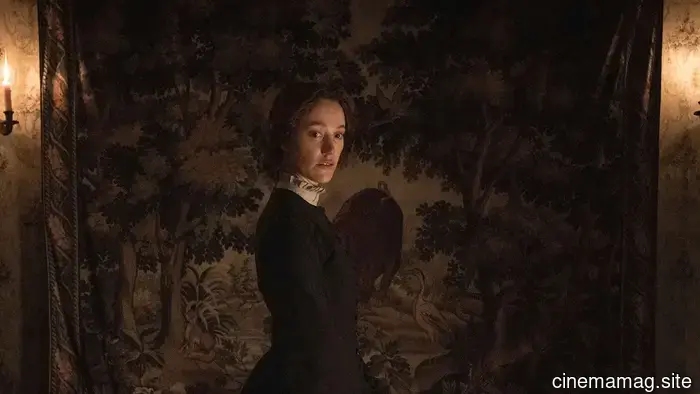
Cannes Review: Victorian Psycho is a Gothic horror film that exudes confidence and energy.
In 1858, during the pre-Freud era, a castle in the Yorkshire moors of Northern England, known as Ensor House, becomes the new home for young governess Winifred Notty (Maika Monroe, continuing her horror streak from Longlegs). What lies ahead for her is a predictably awkward wealthy family, the Pounds, consisting of Mrs. Pounds (Ruth Willson), Mr. Pounds (Jason Isaacs), their heir Andrew (Jacobi Jupe), and their teenage daughter Drusilla (Evie Templeton). However, the script—adapted from Virginia Feito’s novel of the same title—holds several surprises. By following the erotic thriller Sanctuary with a historical narrative and an enigmatic premise, director Zachary Wigon effectively embraces this shift towards gothic horror: the whimsically bizarre Victorian Psycho showcases both his versatility and dedication to the genre.
Upon arriving at the manor, Mrs. Notty (humorously similar to “naughty”) is charged with teaching the children about various subjects, from etiquette to family history, while ideally imparting her exemplary moral values. Concurrently, Winifred's confessional voiceover disrupts the film's dramatic flow with sarcastic comments hinting at her psychopathic traits, playfully engaging the audience. “My name is Winifred Notty and I’m the sanest person I’ve ever met,” she proclaims in the opening scene, eliciting both laughter and sympathy—especially since viewers have greater insight into the struggles faced by Victorian women than the characters do themselves. Though unspoken, Victorian Psycho aligns with the psychoanalytical notion that hysteria and pathology may represent the only rational responses to a chaotic world.
Monroe’s face is frequently captured in close-up shots with a slightly tilted angle that amplifies her unsettling, perpetual smile, as the camerawork by Nico Aguilar vividly reflects the character’s twisted psyche. The film employs canted angles, inverted frames, and tense, breathy camera movements that generate a thrilling sense of unease. Victorian Psycho acknowledges its influences from Brian De Palma and American Psycho, while treating its female lead with an interest that avoids fetishization. It deftly navigates the fine line between criticism and identification, using humor to defuse potential accusations of either. Mrs. Notty is refreshingly candid, even as she confesses to her criminal acts or delivers a lecture on malevolence. Even when she cruelly harms an innocent animal to illustrate a point, her eccentricity, reminiscent of Poor Things’ Bella Baxter, remains hard to resist.
Moreover, Victorian Psycho merits recognition for not romanticizing her character: the script (like the novel) ensures that we and other characters are informed of her troubled history from the start. Nonetheless, she acknowledges her “tender” feelings towards her darkness and expresses it with an elegance rarely seen in contemporary female-led horror films. Ariel Marx’s unconventional score accompanies Winifred’s descent into madness, weaving in whispers and screams that haunt her, as well as strings and dramatic themes that highlight the theatricality and enjoyment she finds in each act of cruelty.
Beyond being a skillfully crafted thriller, Victorian Psycho emerges as an engaging comedy, with its trio of remarkable actors delivering lines with perfect stoicism. Like Monroe, Wilson and Isaacs complement each other perfectly as they attempt to outdo one another's absurdity while revealing their characters’ cold-heartedness without hesitation. The award for Best Inanimate Object Cameo should go to the pineapple (perhaps a nod to a line in Yorgos Lanthimos’ The Favourite) delightfully claimed by young master Andrew, serving as one of the film’s milder comedic moments. Even if you typically don't appreciate the type of dark humor Victorian Psycho presents—slightly misandrist, at times anti-natalist, yet always anti-classist—Wigon and his team might just persuade you to embrace that darker humor, if only during the film’s runtime.
Victorian Psycho debuted at the 2026 Cannes Film Festival and is set to release on September 25.
Other articles
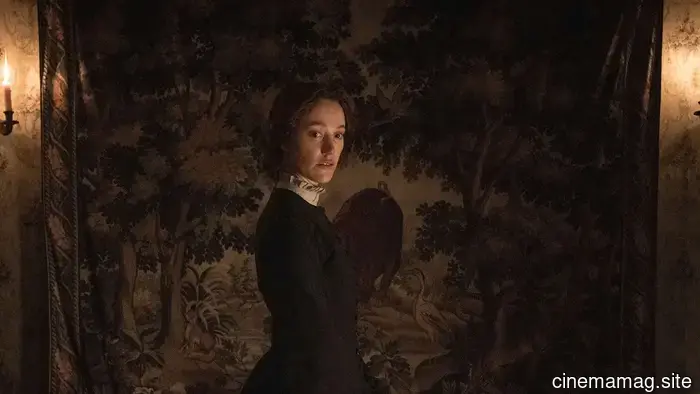 Cannes Review: Victorian Psycho Exudes Gothic Horror with Boldness and Energy
In 1858, before Freud's influence, a castle known as Ensor House located in the Yorkshire moors of Northern England becomes the new home for young governess Winifred Notty (Maika Monroe, continuing her horror theme from Longlegs). She is about to encounter a typically awkward and affluent family, the Pounds, which includes Mrs. Pounds (Ruth Willson),
Cannes Review: Victorian Psycho Exudes Gothic Horror with Boldness and Energy
In 1858, before Freud's influence, a castle known as Ensor House located in the Yorkshire moors of Northern England becomes the new home for young governess Winifred Notty (Maika Monroe, continuing her horror theme from Longlegs). She is about to encounter a typically awkward and affluent family, the Pounds, which includes Mrs. Pounds (Ruth Willson),
 Hasbro reveals new action figures from the Marvel Legends Series along with Comic-Con exclusive items.
In the most recent Hasbro Pulse Fanstream, a variety of new Marvel Legends Series action figures were officially revealed, featuring Hulk 2099 and Future Foundation 2-packs for Mister Fantastic…
Hasbro reveals new action figures from the Marvel Legends Series along with Comic-Con exclusive items.
In the most recent Hasbro Pulse Fanstream, a variety of new Marvel Legends Series action figures were officially revealed, featuring Hulk 2099 and Future Foundation 2-packs for Mister Fantastic…
 Michael Bay set to helm a film centered on the rescue of U.S. pilots shot down in Iran.
Michael Bay is preparing to direct a new film inspired by actual U.S. military operations by adapting an upcoming book that recounts the rescue of two pilots who were shot down deep within enemy territory in Iran. According to…
Michael Bay set to helm a film centered on the rescue of U.S. pilots shot down in Iran.
Michael Bay is preparing to direct a new film inspired by actual U.S. military operations by adapting an upcoming book that recounts the rescue of two pilots who were shot down deep within enemy territory in Iran. According to…
 Michael Bay will direct a film centered on the rescue of U.S. pilots who were shot down in Iran.
Michael Bay is preparing to direct a new film inspired by actual U.S. military operations, adapting an upcoming book that portrays the rescue of two pilots who were shot down behind enemy lines in Iran. According…
Michael Bay will direct a film centered on the rescue of U.S. pilots who were shot down in Iran.
Michael Bay is preparing to direct a new film inspired by actual U.S. military operations, adapting an upcoming book that portrays the rescue of two pilots who were shot down behind enemy lines in Iran. According…
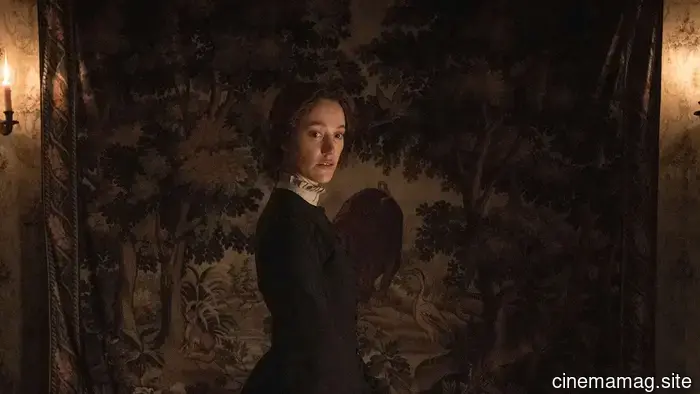 Cannes Review: Victorian Psycho Exhibits Gothic Horror with Assurance and Enthusiasm
In 1858, during the period before Freud, Ensor House, a castle located in the Yorkshire moors of Northern England, becomes the new home for young governess Winifred Notty (Maika Monroe, known for her recent horror projects like Longlegs). There, she encounters a typically awkward and affluent family, the Pounds, which includes Mrs. Pounds (Ruth Willson).
Cannes Review: Victorian Psycho Exhibits Gothic Horror with Assurance and Enthusiasm
In 1858, during the period before Freud, Ensor House, a castle located in the Yorkshire moors of Northern England, becomes the new home for young governess Winifred Notty (Maika Monroe, known for her recent horror projects like Longlegs). There, she encounters a typically awkward and affluent family, the Pounds, which includes Mrs. Pounds (Ruth Willson).
Cannes Review: Victorian Psycho is a Gothic horror film that exudes confidence and energy.
In 1858, before the era of Freud, a castle named Ensor House located in the Yorkshire moors of Northern England becomes the new residence of young governess Winifred Notty (Maika Monroe, known for her roles in horror films like Longlegs). She is set to encounter a typically awkward and affluent family, the Pounds, which includes Mrs. Pounds (Ruth Willson),