
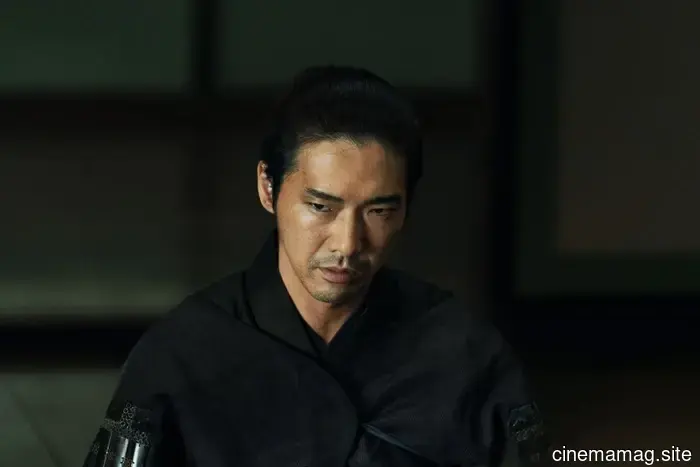
Cannes Review: Kiyoshi Kurosawa Weaves a Captivating Tale with The Samurai and the Prisoner
Lord Murashige Araki (Masahiro Motoki) is a man who dislikes killing. He is a samurai who governs Arioka Castle in 16th-century Japan, embodying a paradox—a warrior adhering to a ruthless code of conduct that he consistently disregards, much to the frustration of those around him. Throughout Kiyoshi Kurosawa’s first jidaigeki film, he finds himself called upon to execute individuals who have betrayed him, disobeyed his commands, or viewed death as their only path to honor. Nevertheless, he consistently declines, opting instead to imprison these offenders in Arioka’s dark dungeons. The distinction between mercy and cowardice is precariously thin, and his loyal followers must labor to justify these apparent acts of weakness as the prudent actions of a deserving ruler. “I cannot see into your heart,” his wife tells him early on, perplexed by his unconventional mercy. But does anyone truly understand?
Similar to its main character, The Samurai and the Prisoner is an intriguing anomaly. The film minimizes bloodshed and enjoys subverting genre conventions to compelling effect. Unlike other recent entries in the genre that have embraced larger, action-filled spectacles—such as Takeshi Kitano’s brutal 2023 Kubi—this film adopts a more measured, almost contemplative tone, reminiscent of mid-century masterpieces by Kenji Mizoguchi and Akira Kurosawa. Based on Honobu Yonezawa’s award-winning novel of the same name, it is divided into four chapters, each associated with a specific season. The story begins in winter 1578, with Arioka under siege from Nobunaga Oda, the tyrannical ruler Murashige once served. He also deals with the capture of Kanbei Kuroda (Masaki Suda, who last portrayed an online scammer in Kurosawa’s 2025 Cloud), an envoy Oda sent to the fortress for a diplomatic mission. While the enemy’s forces draw nearer, Murashige is more troubled by the mysterious murder of eight-year-old Jinen, the son of a former ally who has defected to Oda’s side. The child had previously implored Murashige to kill him as a means of atoning for his father’s betrayal, which was to no avail; when his body is discovered in one of Arioka’s rooms, Samurai takes on the quality of a courtroom drama, transforming Murashige into a detective-cum-prosecutor interrogating his retainers about their wrongdoings.
It is here that Kurosawa reveals his intentions. One interpretation of the confusion that permeates the narrative is that the film prioritizes dialogue over action—which does not suggest it is uneventful or excessively wordy. Samurai relies heavily on conversations, yet Kurosawa stages them as verbal duels. There’s a palpable tension in these exchanges, particularly those between Murashige and Kanbei, a clever strategist involved in solving the child’s murder—and the various other odd occurrences in this decidedly peculiar film—from within his cell. The atmosphere becomes increasingly ominous as Kurosawa captures the setting. Primarily set indoors, Samurai takes place within Arioka, where the historical Murashige isolated himself in 1578 after rebelling against his master. Cinematographer Yasuyuki Sasaki, who previously worked on Cloud, portrays the castle more as a prison than a sanctuary, creating a panopticon effect with his 360-degree camera movements across the inner courtyard.
Kurosawa has long excelled at using offscreen space to create tension. His 21st-century ghost stories—haunted by apparitions and sinister beings haunting cities that resemble graveyards—derive their chilling impact not just from what they display but also from what they deliberately conceal; the world just beyond his frames is always pulsing with an unsettling sense of peril. This technique reaches its peak here. Samurai is not devoid of violence; rather, much of it occurs outside of our sight. Aside from a night battle scene, we only hear accounts of Oda’s soldiers brutally advancing towards Arioka, of foes vanquished at the front, of Murashige’s subordinates achieving heroic deeds. Much of Samurai consists of rumors that may or may not hold truth, depending on one's beliefs, fueling the underlying paranoia throughout the film.
For a director renowned for his chilling allegories of our backward digital lives, the notably distinct setting may inspire discussions about Samurai as a divergence from Kurosawa’s typical body of work. Yet, Murashige's quest for liberation from the harsh bushido moral framework connects him to the marginalized figures in films like Cure, Pulse, or Cloud—outsiders equally determined to escape their confining societal structures, with all rules shattered. In his later years as a tea master, Kurosawa captures Murashige in what may be his most memorable scene, treating a few vassals to his special brew. With b

Other articles
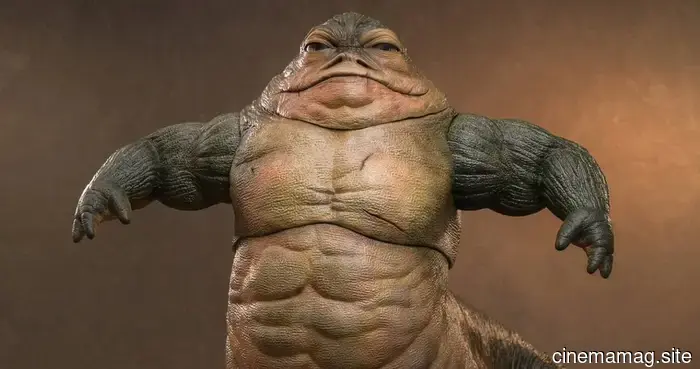 Hot Toys has revealed a sixth scale figure of Star Wars: The Mandalorian featuring Grogu and Rotta the Hutt.
Alongside the launch of Star Wars: The Mandalorian and Grogu, Hot Toys has officially revealed its sixth scale Rotta the Hutt action figure, which is now available for pre-order at a price of 5;…
Hot Toys has revealed a sixth scale figure of Star Wars: The Mandalorian featuring Grogu and Rotta the Hutt.
Alongside the launch of Star Wars: The Mandalorian and Grogu, Hot Toys has officially revealed its sixth scale Rotta the Hutt action figure, which is now available for pre-order at a price of 5;…
 Comic Book Preview – Wiccan & Hulkling: Ultron's Raid #1
Marvel Comics will launch Wiccan & Hulkling: Raid of Ultron #1 this Wednesday, and we have the official preview of the issue for you below… WICCAN & HULKLING REJOIN FAMILY… AND DA…
Comic Book Preview – Wiccan & Hulkling: Ultron's Raid #1
Marvel Comics will launch Wiccan & Hulkling: Raid of Ultron #1 this Wednesday, and we have the official preview of the issue for you below… WICCAN & HULKLING REJOIN FAMILY… AND DA…
Cannes Review: Kiyoshi Kurosawa Weaves a Captivating Tale with The Samurai and the Prisoner
Lord Murashige Araki (Masahiro Motoki) has an aversion to killing. As a samurai ruling over Arioka Castle in 16th-century Japan, he embodies a paradox—a fighter tied to a ruthless code of honor he easily disregards, much to the disappointment of his court. Throughout Kiyoshi Kurosawa’s inaugural jidaigeki, he is called upon to carry out executions of individuals who have