

Forastera Review: Engaging Drama Examines the Value of Life
It begins as a joke. Pepa (Núria Prims) calls to apologize to her mother, believing she is speaking to her on the other end. Her teenage daughter Cata (Zoe Stein) plays along, pretending to respond as her grandmother would, until Pepa finally realizes and calls her out by name. However, when this happens again, Catalina (Marta Angelat) has passed away. Yet, instead of sharing this information with the hairdresser, Cata pretends once more to be her grandmother to cancel the appointment and reassure her that she'll call soon for a touch-up.
Why? Because Cata isn't prepared to say goodbye to her grandmother. They were very close, having spent summers together at her beach house in Mallorca. They share the same name, and people frequently comment on how alike they look. This resemblance has led Pepa to ask her not to wear any of Catalina’s clothes while at the property, just in case her grandfather Tomeu (Lluís Homar) sees her. He is deeply affected by this loss—often speaking of her lingering spirit. Seeing Cata in one of his wife’s dresses might just add to his confusion.
What Pepa doesn’t realize is that Cata needs this confusion in order to avoid confronting reality. She was the one who discovered her grandmother facedown on the stone stairs. She’s the one grappling with PTSD whenever she sees a drunken co-ed lying on the beach. If Cata can persuade her grandfather to see her as Catalina, then the rest of their summer can persist as usual. There is even a sense of healing in the pretense that helps bring Tomeu out of his grief, but they both must eventually confront what has happened.
Lucía Aleñar Iglesias’ *Forastera* tracks Cata as she navigates her changed reality against the backdrop of what was once a carefree vacation with Swedish tourist Max (Nonni Ardal Hammarström) and her usual antics with her grandparents. Suddenly, with her grandmother gone and her mother back, the arguments and emotions she and her younger sister Eva previously ignored become too much for Cata, who starts to take on a matriarchal role to maintain her sanity. She is right in many situations, enough that her elders cease to insist she mind her tone.
It's hard for all of them. None knows how they should feel, as they’re often preoccupied with how the others feel. Tomeu wants to sulk in the current sadness. Pepa wants to take charge and plan for the future. Cata wishes to freeze time and return to the past. The contrasts lead to rising tensions, and they begin to resent each other’s perspectives instead of sitting down to listen. If this family has a singular trait, it’s their stubbornness.
What makes the drama truly compelling is that Cata's desire to channel her grandmother's spirit is not purely intentional. Indeed, she puts herself in situations that would alarm any mother regarding boundaries with a grieving man, but there’s a sweetness in many moments, even as she seems unable to prevent them. Cata doesn’t actively seek out the traumatic experience that caused Catalina to never swim in the Mediterranean again; it simply finds her, accompanied by a senseless brutality.
*Forastera* is very much a coming-of-age tale, despite its unconventional catalyst being the sorrow of death. By embodying her grandmother, Cata appears to mature overnight, refusing to tolerate her grandfather’s chauvinism or her mother’s self-centeredness. She embraces the role of caretaker after Pepa hires someone to help around the house and rejects being a reckless teenager focused on boys and drinking. This summer marks a crucial turning point for Cata as she learns to appreciate the value of life and the complexities of love.
The film is beautifully shot, featuring exotic landscapes enhanced by recently installed glass railings on the terrace that provide an unobstructed view of the sea. Iglesias incorporates imaginative visuals in various scenes that create space for supernatural elements, such as ants on the ceiling and reflective ghosts of light. The performances also balance on the brink of unraveling, so that even a slight push can bring characters to confront their own misbehavior. The line between frustration and repentance is always close.
Homar perfectly captures Tomeu’s grief and his desire for isolation, which he acknowledges is not healthy. This is why he needs Cata’s charade to help pull him away from the abyss of despair that follows an unexpected loss. She, whether consciously or not, guides him through this process, providing the strength to push boundaries while also allowing space to recognize when things have gone too far. It’s a remarkable breakthrough performance, layering emotions as she becomes a vessel for her grandmother's spirit and the enduring love that remains.
*Forastera* opens in theaters on Friday, May 29.
Other articles
 Fast Payout Casinos in Australia 2026: Instant Withdrawal Casinos That Australians Are Currently Choosing
In Australia, fast payout casinos are assessed based on their withdrawal efficiency rather than promotional promises. Our evaluation emphasizes the actual speed at which players receive their funds.
Fast Payout Casinos in Australia 2026: Instant Withdrawal Casinos That Australians Are Currently Choosing
In Australia, fast payout casinos are assessed based on their withdrawal efficiency rather than promotional promises. Our evaluation emphasizes the actual speed at which players receive their funds.
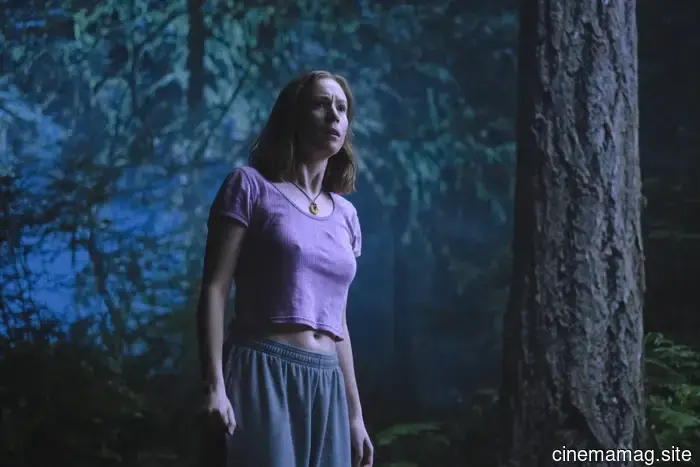 New Trailer for Jane Schoenbrun's Teenage Sex and Death at Camp Miasma Analyzes the Slasher Genre
Undoubtedly one of the standout features of the 2026 Cannes Film Festival, which appeared on nearly every top 10 list from our critics, Jane Schoenbrun's follow-up to I Saw the TV Glow, titled Teenage Sex and Death at Camp Miasma, is a highly engaging examination of slasher films, erotic pleasure, and all that lies in between. Starring
New Trailer for Jane Schoenbrun's Teenage Sex and Death at Camp Miasma Analyzes the Slasher Genre
Undoubtedly one of the standout features of the 2026 Cannes Film Festival, which appeared on nearly every top 10 list from our critics, Jane Schoenbrun's follow-up to I Saw the TV Glow, titled Teenage Sex and Death at Camp Miasma, is a highly engaging examination of slasher films, erotic pleasure, and all that lies in between. Starring
 In the first teaser for Lance Oppenheim's Primetime, Robert Pattinson portrays Chris Hansen.
After Matt Johnson's drama about Anthony Bourdain, Tony, A24's next release is yet another unique biopic, this time telling the story of Chris Hansen from To Catch a Predator. In Primetime, Robert Pattinson stars as the television host and investigative journalist in a film directed by Lance Oppenheim, who is making his narrative feature debut following Some Kind of Heaven and Spermworld. Before
In the first teaser for Lance Oppenheim's Primetime, Robert Pattinson portrays Chris Hansen.
After Matt Johnson's drama about Anthony Bourdain, Tony, A24's next release is yet another unique biopic, this time telling the story of Chris Hansen from To Catch a Predator. In Primetime, Robert Pattinson stars as the television host and investigative journalist in a film directed by Lance Oppenheim, who is making his narrative feature debut following Some Kind of Heaven and Spermworld. Before
 Fast Payout Casinos in Australia 2026: Instant Withdrawal Casinos That Australians Are Currently Choosing
In Australia, fast payout casinos are assessed based on their withdrawal efficiency rather than promotional statements. Our evaluation centers on the actual speed at which players receive their payouts.
Fast Payout Casinos in Australia 2026: Instant Withdrawal Casinos That Australians Are Currently Choosing
In Australia, fast payout casinos are assessed based on their withdrawal efficiency rather than promotional statements. Our evaluation centers on the actual speed at which players receive their payouts.
 Currents Director Milagros Mumenthaler discusses Sensory Filmmaking, the experience of motherhood, and the depiction of an internal emotional landscape.
A captivating character exploration and an astonishing sensory journey, Milagros Mumenthaler's The Currents was among my favorite finds at last year's New York Film Festival. It begins with an Argentinian designer named Lina (Isabel Aimé González Sola) who survives a fall from a bridge while in Switzerland, leading to a transformation in her life as the pressures intensify.
Currents Director Milagros Mumenthaler discusses Sensory Filmmaking, the experience of motherhood, and the depiction of an internal emotional landscape.
A captivating character exploration and an astonishing sensory journey, Milagros Mumenthaler's The Currents was among my favorite finds at last year's New York Film Festival. It begins with an Argentinian designer named Lina (Isabel Aimé González Sola) who survives a fall from a bridge while in Switzerland, leading to a transformation in her life as the pressures intensify.
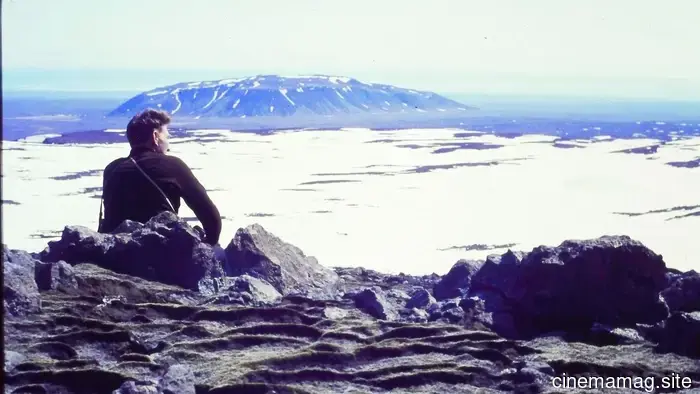 Time and Water Review: Grieving the Loss of Iceland’s Glaciers and Beyond
Note: This review was initially published during our 2026 Sundance coverage. The film is set to release in theaters on May 29. "Will your oceans be composed of our glaciers?" questions Icelandic poet Andri Snær Magnason in the narration accompanying Time and Water, the stunning new documentary by Fire of Love director Sara Dosa.
Time and Water Review: Grieving the Loss of Iceland’s Glaciers and Beyond
Note: This review was initially published during our 2026 Sundance coverage. The film is set to release in theaters on May 29. "Will your oceans be composed of our glaciers?" questions Icelandic poet Andri Snær Magnason in the narration accompanying Time and Water, the stunning new documentary by Fire of Love director Sara Dosa.
Forastera Review: Engaging Drama Examines the Value of Life
It begins as a joke. Pepa (Núria Prims) calls to say sorry to her mother, thinking she is the one who answers the call. Her teenage daughter Cata (Zoe Stein) goes along with it, acting as if she is her grandmother until Pepa eventually realizes and says her name. When it occurs once more,