
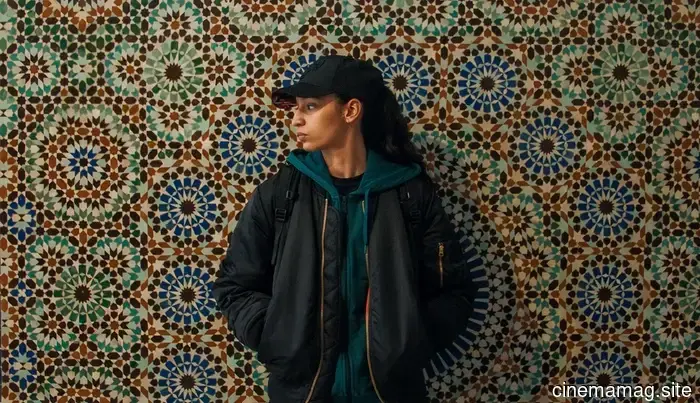
The Little Sister Review: Hafsia Herzi Depicts a Woman in Transition
In the ideal environment of her mosque, Fatima (Nadia Melliti) appears to be on the right track. She has a loving family, a close-knit circle of loyal friends, a boyfriend ready to propose, and a strong faith in Islam. In many respects, this teenager excels on the wife checklist compared to her older sisters (aside from culinary skills). Perhaps she would have adhered to this path if she were in Algeria or Egypt. However, she is in France, where the chance to live authentically is available if she chooses.
Adapted from Fatima Daas' autobiographical novel *The Last One*, writer-director Hafsia Herzi’s *The Little Sister* unfolds over five seasonal chapters. The story begins during the spring of Fatima’s senior high school year and follows her first year of college in Paris, concluding on her birthday the following year. We observe her as she navigates her desires alongside external expectations. We hope that the line between the two eventually merges.
However, this is easier said than done. Certain environments impose specific expectations, and Fatima’s initial opportunity to believe in the possibility of being a lesbian ultimately leads her to doubt that dream. She feels uncertain about whom to confide in. Will her seven "brothers" accept her? Their casual homophobia towards a gay classmate raises her concerns. What about a new group of open-minded college friends?
This is a lot for her to handle within a short time, especially with the Qur’an's ominous presence in her life. Her Imam forbids homosexuality, a belief deeply rooted in her family. Fatima’s sisters criticize her for dressing too masculine, suggesting she would never find a husband; they cannot even imagine a reality in which she does not desire a husband. Balancing her daily prayers to a God who does not accept her with the joy of living her truth leads to a crisis.
We witness some of her turmoil through the worsening of her asthma and the emotional barriers she puts up by using fake names on dating apps to build her confidence when flirting with other women. It isn’t until she experiences a love she never felt with her high school boyfriend that a sense of calm washes over her. Ji-Na (Park Ji-min) becomes a comforting presence with whom she feels no need to hide. It is in this moment of vulnerability that she faces God's wrath.
Fatima's situation is highly complex—she lacks a genuine example of what she desires, relying only on her own experiences of trial and error. Observing the women around her adhering to rigid norms regarding marriage and love, the anguish of losing herself to the pain of a failed relationship feels like a punishment. What will be her escape? Casual relationships with women without attachments? Returning to strict religious beliefs at the expense of her own happiness?
I found the first two-thirds of Fatima’s journey in *The Little Sister* very engaging. Watching her frustration over being in the closet manifesting in her own homophobic acts. Witnessing her liberation and excitement in being with Ji-Na. Enjoying college life with a sort of queer mentor in Mouna Soualem’s Cassandra. The range of emotions is vivid, and Melliti brings authenticity to each one as her world oscillates between the conflicting aspects of her identity.
The final third feels somewhat hurried as Fatima must face everything that has transpired over the past year. It becomes a rapid series of crosscuts to various pivotal moments that push her towards self-discovery, bringing her back to her ex-boyfriend, into sleep-paralysis nightmares, facing a strict Muslim authority, and revisiting Parisian clubs. There are no straightforward resolutions when Herzi refrains from providing definitive answers. Fatima is a woman in transition.
As such, the film is less about “coming of age” and more about “evolving to be.” It focuses on the significant moments that propel Fatima to embrace her desires while reminding her that she need not abandon her faith. Herzi illustrates that Fatima's refusal of alcohol upon meeting new people is not just to highlight her sobriety; it’s to show that this teenager hasn’t renounced her religion—it's a journey of addition rather than subtraction.
This is why the ending ultimately resonates. Sure, the narrative may feel a bit jumbled with setbacks and leaps, but that mirrors life: we all experience regret and guilt before finding stability. We endure pain and sorrow to learn why our loved ones might evoke those feelings and recognize when forgiveness is necessary. Thus, not everything needs to be explicitly stated. We can glean meaning from what's left unsaid.
*The Little Sister* will be released in theaters on Friday, June 5.
Other articles
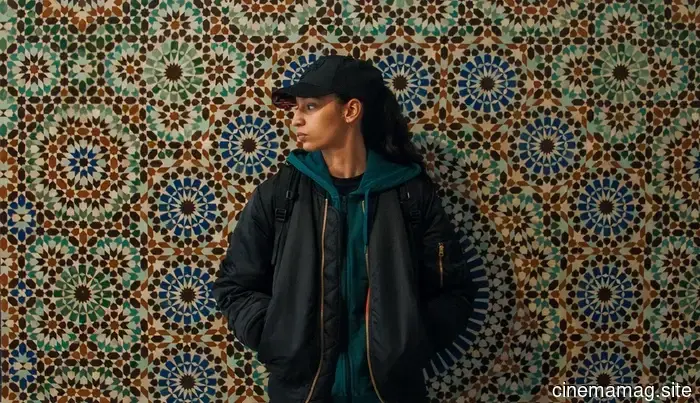 The Little Sister Review: Hafsia Herzi Depicts a Woman in Transition
In the ideal world of her mosque, Fatima (Nadia Melliti) is navigating her life successfully. She has a supportive family, a close circle of devoted friends, a boyfriend who is prepared to propose, and a strong commitment to her Islamic faith. In several aspects, this teenager is ahead of her older sisters on the checklist for being a good wife (excluding her cooking abilities). And perhaps
The Little Sister Review: Hafsia Herzi Depicts a Woman in Transition
In the ideal world of her mosque, Fatima (Nadia Melliti) is navigating her life successfully. She has a supportive family, a close circle of devoted friends, a boyfriend who is prepared to propose, and a strong commitment to her Islamic faith. In several aspects, this teenager is ahead of her older sisters on the checklist for being a good wife (excluding her cooking abilities). And perhaps
 Top Online Pokies in Australia for Real Money in 2026 - 5 Leading PayID Pokies Platforms - MovieMaker Magazine
In 2026, online pokies continue to be one of the most favored real money casino games among Australian players. The top online pokies sites feature pokies with high RTP.
Top Online Pokies in Australia for Real Money in 2026 - 5 Leading PayID Pokies Platforms - MovieMaker Magazine
In 2026, online pokies continue to be one of the most favored real money casino games among Australian players. The top online pokies sites feature pokies with high RTP.
 Top 5 Real Money Australian Online Casinos for 2026 - MovieMaker Magazine
Australian players now have more options than ever when looking for the top online casinos in Australia, but not all online casinos in Australia provide the
Top 5 Real Money Australian Online Casinos for 2026 - MovieMaker Magazine
Australian players now have more options than ever when looking for the top online casinos in Australia, but not all online casinos in Australia provide the
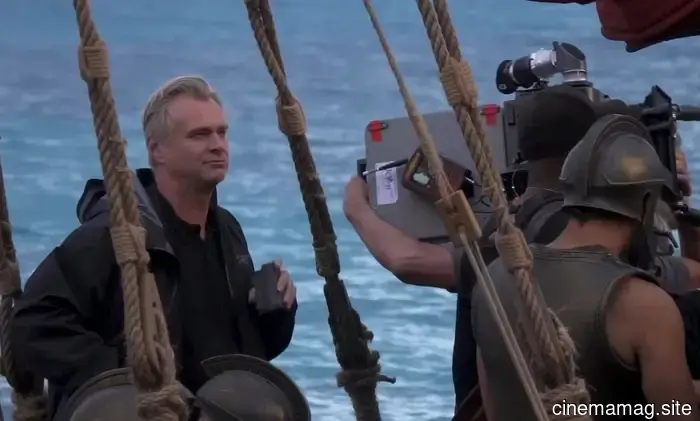 Take a look behind the scenes of Christopher Nolan's The Odyssey with this new featurette.
Universal Pictures has unveiled a new featurette for Christopher Nolan’s forthcoming adaptation of Homer’s The Odyssey, offering a behind-the-scenes look at the mythological epic along with interviews wi…
Take a look behind the scenes of Christopher Nolan's The Odyssey with this new featurette.
Universal Pictures has unveiled a new featurette for Christopher Nolan’s forthcoming adaptation of Homer’s The Odyssey, offering a behind-the-scenes look at the mythological epic along with interviews wi…
 Roadmap Writers Unveils LGBTQ+ Pitch Fellowship
Roadmap Writers has introduced a new LGBTQ+ Pitch Fellowship aimed at uplifting queer voices and linking queer storytellers with industry professionals.
Roadmap Writers Unveils LGBTQ+ Pitch Fellowship
Roadmap Writers has introduced a new LGBTQ+ Pitch Fellowship aimed at uplifting queer voices and linking queer storytellers with industry professionals.
The Little Sister Review: Hafsia Herzi Depicts a Woman in Transition
In the ideal world of her mosque, Fatima (Nadia Melliti) feels she is on the right track. She has a loving family, a close circle of protective and devoted friends, and a boyfriend who is prepared to propose. Her strong faith in Islam further strengthens her foundation. In several aspects, this teenager is ahead on the wife checklist compared to her older sisters (except when it comes to cooking skills). And perhaps...