
Jinsei Review: Ryuya Suzuki's Solo Animation Is Stark and Aspiring
Presenting the end of the world with tranquility may prove more challenging than it seems, particularly within a 93-minute timeframe. This is one of the film's significant accomplishments in the new, comparatively low-budget anime, Jinsei. Spanning over a century—viewed through the lens of pop music and Japanese culture—it quickly becomes clear that the millennial and Gen-Z sense of doom also resonates in Japan.
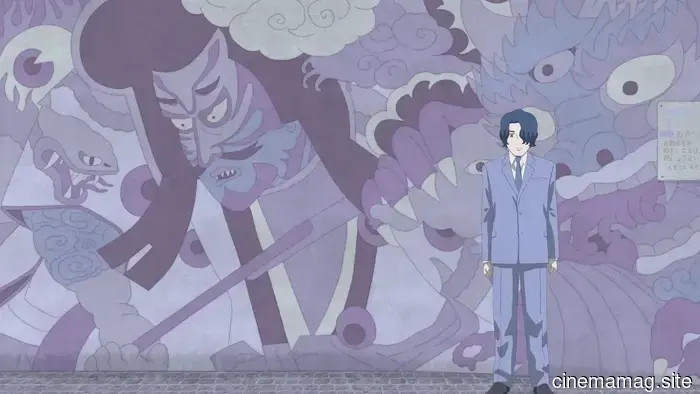
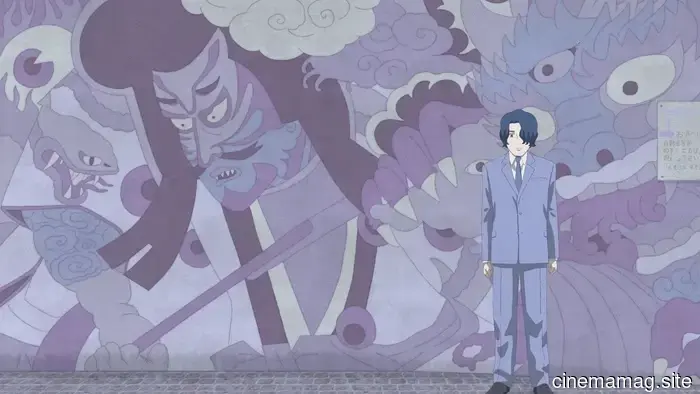
One distinguishing feature of this film is that it is primarily the work of a single creator, rather than a large studio production. Promotional materials for Jinsei proudly state that it was entirely hand-drawn by anime talent Ryuya Suzuki. The result is at times somewhat austere, perhaps due to the limitations of its crowdfunded budget, yet it can never be labeled as imprecise—action consistently unfolds within a square frame, lending a somewhat whimsical, Wes Anderson-like quality to the visuals.
In terms of the storyline, akin to Tenet, the main character is simply referred to as Protagonist, voiced by rapper ACE COOL. He appears destined from a young age to become a pop star. The narrative revolves around his fascination with a dancing, Michael Jackson-like icon seen on a broken television screen. Pursuing a vague ambition, the seemingly foolproof route to fame in the pop industry ultimately leads to prestigious film roles and artistic fulfillment. However, there remains an underlying emptiness, both within his aspirations and his character. Jinsei has a cool, detached quality; it does not follow a classic tale of triumph and tragedy.
The Protagonist's tragedy lies in his perpetual discontent and lack of control over his fate, evident in his placement into a soulless boy band by external forces. The sterile world of pop music, dominated by older men in stylish yet unsettling corporate settings, exacerbates his situation and foreshadows his future. As the story progresses into a distant future where he achieves his dreams in both music and film, his rise into elite circles only breeds further disillusionment. He becomes merely an observer of celebratory champagne toasts while a futuristic war with soldiers reminiscent of Master Chief rages outside.
The societal collapse occurs in the silences of the narrative, but it’s easy for viewers to connect the dots. This type of cynicism may require little of the audience, but Suzuki avoids resting on this alone. As the film approaches its conclusion, it becomes increasingly cosmic, elevating its visual imagination and posing more questions. This aspect may explain why Jinsei is captivating, if not entirely fulfilling in a dramatic sense. Suzuki’s work hints at the potential for greater things ahead, even if certain elements seem to be lacking.
Jinsei is set to receive a limited release on Friday, June 5.
Jinsei Review: Ryuya Suzuki's Solo Animation Is Stark and Aspiring
Perhaps it’s more challenging than it appears to portray the apocalypse in a tranquil manner, particularly within a mere 93 minutes. This is one of the significant accomplishments of the new, relatively low-budget anime film Jinsei. Spanning over a century—and viewed through the lens of pop music and Japanese identity—viewers soon grasp the extent of the millennial and zoomer doom mentality.