

Disclosure Day Review: A Deeply Reflective, Thrilling Blockbuster Success
Certain beliefs bind humanity together. For instance, the notion that what seems extraordinary could actually be attainable, or even that the impossible might become possible. Steven Spielberg openly embraces the idea of extraterrestrial life and encourages others to do the same. His belief in this lofty concept is profound, as he reiterates the importance of empathy as “the core of animate existence–our evolutionary advantage,” aiming to remind us of our innate capabilities.
It feels as though the elite side of Spielberg is attempting to convey a message. However, this has long been a subject of his fascination. His debut feature, Firelight, released in 1964, explored the existence of aliens, a theme he revisited in films like Close Encounters of the Third Kind, E.T., and War of the Worlds (and arguably, Minority Report). He also infused an “aliens exist” plot into the fourth Indiana Jones installment, Kingdom of the Crystal Skull. Nonetheless, Disclosure Day carries a more personal feel as it marks his first authentic sci-fi film since 2005’s War of the Worlds, and his second in the last two decades aside from the mismanaged Ready Player One.
Having only penned scripts for three of his films since Close Encounters in 1977, Spielberg recently wrote his most personal film, The Fabelmans, and still appears to have the writing urge. As the creator of the story, he brings a personal touch to Disclosure Day, almost making it feel autobiographical (though it isn't). He entrusted long-time collaborator David Koepp to refine the final screenplay, resulting in a unique yet universal voice. The secret being revealed isn't as concealed as one might think; a quick glimpse at any recent trailers will clarify this. Still, there are subtler secrets and intriguing details within the larger extraterrestrial revelation.
The narrative of Disclosure Day begins with a chase already underway. A dubious handoff is happening, with the how, why, and what remaining unclear. A lanky, silent Dr. Daniel Kellner (Josh O’Connor) stands in a wrestling match crowd, resembling a Julian Assange figure on the run after stealing WARDEX secrets, intending to exchange them for the captured Jane (Eve Hewson), his former novice girlfriend who has become unwittingly entangled in Danny’s groundbreaking decision to disclose secrets he was paid to safeguard. While she abandoned her calling as a nun, he discovered his role as a cybersecurity data analyst within a deep state.
The antagonist, Noah Scanlon (Colin Firth), leads the enigmatic agency searching for Danny and Jane, directing his subordinates with a chilling efficiency while utilizing alien technology to alter the fabric of space. Amid this recognizable contemporary America, World War III looms ominously and credibly into chaos without explanation, with Spielberg illustrating just how crucial the secrets being uncovered are.
Despite this, Danny takes a backseat to Kansas City weather anchor Margaret Fairchild (Emily Blunt, in her best role since Sicario and finally given material worthy of her talent). She leads the thriller with a mix of comedic and awe-inspiring tones. Maggie finds herself in a phase where nothing feels right. She’ll realize when she’s in the right place, but Kansas City isn’t it, nor is her relationship with Jackson (a hilariously charming Wyatt Russell, who I envisioned Tim Robinson portraying even better). Following an eerily affectionate encounter with a cardinal, Maggie mysteriously gains the ability to communicate across languages and perceive people’s hearts, thoughts, and pasts with simple, meaningful eye contact. This newfound insight evokes memories of Agatha’s eerie foresight in Minority Report: “He knows. Don’t go home.”
From this juncture, Danny and Maggie gradually come together, leading to a different story that I’ll leave for viewers to uncover. There’s a haunting weight to Disclosure Day that creates an existential sensation of carrying something monumental yet as light as a feather—a spine-tingling feeling that something far greater than ourselves, an unknown reality, lies ahead.
It has been 49 years since Spielberg transformed the science fiction genre with Close Encounters. Are these the same aliens we encountered back then, merely concealed? It's a possibility. They have that familiar gaunt, gray appearance with classic features: large, dark, empty eyes, nostrils where a nose would typically be, a rounded upside-down triangular head, and short, stubby fingers. Their stereotypical nature (think alien iPhone emoji) isn’t meant to shock us; rather, it’s their existence that should cause unease.
In a sense, it’s our existence that should equally astound us. This belief in humanity is the most significant contrast in Spielberg’s current sci-fi film compared to his previous works. Overall, it diverges from his earlier sci-fi narratives while still retaining a modern Spielberg and Janusz Kamiński aesthetic; their 21st collaboration in 33 years is characterized by vibrant lens flares and a subtle silvery-blue tint amidst the otherwise bright-white cinemat

Other articles
 5 Top Online Casinos in Australia for Real Money and Pokies - Rated and Reviewed - MovieMaker Magazine
The top online casinos in Australia provide much more than just welcome bonuses. Players in Australia are placing greater emphasis on the dependability of withdrawals and mobile gaming.
5 Top Online Casinos in Australia for Real Money and Pokies - Rated and Reviewed - MovieMaker Magazine
The top online casinos in Australia provide much more than just welcome bonuses. Players in Australia are placing greater emphasis on the dependability of withdrawals and mobile gaming.
 5 Top Online Casinos in Australia for Real Money & Pokies - Ranked & Evaluated - MovieMaker Magazine
The top online casinos in Australia provide much more than just welcome bonuses. Players in Australia are placing greater emphasis on the reliability of withdrawals and mobile gaming options.
5 Top Online Casinos in Australia for Real Money & Pokies - Ranked & Evaluated - MovieMaker Magazine
The top online casinos in Australia provide much more than just welcome bonuses. Players in Australia are placing greater emphasis on the reliability of withdrawals and mobile gaming options.
 Comic Book Sneak Peek – ThunderCats X SilverHawks: ThunderHawks #3
Dynamite Entertainment is set to release ThunderCats X SilverHawks: ThunderHawks #3 on Wednesday, and we have the official preview available below… The most significant crossover event in the galaxy carries on! Cheetara an…
Comic Book Sneak Peek – ThunderCats X SilverHawks: ThunderHawks #3
Dynamite Entertainment is set to release ThunderCats X SilverHawks: ThunderHawks #3 on Wednesday, and we have the official preview available below… The most significant crossover event in the galaxy carries on! Cheetara an…
 Disclosure Day Review: A Soul-Searching, Heart-Racing Blockbuster Success
There are specific beliefs that connect all of humanity. For instance, the notion that extraordinary things can happen. Furthermore, the belief that the impossible can become possible. Steven Spielberg openly expresses his faith in the existence of extraterrestrial life and encourages others to share that belief. He is so earnest about this lofty yet significant idea that he is revisiting it with
Disclosure Day Review: A Soul-Searching, Heart-Racing Blockbuster Success
There are specific beliefs that connect all of humanity. For instance, the notion that extraordinary things can happen. Furthermore, the belief that the impossible can become possible. Steven Spielberg openly expresses his faith in the existence of extraterrestrial life and encourages others to share that belief. He is so earnest about this lofty yet significant idea that he is revisiting it with
 Gozer receives the Skullector Series treatment from Monster High with the Monster High x Ghostbusters doll.
Mattel Creations has introduced the upcoming mash-up doll from its Monster High Skullector Series, which will focus on Gozer the Gozerian, the antagonist from the iconic 1984 supernatural comedy Ghostbusters…
Gozer receives the Skullector Series treatment from Monster High with the Monster High x Ghostbusters doll.
Mattel Creations has introduced the upcoming mash-up doll from its Monster High Skullector Series, which will focus on Gozer the Gozerian, the antagonist from the iconic 1984 supernatural comedy Ghostbusters…
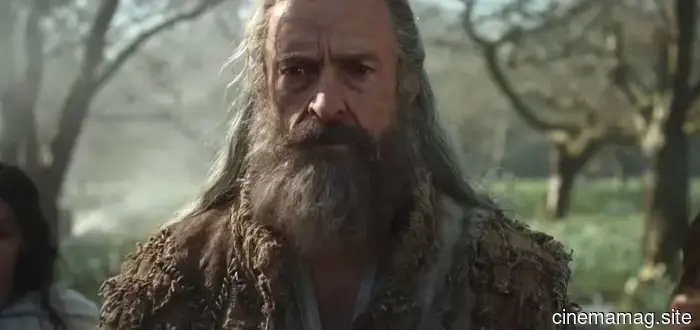 Ridley Scott and Hugh Jackman embark on a journey to Treasure Island.
Director Ridley Scott and Wolverine star Hugh Jackman have been revealed to be working on a new adaptation of the adventure classic Treasure Island by Robert Louis Stevenson, with a script written by Jack T...
Ridley Scott and Hugh Jackman embark on a journey to Treasure Island.
Director Ridley Scott and Wolverine star Hugh Jackman have been revealed to be working on a new adaptation of the adventure classic Treasure Island by Robert Louis Stevenson, with a script written by Jack T...
Disclosure Day Review: A Deeply Reflective, Thrilling Blockbuster Success
There are specific beliefs that bring all of humanity together. Consider, for instance, the notion that the extraordinary can occur. Or, even more, the belief that the impossible can become possible. Steven Spielberg openly embraces the idea of extraterrestrial life and encourages you to do the same. His conviction in this distant yet high-stakes concept is so strong that he is revisiting it with