

Disclosure Day Review: A Reflective, Thrilling Blockbuster Success
Certain beliefs bind humanity together. For instance, the notion that the extraordinary can happen, or even that the impossible can become possible. Steven Spielberg openly embraces the idea of extraterrestrial life and encourages others to do the same. He is so earnest about this concept, which holds both detachment and high stakes, that he revisits it with a simple yet profound statement: “Empathy is the core of animate existence—our evolutionary advantage.” He aims to remind us of our ability to empathize.
It seems as though Spielberg's high-society, elite background is trying to convey a message. However, this is a topic that has intrigued him throughout his life. This fascination dates back to his first feature film, Firelight, released in 1964, which explored the existence of aliens. This theme continues in films like Close Encounters of the Third Kind, E.T., War of the Worlds, and arguably, Minority Report. He even incorporated an "aliens exist" storyline into his fourth Indiana Jones film, Kingdom of the Crystal Skull. Nevertheless, there is something more personal about Disclosure Day, the director's first genuine sci-fi film since War of the Worlds in 2005 and his second in two decades, aside from the already commercial spectacle of Ready Player One.
Since Close Encounters in 1977, Spielberg has written only three stories or screenplays. After crafting his most personal film yet, The Fabelmans, he seems to still be inspired to write. As the creator of Disclosure Day's story, he brings a personal touch that feels almost autobiographical (though it isn’t), passing the project to long-time collaborator David Koepp, who crafted a lively final script with a distinctive yet universal voice. As for what is revealed in the film: it’s not as elusive as it might seem. A quick viewing of the latest trailers makes it clear. Nonetheless, there are subtler secrets and intriguing details within its broader extraterrestrial narrative.
The film opens with the chase already underway. A dubious exchange is happening, but the details around it remain unclear. Dr. Daniel Kellner (Josh O’Connor), a slim, silent figure with sleepy eyes, lurks in the crowd at a wrestling event. He’s reminiscent of Julian Assange, escaping after stealing secrets from WARDEX, which he aims to trade for Jane (Eve Hewson), his former girlfriend, who has unwittingly become caught up in his life-altering decision to disclose the secrets WARDEX entrusted to him. She abandoned her path to become a nun; he discovered his as a cybersecurity analyst involved with deep state secrets.
The antagonistic Noah Scanlon (Colin Firth) heads the elusive agency pursuing Danny and Jane, exuding a cold efficiency as he commands his minions into action and uses alien technology to defy spatial boundaries. Against the backdrop of a recognizable modern America, World War III looms ominously and believably, descending into chaos without explanation; Spielberg uses this backdrop to emphasize the significance of the secrets being unveiled.
Amidst this, Danny takes a secondary role to Kansas City weather anchor Margaret Fairchild (Emily Blunt, in her best performance since Sicario and finally offered a role that showcases her talent), who carries the thriller with an engaging mix of humor and reverence. Maggie finds herself in a phase where nothing feels quite right. She’ll only recognize her true place when she arrives there, but Kansas City isn’t it. Her relationship with Jackson (a hilariously amusing Wyatt Russell, who brings to mind Tim Robinson in a role that could have suited him even better) is off the mark too. Following a strangely serene encounter with a cardinal, Maggie inexplicably gains the power to communicate across languages and perceive people's emotions, thoughts, and personal histories through mere eye contact. Her unforeseen ability evokes memories of Agatha's eerie intuition in Minority Report: “He knows. Don’t go home.”
From this point onward, Danny and Maggie gradually gravitate towards one another, leading to a different unfolding narrative that I’ll leave for audiences to discover. There's a chilling weight to Disclosure Day that evokes a sensation of carrying something both overwhelmingly heavy yet as light as a feather—a spine-tingling existential feeling that something far greater than ourselves, some Great Unknown, lies ahead.
It has been 49 years since Spielberg revolutionized the science fiction genre with Close Encounters. Are these the aliens we first met, simply concealed? It’s possible. They bear the same classic, skinny, gray alien appearance: large, black, empty eyes, two nasal openings where a nose might be, a rounded, inverted triangular head, and stubby fingers. Their portrayal is so archetypal (think alien iPhone emoji) that the images we see are designed more to evoke familiarity than shock. It’s their very existence that should astonish us.
In a sense, it’s our own existence that should equally astonish. This faith in humanity represents the most notable contrast in

Другие статьи
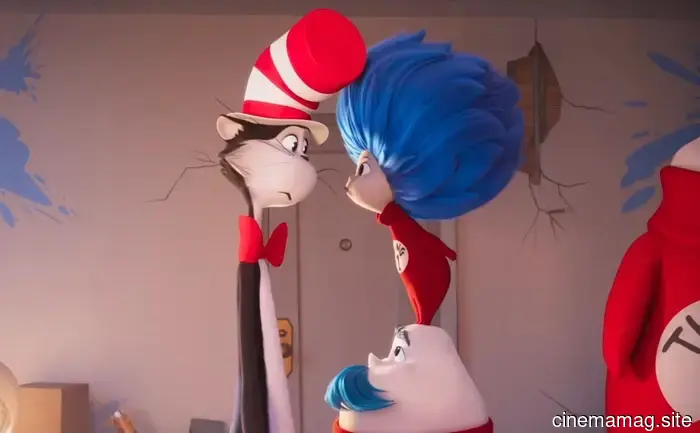 В новом трейлере «Кот в шляпе» дела выходят из-под контроля.
Warner Bros. представила еще один трейлер анимационной адаптации классической детской книги Доктора Сьюза «Кот в шляпе» режиссеров Алессандро Карлони и Эрики Ривиноя. Фэнтезийное приключение…
В новом трейлере «Кот в шляпе» дела выходят из-под контроля.
Warner Bros. представила еще один трейлер анимационной адаптации классической детской книги Доктора Сьюза «Кот в шляпе» режиссеров Алессандро Карлони и Эрики Ривиноя. Фэнтезийное приключение…
 День раскрытия: Поиск души, захватывающий блокбастер-триумф
Определенные убеждения объединяют все человечество. Возьмите, к примеру, идею о том, что необычное возможно. Или, что еще более важно, что невозможное возможно. Стивен Спилберг не стесняется верить в внеземную жизнь, и он не думает, что вам следует стесняться тоже. Он так искренен в отношении этой отстраненной, но высоко рискованной концепции, что возвращается к ней снова с
День раскрытия: Поиск души, захватывающий блокбастер-триумф
Определенные убеждения объединяют все человечество. Возьмите, к примеру, идею о том, что необычное возможно. Или, что еще более важно, что невозможное возможно. Стивен Спилберг не стесняется верить в внеземную жизнь, и он не думает, что вам следует стесняться тоже. Он так искренен в отношении этой отстраненной, но высоко рискованной концепции, что возвращается к ней снова с
 День раскрытия: Духовное самоисследование, захватывающий триумф блокбастера
Определенные убеждения объединяют все человечество. Возьмите, к примеру, идею о том, что необычное возможно. Или, что еще более важно, что невозможное возможно. Стивен Спилберг не стесняется верить в внеземную жизнь, и он не думает, что вы должны стесняться тоже. Он так искренен в отношении этой отстраненной, но высоко рискованной концепции, что снова возвращается к ней с
День раскрытия: Поиск души, захватывающий триумф блокбастера
Определенные убеждения объединяют все человечество. Возьмите, к примеру, идею о том, что необычное возможно. Или, что еще более важно, что невозможное возможно. Стивен Спилберг не стесняется верить в внеземную жизнь, и он не думает, что вам следует стесняться тоже. Он так искренен в отношении этой отстраненной, но высоко рискованной концепции, что снова возвращается к ней с
День раскрытия: Духовное самоисследование, захватывающий триумф блокбастера
Определенные убеждения объединяют все человечество. Возьмите, к примеру, идею о том, что необычное возможно. Или, что еще более важно, что невозможное возможно. Стивен Спилберг не стесняется верить в внеземную жизнь, и он не думает, что вы должны стесняться тоже. Он так искренен в отношении этой отстраненной, но высоко рискованной концепции, что снова возвращается к ней с
День раскрытия: Поиск души, захватывающий триумф блокбастера
Определенные убеждения объединяют все человечество. Возьмите, к примеру, идею о том, что необычное возможно. Или, что еще более важно, что невозможное возможно. Стивен Спилберг не стесняется верить в внеземную жизнь, и он не думает, что вам следует стесняться тоже. Он так искренен в отношении этой отстраненной, но высоко рискованной концепции, что снова возвращается к ней с
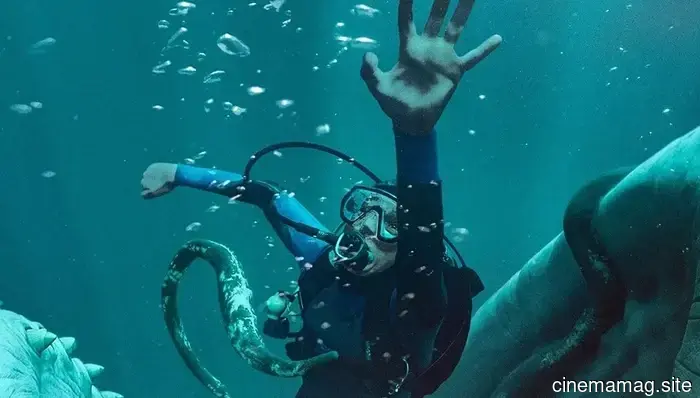 Остин Эйбрамс живьем поглощен 80-футовым кашалотом в трейлере триллера о выживании «Убийственный кит»
20th Century Studios выпустила трейлер фильма «Whalefall», своей адаптации бестселлера Дэниела Крауса, в котором Остин Абрамс (Оружие) живьем проглатывается кашалотом и должен...
Остин Эйбрамс живьем поглощен 80-футовым кашалотом в трейлере триллера о выживании «Убийственный кит»
20th Century Studios выпустила трейлер фильма «Whalefall», своей адаптации бестселлера Дэниела Крауса, в котором Остин Абрамс (Оружие) живьем проглатывается кашалотом и должен...
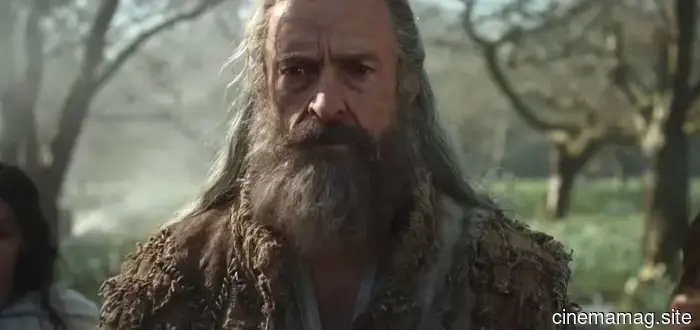 Ридли Скотт и Хью Джекман отправляются на Остров сокровищ
Режиссер Ридли Скотт и актер Вулверин Хью Джекман были объявлены о создании новой адаптации классического приключенческого романа «Остров сокровищ» Роберта Льюиса Стивенсона по сценарию Джека Т…
Ридли Скотт и Хью Джекман отправляются на Остров сокровищ
Режиссер Ридли Скотт и актер Вулверин Хью Джекман были объявлены о создании новой адаптации классического приключенческого романа «Остров сокровищ» Роберта Льюиса Стивенсона по сценарию Джека Т…
Disclosure Day Review: A Reflective, Thrilling Blockbuster Success
Certain beliefs bring all of humanity together. For instance, the notion that the extraordinary can occur. Or even more so, that the impossible may be achievable. Steven Spielberg openly embraces his belief in extraterrestrial life and encourages others to do the same. His conviction in this distant yet high-stakes idea is so strong that he is revisiting it with