
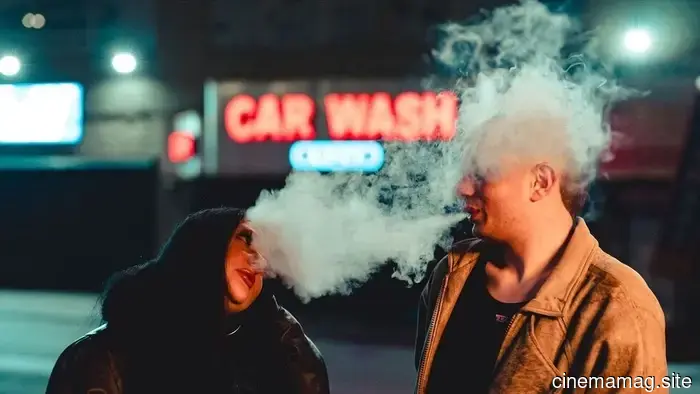
Tribeca Review: Here I’m Alive Offers a Gritty, Personal Glimpse into Chaotic Lives in New York
Here I’m Alive, the latest film by Joshua Z. Weinstein following his 2017 success Menashe, offers an intimate and claustrophobic portrayal of life in New York City. This film is both demanding and subtly gratifying. It embraces a micro-budget style reminiscent of Sean Baker’s earlier films Take Out and Prince of Broadway, while also drawing on the minimal sound design and narrative restraint characteristic of Amir Naderi—a hallmark of the early Tribeca Festival (where I viewed his works Sound Barrier and Vegas: Based on a True Story). Here I’m Alive presents a New York inhabited by hustlers and recluses, unfolding a narrative that exists in the shadows of the city's more glamorous neighborhoods.
Cast through social media and filmed over two years, Here I’m Alive stands out as a rare neorealistic film that delves into the use of screens—frequently a means of escapism—as focal points of obsession. They dominate the lives of the characters, whether through their involvement in the gig economy or their efforts to establish connections through formal arrangements and informal support networks.
The film weaves together four disparate storylines, mostly occurring over a single evening: Felix (Caleb Zuzga), a young man in search of a sugar daddy; Eddie (Eddie Torrengra), a Venezuelan migrant working in food delivery who interacts with everyone; Majoria (Cheyenne Gallagher), a gamer who cultivates community online while remaining in their apartment; and Yanni and Krystaly Figueroa, a duo of OnlyFans content creators who aspire to launch a podcast to turn the tables on men who audition for their attention. Common among them is a lack of a solid plan for success: Felix dreams of cosmetic enhancements, while Yanni and Krystaly have no clear strategy for their show, relying on the hope that it could free them from their jobs at Target.
We first meet this world through Majoria, who is shown watching venture capitalist Marc Andreessen discuss his controversial essay "The Techno-Optimist Manifesto." As a recluse, Majoria only leaves his apartment—illuminated by blue LED lights and computer screens—to pick up prescriptions. He is not inhabiting a techno-optimistic future; rather, he spends his days on Discord servers focused on aiding those grappling with mental health issues, and much of the evening video-chatting with a young man (Alex Fox) on the verge of self-harm.
Meanwhile, Felix finds a potential benefactor on SeekingArrangement and shares a meal with an older man, who critiques Felix's scheme. Although Felix hopes to obtain enough funds for cosmetic surgery, the man highlights a major flaw: Felix won't be able to afford the expensive upkeep of this new look without regular, costly injections.
Much like the film's characters, the screenplay by Weinstein and Brian Perkins seems detached yet remains firmly in control. Each scene captures the vibrant essence of New York—a place where spontaneous conversations or confrontations can happen at any moment. Some characters pursue online fame—a pursuit that appears easier than it truly is—while others are reluctant to leave their comfort zones until absolutely necessary. While starting with the premise of Andreessen’s essay—which suggests quickly embracing AI and compromising civil liberties in the hope of curing diseases like cancer—it becomes apparent that technology may not truly save anyone.
Here I’m Alive is a raw and often demanding work that is far from flawless. At times, it feels more suited to a gallery or an interactive online film, but perhaps that is the intention: simply existing is inherently messy.
Here I’m Alive had its premiere at the 2026 Tribeca Festival.
Other articles
Tribeca Review: Here I’m Alive Offers a Gritty, Personal Glimpse into Chaotic Lives in New York
Here I’m Alive, the successor to Joshua Z. Weinstein’s 2017 film Menashe, presents an intimate and tightly woven portrayal of life in New York City, a movie that is both demanding and quietly fulfilling. Adopting a low-budget style reminiscent of Sean Baker’s earlier films Take Out and Prince of Broadway, it similarly employs a sparse sound design and a restrained narrative approach akin to Amir.