
.jpg)
Film Review – The Demise of Robin Hood (2026)
The Death of Robin Hood, 2026.
Written and Directed by Michael Sarnoski.
Starring Hugh Jackman, Jodie Comer, Bill Skarsgård, Murray Bartlett, Noah Jupe, Jade Croot, Faith Delaney, Tabitha Smyth, Beau Thompson, Alfie Lawless, and Asher de Silva.
SYNOPSIS:
Haunted by his criminal past and acts of murder, Robin Hood finds himself severely injured following a battle he believed would be his final stand. In the care of a mysterious woman, he receives an opportunity for redemption.
The Robin Hood mythos carries a certain nobility—seen in its family-friendly animated adaptations and more mature explorations—characterizing the outlaw's thefts as a means to take from the rich and support the poor, thereby restoring balance. In Michael Sarnoski’s examination of this legacy with The Death of Robin Hood, the filmmaker depicts an older, weathered, and disheveled version of Robin (Hugh Jackman), who appears to lack any heroic or morally upright intentions. Instead, he portrays a deranged individual driven by bloodlust, relishing in the destruction of corrupt kings and empires, primarily focused on surviving in the woods alongside his apprentice, Little John (Bill Skarsgård). Any good arising from his actions is purely coincidental.
Unsurprisingly, the initial third of The Death of Robin Hood is intensely violent, establishing what could be the most brutal representation of the character. The film begins with a vengeful woman attempting to ambush Robin, leading to her graphic demise, highlighting his desensitization to murder and lack of desire for change. In some moments, he resembles a version of Kratos from God of War, but as Robin Hood.
Little John, meanwhile, is shown having a wife and daughter (both coincidentally named Margaret, which could be confusing during pivotal scenes) and becomes entangled in perilous circumstances with foes threatening his family. He dreams of starting anew on a farm, although that hope appears bleak. Robin is convinced he has no chance for a second life. The violence escalates as Robin seeks to provide Little John with an escape from their life as outlaws. While avoiding spoilers regarding survival, it’s noted that a gravely injured Robin ends up at a priory managed by Sister Brigid (Jodie Comer), who assists in his recovery, although he remains visibly impaired.
This point marks the emergence of Michael Sarnoski’s more recognizable directorial signature (previously seen in the acclaimed Pig with Nicolas Cage), as The Death of Robin Hood shifts into a reflective narrative exploring unresolved issues, opportunities for redemption, cosmic balance, the possibility of finding peace after years of violence, and the complex depiction of Robin Hood. While tales traditionally characterize him as a thief for the poor, Robin vehemently denies this narrative whenever he encounters it. Conversely, some view him merely as a murderous lunatic. This latter view seems to dominate, prompting Robin to adopt the alias Randall to shield himself and avoid causing trouble at the priory.
Regardless of Little John’s fate (which I’ll refrain from revealing), Little Margaret (Faith Delaney) also finds her way to the priory and requires care. Additionally, a one-eyed young man (Noah Jupe) arrives seeking vengeance for earlier events. A leper (Murray Bartlett) also appears, offering advice to Robin concerning local resources and potential roles at the priory that could distance him from violence. The individuals in this setting might represent his last connection to chaos, or perhaps Robin's ruse is transparent, with some here aware of his true identity. Ultimately, a pressing question emerges: will this lead to violence within the priory, or will it merely serve as the calm before an anticipated storm that never materializes?
With striking cinematography (by Pat Scola) captured on film, featuring serene settings and natural lighting, along with convincing costumes and a distinctive appearance for Robin Hood—who resembles Geralt from The Witcher series—there’s no denying the film's aesthetic appeal. Occasionally, a medieval score (composed by Jim Ghedi) intersperses catchy folk songs that enhance the viewer’s immersion into the 13th-century backdrop. It seems that after experiencing Hollywood success with A Quiet Place: Day One, Michael Sarnoski was eager to embark on a personal project exploring a scenario wherein Robin Hood is self-serving, devoid of heroic traits, while wrestling with the legendary narratives surrounding him and his own mortality. The addition of a young girl for protection and mentorship adds further depth.
While these concepts are intriguing, The Death of Robin Hood struggles with pacing, even for this director, somewhat elevated by a strong supporting cast whose roles mainly revolve around reflections on balance, forgiveness, confronting consequences, how to end cycles of violence, and the distinction between mythology and truth. The supporting characters remain underdeveloped, mostly serving to deepen Robin’s
.jpg)
.jpg)
.jpg)
.jpg)
.jpg)
Other articles
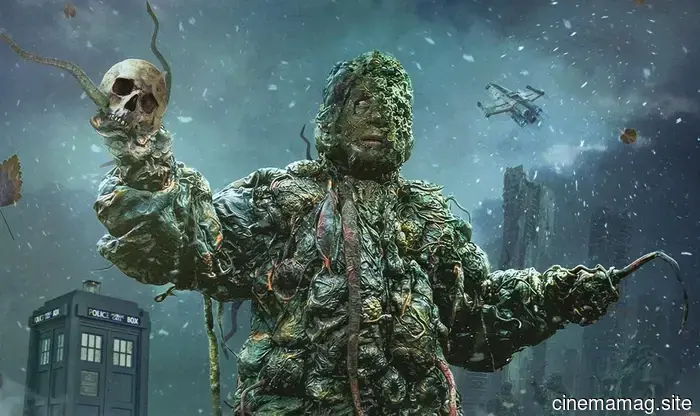 Killer plants extend their roots in The Worlds of Doctor Who – Planet Krynoid: Survivors.
Today, three terrifying new audio episodes are released in The Worlds of Doctor Who – Planet Krynoid: Survivors. This second box set in the Planet Krynoid series features the flesh-eating and extremely perilous...
Killer plants extend their roots in The Worlds of Doctor Who – Planet Krynoid: Survivors.
Today, three terrifying new audio episodes are released in The Worlds of Doctor Who – Planet Krynoid: Survivors. This second box set in the Planet Krynoid series features the flesh-eating and extremely perilous...
 Red Sonja Noir makes a comeback with an initial preview of The Plunder & The Princess.
The She-Devil with a Sword is back this July for a new noir-themed adventure in the one-shot comic Red Sonja Noir: The Plunder & The Princess, and you can get an exclusive early look at…
Red Sonja Noir makes a comeback with an initial preview of The Plunder & The Princess.
The She-Devil with a Sword is back this July for a new noir-themed adventure in the one-shot comic Red Sonja Noir: The Plunder & The Princess, and you can get an exclusive early look at…
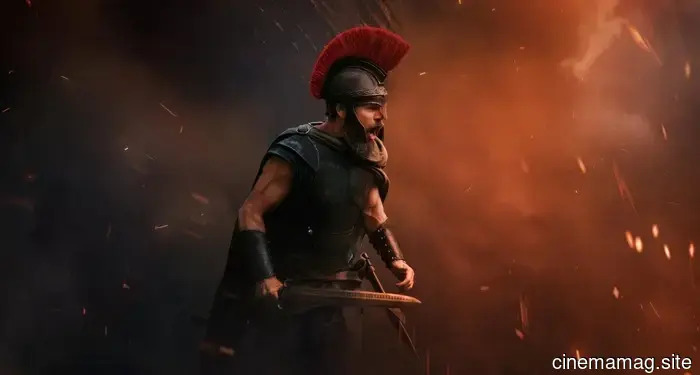 Ludwig Göransson discusses the soundtrack for Christopher Nolan's The Odyssey in a behind-the-scenes featurette.
Universal Pictures has launched another behind-the-scenes featurette to generate excitement for Christopher Nolan’s highly awaited epic The Odyssey, highlighting the work of the three-time Academy Award winner…
Ludwig Göransson discusses the soundtrack for Christopher Nolan's The Odyssey in a behind-the-scenes featurette.
Universal Pictures has launched another behind-the-scenes featurette to generate excitement for Christopher Nolan’s highly awaited epic The Odyssey, highlighting the work of the three-time Academy Award winner…
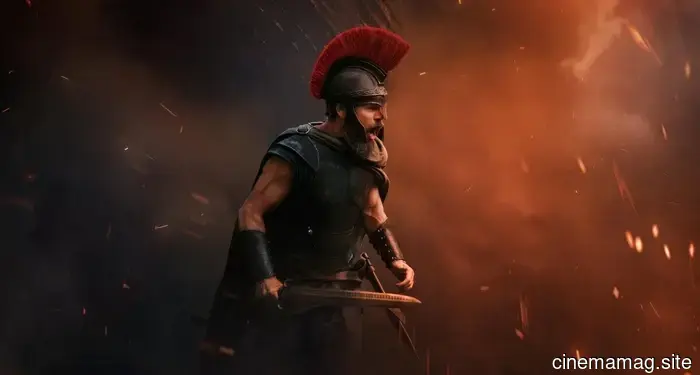 Ludwig Göransson discusses the soundtrack of Christopher Nolan’s The Odyssey in a behind-the-scenes featurette.
Universal Pictures has unveiled another behind-the-scenes featurette to generate excitement for Christopher Nolan’s highly awaited epic The Odyssey, this time highlighting the triple Academy Award winner…
Ludwig Göransson discusses the soundtrack of Christopher Nolan’s The Odyssey in a behind-the-scenes featurette.
Universal Pictures has unveiled another behind-the-scenes featurette to generate excitement for Christopher Nolan’s highly awaited epic The Odyssey, this time highlighting the triple Academy Award winner…
.jpg) Film Review – The Death of Robin Hood (2026)
The Death of Robin Hood, 2026. Penned and helmed by Michael Sarnoski. Featuring performances by Hugh Jackman, Jodie Comer, Bill Skarsgård, Murray Bartlett, Noah Jupe, Jade Croot, Faith Delaney, Tabitha Smyth, Beau…
Film Review – The Death of Robin Hood (2026)
The Death of Robin Hood, 2026. Penned and helmed by Michael Sarnoski. Featuring performances by Hugh Jackman, Jodie Comer, Bill Skarsgård, Murray Bartlett, Noah Jupe, Jade Croot, Faith Delaney, Tabitha Smyth, Beau…
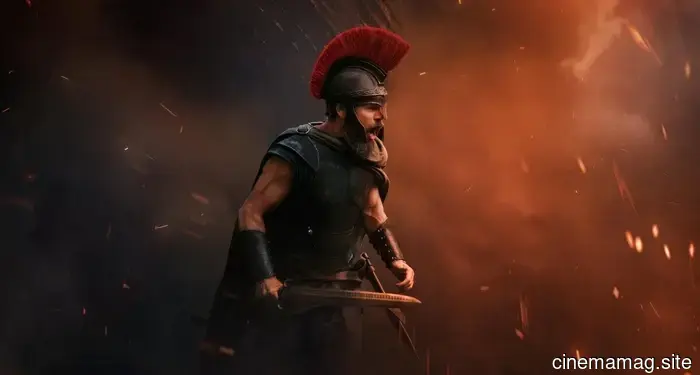 Ludwig Göransson discusses the soundtrack of Christopher Nolan's The Odyssey in a behind-the-scenes featurette.
Universal Pictures has unveiled another behind-the-scenes featurette to heighten excitement for Christopher Nolan's highly awaited epic The Odyssey, with this installment centering on the triple Academy Award winner...
Ludwig Göransson discusses the soundtrack of Christopher Nolan's The Odyssey in a behind-the-scenes featurette.
Universal Pictures has unveiled another behind-the-scenes featurette to heighten excitement for Christopher Nolan's highly awaited epic The Odyssey, with this installment centering on the triple Academy Award winner...
Film Review – The Demise of Robin Hood (2026)
The Death of Robin Hood, 2026. Created and helmed by Michael Sarnoski. Featuring performances by Hugh Jackman, Jodie Comer, Bill Skarsgård, Murray Bartlett, Noah Jupe, Jade Croot, Faith Delaney, Tabitha Smyth, Beau…