
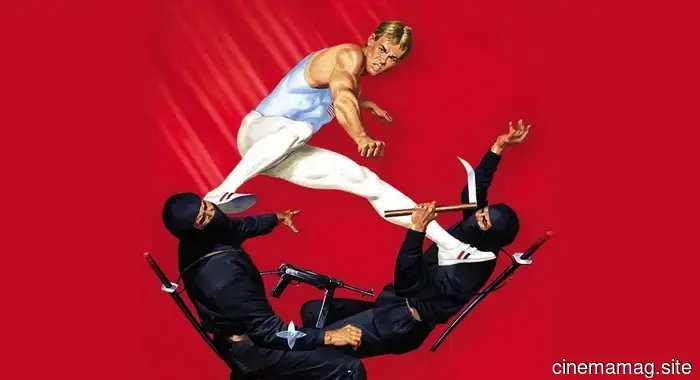
Gymkata: The Awful Spy/Karate/Horror Movie You Must Watch
Jack Gayer discusses Gymkata and why you should watch it…
"Unintentionally hilarious" is not a title anyone aims for, yet there's a certain charm in it when it occurs. You find yourself pondering, “Did I really just see that?” Gymkata (1985) is packed with such instances that elicit laughter, solely at the film's expense. The movie's elements, from casting to storyline, are puzzling at best. Surprisingly, it also offers some unexpected redemption, transitioning from a silly spy flick to a surreal horror narrative. Often, the backstory of these mishaps proves to be more intriguing than the film itself.
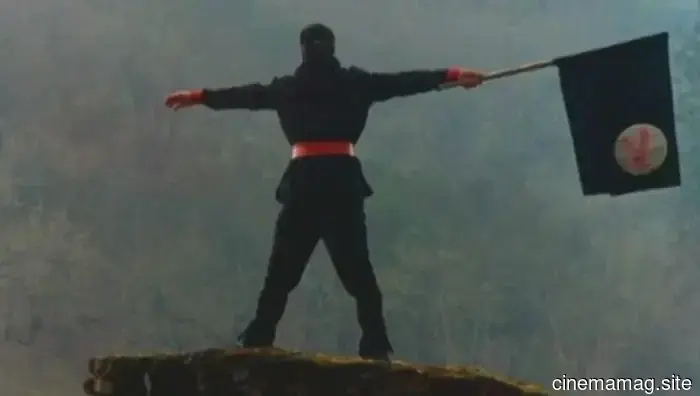
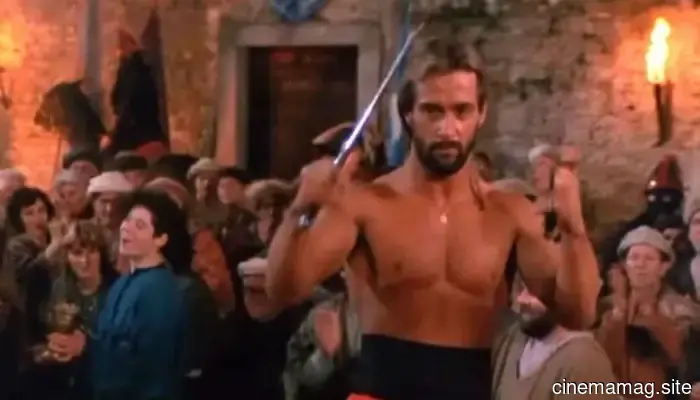
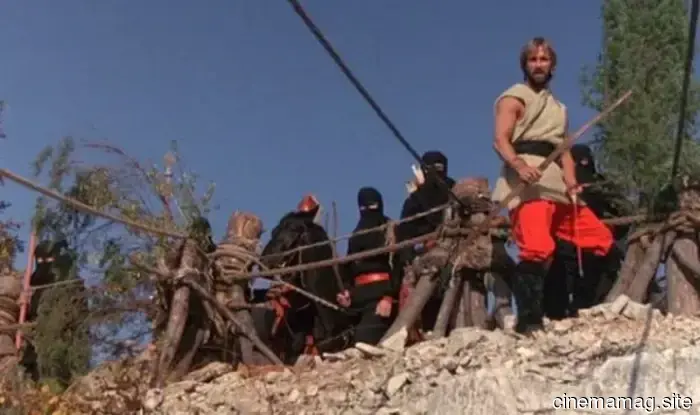
Gymkata begins with a mix of drama and dullness. There's tense string music accompanying a long, static shot of parallel bars that lasts nearly a minute and a half before anything happens. The music grows more intense as a man swings on the bars, juxtaposed with images of galloping horses. This man practices on the bars while we get close-ups of the horses and men on horseback chasing someone dressed in bright green. The pursued man begins to cross a rope bridge using only his hands, with ninjas holding black flags on either side. One pursuer, perfectly styled with well-defined muscles, pulls out a bow and arrow. At this point, it feels like a quirky action movie with some odd editing—until this character speaks, delivering the line, "And you believe the fool," in a flat tone that feels lifeless.
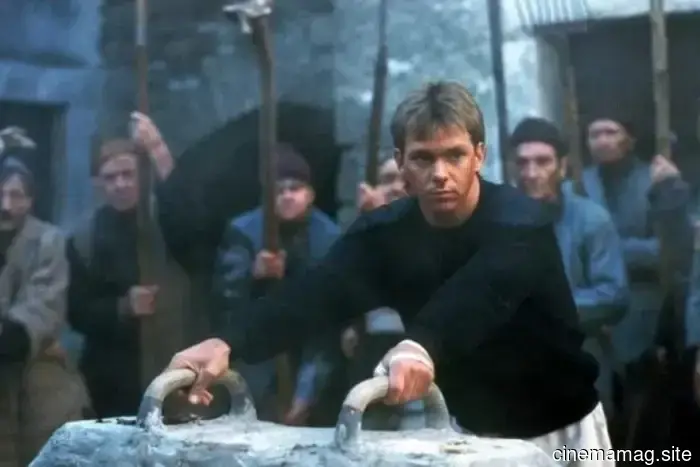
We then return to the less engaging part: the hero on the parallel bars, Jonathan Cabot (Kurt Thomas), an Olympic athlete so skilled in real life that several gymnastics moves bear his name. Thankfully, Gymkata marked one of his few acting appearances.
Next, Jonathan meets with a man we assume is an intelligence operative. We're thrust into a conversation that feels like the screenwriter took Mamet’s advice of “get in late, leave early” to an extreme. Out of nowhere, Jonathan remarks, “I remember all the hours Dad and I spent out there.” What exactly is he talking about? With little context, it’s time to dive into the story. Jonathan is being recruited at a point when we don’t even know basic details about him, such as his name or circumstances; one might wonder what sort of bet led to that dramatic haircut.
It's as though the screenwriter partially grasped the Hero’s Journey structure by Christopher Vogler, omitted the first step, and jumbled together the call to adventure with the meeting of the mentor while skipping the refusal of the call entirely.
Paley (Edward Michael Bell), the government agent, provides Jonathan with vague hints about the mission: “For the next two months you’re going to toughen your mind and your body,” claiming it will make his Olympic training look like finger painting. After this unclear explanation concludes, Jonathan is asked, “Any questions?” Strangely enough, he has none, showcasing a surprising lack of curiosity as he readily consents to… something, apparently having no other commitments.
Once he agrees to this mysterious endeavor (followed by an unexplained costume change), Paley—whose name we still don’t know—begins explaining what Jonathan just agreed to.
The movie finally begins to provide exposition, including details about the earlier-seen villain, the well-groomed Zamir (Richard Norton), who aims to topple the fictional country of Parmistan and sell it to “the other side.” According to Paley, Zamir is a "Viper," a term that is never clarified so it simply lingers in the air, alongside the information that Jonathan's safety is “of no interest” to him. No surprises there.
With Parmistan on the verge of a coup, one would think Jonathan’s mission is to prevent this chaos. Not quite. Paley clarifies that their interest in Parmistan is due to a satellite monitoring station within its borders that could track all other satellites globally, serving as a potential “early warning system in case of attack.” So, the stability of the citizens isn’t a concern—understandably questionable. Why this tiny nation possesses such a powerful satellite station is left unexplained.
This leads us to the plot. Paley states that anyone entering Parmistan must "play The Game." Fortunately for Jonathan, it isn’t a complex game like tic-tac-toe, as he appears ill-suited for anything aimed at younger audiences. Unluckily, details about "The Game" won't be revealed for quite a while.
At least the stakes are made known. Winning The Game gives you your life and “one request.” For someone not at risk of dying, the first reward isn’t exactly appealing. In terms of prizes, they fall short of expectation.
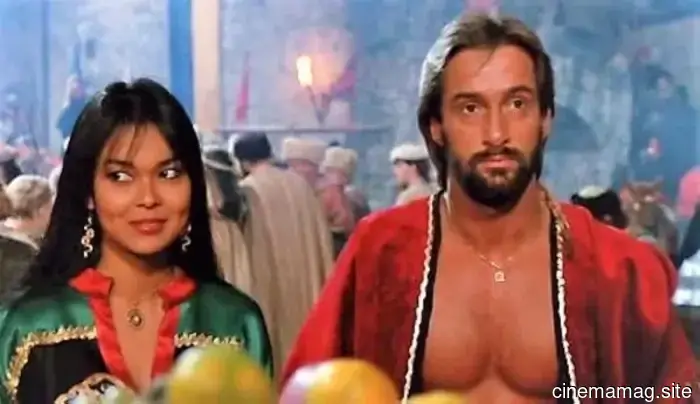
Once again, the relentlessly uncurious Jonathan fails to ask the crucial question, “What is The Game, exactly?” The mechanics of The Game can wait because now Paley introduces Princess Rubali (


Other articles
 The Testaments showrunner Bruce Miller discusses the spinoff of The Handmaid's Tale.
In The Testaments, Hulu's spinoff of the acclaimed series The Handmaid's Tale, you don't spend time with the Handmaids — a choice that was made intentionally by
The Testaments showrunner Bruce Miller discusses the spinoff of The Handmaid's Tale.
In The Testaments, Hulu's spinoff of the acclaimed series The Handmaid's Tale, you don't spend time with the Handmaids — a choice that was made intentionally by
 The G.I. Joe Classified Series reveals for Yo Joe June include Hooded Cobra Commander, Action Man, Deep Six, and additional figures.
We're slightly delayed with our Yo Joe June announcements here at Flickering Myth because we've been busy with the production of our new film, Robert Returns. However, there have been some really exciting...
The G.I. Joe Classified Series reveals for Yo Joe June include Hooded Cobra Commander, Action Man, Deep Six, and additional figures.
We're slightly delayed with our Yo Joe June announcements here at Flickering Myth because we've been busy with the production of our new film, Robert Returns. However, there have been some really exciting...
 10 Movie Sex Scenes That Needed Intervention
Film sex scenes have consistently served as a reflection of our changing standards regarding relationships and consent.
10 Movie Sex Scenes That Needed Intervention
Film sex scenes have consistently served as a reflection of our changing standards regarding relationships and consent.
 12 Movie Con Artists We Can't Help but Fall for Every Time
Here are 12 cinematic con artists that we consistently get tricked by.
12 Movie Con Artists We Can't Help but Fall for Every Time
Here are 12 cinematic con artists that we consistently get tricked by.
 IFC Films has released a trailer for the psychosexual thriller Night Nurse.
IFC has released a poster and trailer for Night Nurse, the forthcoming psychosexual thriller directed and written by Georgia Bernstein. The story centers on Eleni (Camre Paksoy), a young woman who becomes entangled in a chain of…
IFC Films has released a trailer for the psychosexual thriller Night Nurse.
IFC has released a poster and trailer for Night Nurse, the forthcoming psychosexual thriller directed and written by Georgia Bernstein. The story centers on Eleni (Camre Paksoy), a young woman who becomes entangled in a chain of…
 Comic Book Sneak Peek – What If…? Thor #1
What would happen if the God of Thunder obtained Spider-Man's Symbiote Suit? That’s the question Marvel aims to explore in Wednesday’s What If…? Thor #1, and you can catch a glimpse of…
Comic Book Sneak Peek – What If…? Thor #1
What would happen if the God of Thunder obtained Spider-Man's Symbiote Suit? That’s the question Marvel aims to explore in Wednesday’s What If…? Thor #1, and you can catch a glimpse of…
Gymkata: The Awful Spy/Karate/Horror Movie You Must Watch
Jack Gayer discusses Gymkata and why it’s a must-see… Being labeled as “unintentionally hilarious” isn’t something one aims for. However, there’s a certain charm when it occurs. “Did I actually witness that?” you frequently…