
How It Works: Production Designer Paul D. Austerberry Embraced Americana for Welcome to Derry
When Paul D. Austerberry took on production design for HBO’s It: Welcome to Derry, his aim was to replicate the cinematic quality he achieved for director Andy Muschietti’s 2019 It: Chapter Two. However, he did not anticipate the tight production schedules that television demands, especially regarding the finer details that add life to a set.
“Looking back, there are aspects I wish I could have devoted more time to,” Austerberry admits. “I attended a screening recently in front of an audience and was concerned about its reception. Yet, everything appeared to hold up well, just as it did on the screen.”
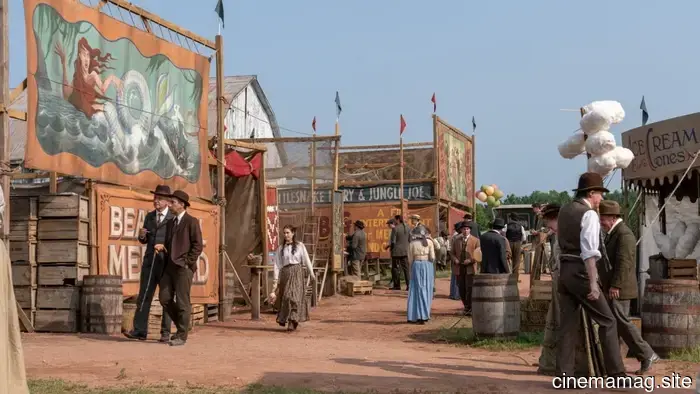
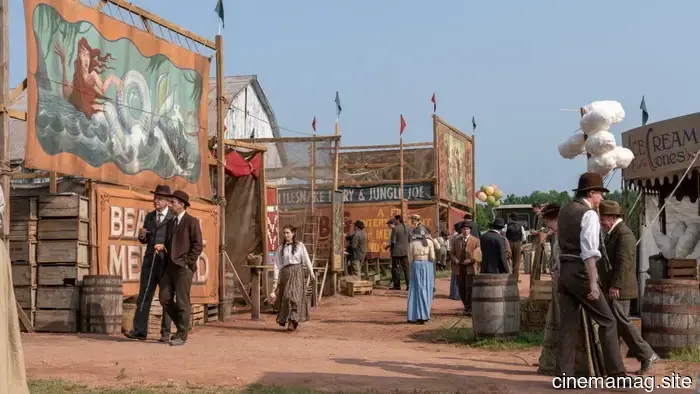
The production designer notes that having a larger team for the eight-part series alleviated some of those “time constraints,” particularly with the extensive carnival setting critical to the origin story of Bob Gray, also known as Pennywise. He attributes the success to having early access to the scripts, which helped in conveying authenticity.
“Smaller versions of the digital backdrops from the film were provided to scenic artists, theatrical painters, and sign painters. There were always banners hung around the studio, with someone diligently working,” Austerberry explains. “While we used a few small digital elements, most were crafted by hand.”
Paul D. Austerberry on Emphasizing the Past for It: Welcome to Derry
IT: Welcome to Derry depicts the early Cold War era. HBO
Additional features, such as wooden animals and simple theatrical elements typical of a 1900s carnival—like shifting clouds and backdrops—brought the scenes to life.
These details contributed to narrating Pennywise's story in a way that would captivate both the show's fictional children and the audience.
“It was all very low-tech, but the special effects team, accustomed to more explosive effects, enjoyed the challenge of rigging all those components,” Austerberry shares. “They took great pride in their work, given the many moving elements involved.”
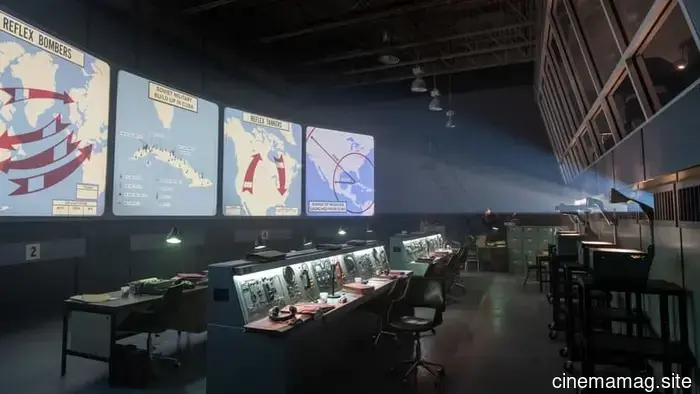
Austerberry drew inspiration from 1950s and ’60s Americana images and color schemes to evoke the feeling of a small American town.
“My role was to make it as realistic as possible for the audience, so they truly believe in the setting and the time period,” he states. “This way, the supernatural and unsettling elements become more impactful, since you’re grounded in this seemingly typical slice of period Americana.”
He also highlights numerous small details in the sets that helped actors become immersed, from parachuting soldiers, airplanes, and Flash comics in the treehouse to 1950s-style spaceships in a bedroom and the old convent in Niagara Falls, Ontario, used as the sanatorium.
IT: Welcome to Derry production designer Paul W. Austerberry. HBO – Credit: HBO
The show’s primary street featured hand-painted signs and around 35 businesses, including a grocery store. Preparing for this took several months, considering the era-specific products and packaging involved.
“The items on both lower and upper shelves are just as detailed as those at eye level,” he notes. “Since we can’t predict what will happen during the shoot, part of my job is to ensure that everything is camera-ready. When on location, you can only explore what we’ve set up.”
It: Welcome to Derry is currently available to stream on HBO Max. You can read more of our Emmy contender interviews here.
Editor's note: Headline correction made.
Other articles
 How VFX Supervisor Blair Clark of Ted Makes You Forget Ted is Not Real
Visual effects supervisor Blair Clark discusses the process of bringing Ted to life.
The Methods Employed in Video Game Trailers - MovieMaker Magazine
Whether featured on video sharing sites such as YouTube or broadcasted on television channels globally, video game trailers have the potential to significantly influence success.
How VFX Supervisor Blair Clark of Ted Makes You Forget Ted is Not Real
Visual effects supervisor Blair Clark discusses the process of bringing Ted to life.
The Methods Employed in Video Game Trailers - MovieMaker Magazine
Whether featured on video sharing sites such as YouTube or broadcasted on television channels globally, video game trailers have the potential to significantly influence success.
 How Ted's VFX Supervisor Blair Clark Makes You Believe Ted is Real
Visual effects supervisor Blair Clark discusses the process of bringing Ted to life.
How Ted's VFX Supervisor Blair Clark Makes You Believe Ted is Real
Visual effects supervisor Blair Clark discusses the process of bringing Ted to life.
 The Criterion Collection's lineup for September includes a 4K set from Leos Carax, The Secret Agent, works by Richard Linklater, Satyajit Ray, and more.
A year after their Wes Anderson collection, which one can only hope marks the beginning of a series, the Criterion Collection is set to release a somewhat leaner but equally significant compilation by Leos Carax. This will include Boys Meets Girl, Mauvais Sang, and The Lovers on the Bridge, along with It's Not Me (perhaps the finest of the bunch?).
The Criterion Collection's lineup for September includes a 4K set from Leos Carax, The Secret Agent, works by Richard Linklater, Satyajit Ray, and more.
A year after their Wes Anderson collection, which one can only hope marks the beginning of a series, the Criterion Collection is set to release a somewhat leaner but equally significant compilation by Leos Carax. This will include Boys Meets Girl, Mauvais Sang, and The Lovers on the Bridge, along with It's Not Me (perhaps the finest of the bunch?).
 How VFX Supervisor Blair Clark Makes You See Ted as Real
Visual effects supervisor Blair Clark discusses the process of bringing Ted to life.
How VFX Supervisor Blair Clark Makes You See Ted as Real
Visual effects supervisor Blair Clark discusses the process of bringing Ted to life.
 How It Works: Production Designer Paul D. Austerberry Embraced Americana for Derry's Welcome
When Paul D. Austerberry approached production design for HBO’s It: Welcome to Derry, his objective was to infuse the series with the same high-quality cinematic feel that he
How It Works: Production Designer Paul D. Austerberry Embraced Americana for Derry's Welcome
When Paul D. Austerberry approached production design for HBO’s It: Welcome to Derry, his objective was to infuse the series with the same high-quality cinematic feel that he
How It Works: Production Designer Paul D. Austerberry Embraced Americana for Welcome to Derry
When Paul D. Austerberry took on the production design for HBO’s It: Welcome to Derry, his aim was to impart the same cinematic quality to the series that he