
.jpg)
Film Review – Little Brother (2026)
Little Brother, 2026.
Directed by Matt Spicer.
Featuring John Cena, Eric André, Michelle Monaghan, Christopher Meloni, Sherry Cola, Ego Nwodim, Caleb Hearon, Dani Deetté, Ben Ahlers, Sophia Bunnell, Bryce Gheisar, Pilot Bunch, Sarah Ramos, Brett Azar, Stephen Singer, Christopher Woodley, and Holdyn Jaymes.
SYNOPSIS:
The carefully arranged life of a well-known real estate agent is disrupted when his quirky "little brother" unexpectedly returns.
At times, the initial joke establishes the film's tone and, for better or worse, informs viewers about what to expect. In director Matt Spicer's Little Brother (who also directed the notable parasocial dramedy Ingrid Goes West, which highlights the stark difference in quality here), this troubling sign is evident right from the start as psych ward patient Marcus (Eric André) reminisces about happy childhood moments with a roommate whose mental illness is a frequent source of jokes. He shows him a 25-year-old photo of his charity Big Brother, Rudd (John Cena), a successful real estate agent who was once overweight. The punchline is that John Cena's character used to be fat.
Marcus has endured a grim existence moving between foster homes, many of which were almost abusive or ended in tragedy, aspects the film cruelly uses as fodder for humor. He isn't in the psych ward due to clinical insanity but rather because he is eccentric and isolated, with nowhere to go. He was happiest during the brief time he had a big brother (by the way, Marcus seems to think that Rudd is his actual blood brother, raising questions about the accuracy of his diagnosis) and decides to escape—ironically, since he is there voluntarily—and sets out to reestablish contact with Rudd. This quickly leads to him being struck by a car and injured, though not severely enough to prevent the ensuing lowbrow chaos that stretches on for 90 minutes.
Rudd rushes to the hospital, believing his older brother Josh is critically injured, only to be astonished to find someone he doesn't even recall claiming a familial connection. Unfortunately for him, his wife Deirdre (Michelle Monaghan) has a soft spot for outcasts and the troubled (including adopting dogs with disabilities), insisting that Marcus move in with them and their teenage sons to reconnect with Rudd until he finds some stability. Living in the shadow of his billionaire older brother (Christopher Meloni) and preparing for a real estate-based reality TV show that could elevate his social and economic standing, Rudd has no time for this nonsense.
What follows is a deeply unfunny blend of You, Me and Dupree and Step Brothers (the former being already terrible, putting it at a disadvantage) that resorts to shockingly crude lengths, failing to generate laughter. It's already awkward that the filmmakers (with a script by Andrew Mogel and Jarrad Paul) treat Marcus's challenging life as a source of ridicule (they believe a throwaway line about one of his foster fathers dying on 9/11, but not on one of the planes, is laugh-out-loud funny). There are sequences of lowbrow humor that, during the end credits outtakes, even Eric André appears to question with a "are you serious?" To his credit, he embraces the role and brings an energetic performance.
Beyond the ceaseless barrage of juvenile and crude humor, Little Brother tries to convey a message about what happens when someone becomes the arrogant, distant, yet likable brother they had, allowing greed, success, and self-absorption to interfere with simply being kind to those who admire them. We can infer that the young, overweight Rudd admired and simultaneously viewed Josh as a rival, transforming into John Cena and becoming a wealthy real estate mogul who once wished to help the less fortunate, hence his participation in the Big Brother program years ago.
However, any potentially meaningful narrative or familial themes are buried under lazy humor that is often surprisingly dumb, lowbrow, and at times tasteless. While this style can be comedic, it appears driven by a desire to shock rather than by character development. The film ultimately has good intentions but falls short in the humor department. After Little Brother concludes, you might feel like sending everyone involved to the same psych ward for creating such an awful comedy, even if it manages to convey a bit of heart toward the end. The frenetic energy of Eric André and John Cena (who usually delivers but barely makes an impact here) deserve better.
Flickering Myth Rating – Film: ★ ★ / Movie: ★ ★
Robert Kojder
.jpg)
.jpg)
.jpg)
.jpg)
Other articles
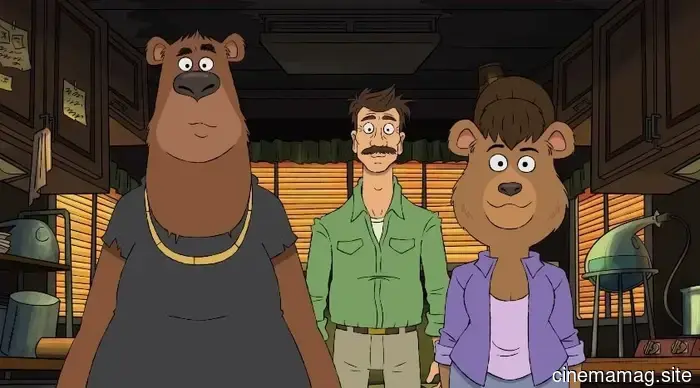 In the trailer for the adult animated series Breaking Bear, a family of bears embarks on establishing a drug empire.
Tubi has unveiled the trailer for the adult animated comedy series Breaking Bear, which parodies AMC's Breaking Bad by narrating the tale of a group of bears that establish a drug empire to rescue…
In the trailer for the adult animated series Breaking Bear, a family of bears embarks on establishing a drug empire.
Tubi has unveiled the trailer for the adult animated comedy series Breaking Bear, which parodies AMC's Breaking Bad by narrating the tale of a group of bears that establish a drug empire to rescue…
.jpg) Film Critique – Little Brother (2026)
Little Brother, 2026. Directed by Matt Spicer. Featuring John Cena, Eric André, Michelle Monaghan, Christopher Meloni, Sherry Cola, Ego Nwodim, Caleb Hearon, Dani Deetté, Ben Ahlers, Sophia Bunnell, and others.
Film Critique – Little Brother (2026)
Little Brother, 2026. Directed by Matt Spicer. Featuring John Cena, Eric André, Michelle Monaghan, Christopher Meloni, Sherry Cola, Ego Nwodim, Caleb Hearon, Dani Deetté, Ben Ahlers, Sophia Bunnell, and others.
.jpg) Film Review – Supergirl (2026)
Supergirl, 2026. Directed by Craig Gillespie. Featuring Milly Alcock, Eve Ridley, Matthias Schoenaerts, David Krumholtz, Emily Beecham, Jason Momoa, Alice Hewkin, Ferdinand Kingsley, Diarmaid Murtagh,…
Film Review – Supergirl (2026)
Supergirl, 2026. Directed by Craig Gillespie. Featuring Milly Alcock, Eve Ridley, Matthias Schoenaerts, David Krumholtz, Emily Beecham, Jason Momoa, Alice Hewkin, Ferdinand Kingsley, Diarmaid Murtagh,…
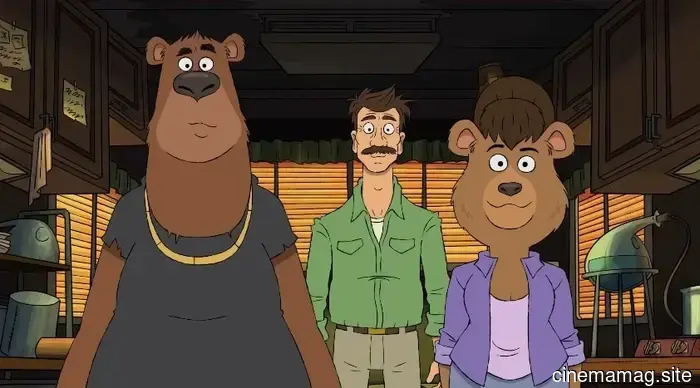 In the trailer for the adult animation Breaking Bear, a clan of bears ventures into the drug trade.
Tubi has unveiled the trailer for its adult animated comedy series Breaking Bear, which parodies AMC’s Breaking Bad by narrating the tale of a group of bears that establish a drug empire to rescue…
In the trailer for the adult animation Breaking Bear, a clan of bears ventures into the drug trade.
Tubi has unveiled the trailer for its adult animated comedy series Breaking Bear, which parodies AMC’s Breaking Bad by narrating the tale of a group of bears that establish a drug empire to rescue…
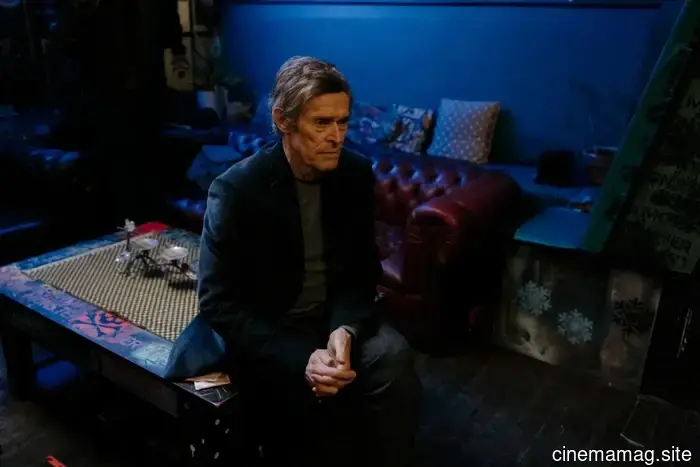 Willem Dafoe discovers newfound recognition in the trailer for a comedy-drama.
Magnolia Pictures and Magnet Releasing have unveiled a poster and trailer for Late Fame, a new comedy-drama directed by Kent Jones (Hitchcock/Truffaut, Diane). The film stars Willem Dafoe in a leading role alongside a cast that...
Willem Dafoe discovers newfound recognition in the trailer for a comedy-drama.
Magnolia Pictures and Magnet Releasing have unveiled a poster and trailer for Late Fame, a new comedy-drama directed by Kent Jones (Hitchcock/Truffaut, Diane). The film stars Willem Dafoe in a leading role alongside a cast that...
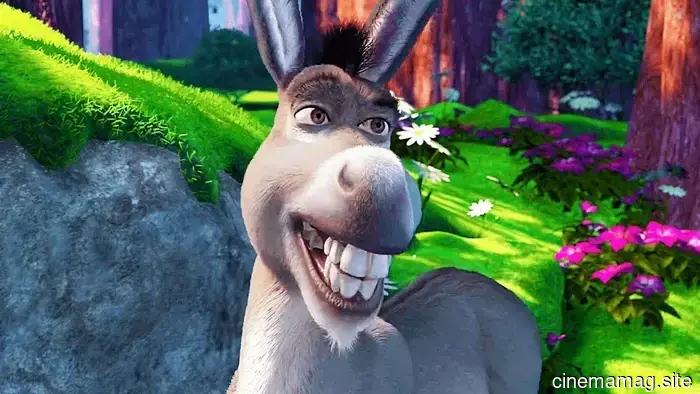 Eddie Murphy will provide the voice for Donkey in the Shrek spin-off film set to be released in the summer of 2028.
After the recent unveiling of the Shrek 5 trailer, Universal Pictures has revealed that the long-discussed Donkey spin-off film is set to arrive in theaters on June 30, 2028. According to The Hollywood Reporter, Eddie…
Eddie Murphy will provide the voice for Donkey in the Shrek spin-off film set to be released in the summer of 2028.
After the recent unveiling of the Shrek 5 trailer, Universal Pictures has revealed that the long-discussed Donkey spin-off film is set to arrive in theaters on June 30, 2028. According to The Hollywood Reporter, Eddie…
Film Review – Little Brother (2026)
Little Brother, 2026. Directed by Matt Spicer. Featuring John Cena, Eric André, Michelle Monaghan, Christopher Meloni, Sherry Cola, Ego Nwodim, Caleb Hearon, Dani Deetté, Ben Ahlers, Sophia Bunnell, and others…