
.jpg)
Film Review – Sentimental Value (2025)
**Sentimental Value, 2025.**
Directed by Joachim Trier.
Featuring Renate Reinsve, Stellan Skarsgård, Inga Ibsdotter Lilleaas, Elle Fanning, Cory Michael Smith, Catherine Cohen, Pia Borgli, Jonas Jacobsen, Anders Danielsen Lie, Jesper Christensen, Lena Endre, Andreas Stoltenberg Granerud, Øyvind Hesjedal Loven, Lars Väringer, Ida Marianne Vassbotn Klasson, Vilde Søyland, Mari Strand Ferstad, Julia Küster, Haakon Norum Albech, Bente Børsum, Lazare Gousseau, Kirsten Kvalø, Gard Løkke, Alix Poisson, and Erling Eggen.
**SYNOPSIS:**
Sisters Nora and Agnes reconnect with their estranged father, the charming Gustav, a once-famous director who offers stage actress Nora a role in what he hopes will be his comeback film. When Nora declines the part, she soon learns he has cast a rising Hollywood star in her place.
The emotional weight of the film goes beyond the intricate family dynamics, reflecting the disconnect between the estranged father and his adult daughters, as well as the father's career in filmmaking, which has impeded their relationships. Co-writer/director Joachim Trier, alongside Eskil Vogt, crafts a narrative that delves into the family's memories across generations within their home.
At the age of six, Nora wrote a school essay about her childhood home—an eloquent piece that could overshadow much of American education, but that’s a discussion for another time. This home has witnessed everything from tragic suicides to joyous celebrations and parental conflicts to vibrant outdoor festivities. The story unfolds through dry narration and montage, featuring impactful static shots by cinematographer Kasper Tuxen that imbue each room and object with significance.
As an adult, Nora (portrayed by Renate Reinsve, who previously collaborated with Trier on the compelling film The Worst Person in the World) shares some of this historical knowledge with her nephew Erik (Øyvind Hesjedal Loven), including insights about a stove allegedly capable of capturing verbal exchanges from downstairs. It's worth noting a classic film criticism cliché that this home serves as another character in the story.
Nora, a stage actress suffering from severe stage fright (her anxiety is so intense that she requires her friend and stagehand Jakob, played by Trier’s frequent collaborator Anders Danielsen Lie, to slap her face as an unorthodox method of summoning courage), openly admits her thoughts are quite disordered.
Much of this turmoil is likely linked to her accomplished, yet disillusioned father, Gustav Borg (played with vulnerability by Stellan Skarsgård), who, filled with regrets, seeks to reconcile with his daughters after abandoning them and their mother following a failed marriage. Following the recent death of his wife and with the house poised for sale, Gustav returns home with intentions that go beyond reconnecting with his daughters or preserving their memories; he aims to create a deeply personal film about his mother's depression and eventual suicide, casting Nora in the role.
It's not entirely surprising when Nora declines, prompting Gustav to turn to a well-known Hollywood actress (played by Elle Fanning) to portray his mother, hoping she can embody her spirit, pain, and beauty. Even the actress has reservations, but she is weary of uninspiring projects and seeks something daring. This also draws her into the lives of Nora and Agnes (Inga Ibsdotter Lilleaas), the latter having been part of Gustav’s film as a child (a flashback in the film highlights the director's emotional disconnect with his family, only expressed through cinema).
A subplot that leans slightly too meta involves the notorious control-freak filmmaker receiving backing from Netflix, which imposes certain demands that gradually divert him from his authentic artistic vision. Although some humor arises from this situation, it often feels overly self-aware and somewhat detracts from the film's more profound family dynamics, which are the true focus of the characters and narrative.
Films that depict wealthy filmmakers dealing with familial issues can sometimes be emotionally challenging, yet Joachim Trier understands that the true power lies in family dynamics and the sentimental worth of childhood homes. He also appears to utilize illness as a narrative device to guide his characters toward their inevitable destinations in the story—but it is handled more organically here than in his previous work.
Regardless, Gustav also seeks to connect with his nephew Erik, which is both heartwarming and nearly disastrous (film enthusiasts may not be ready for the hilariously inappropriate DVDs he buys for the boy) and, somewhat inevitably, leads him to consider involving Erik in this profoundly personal film, despite insisting it’s not about their family. There is also tension between Nora and Agnes, who view their father through different lenses shaped by their ages and experiences in their dysfunctional upbringing.
Renate Reinsve delivers another compelling performance
.jpg)
.jpeg)
.jpg)
.jpg)
.jpg)
.jpg)
Other articles
 Unveil the trailer for the holiday comedy Tinsel Town featuring Kiefer Sutherland and Rebel Wilson.
A poster and trailer have appeared online for Tinsel Town, the forthcoming holiday family comedy directed by Chris Foggin. Kiefer Sutherland plays the role of Bradley Mack, a faded action star who is deceived...
Unveil the trailer for the holiday comedy Tinsel Town featuring Kiefer Sutherland and Rebel Wilson.
A poster and trailer have appeared online for Tinsel Town, the forthcoming holiday family comedy directed by Chris Foggin. Kiefer Sutherland plays the role of Bradley Mack, a faded action star who is deceived...
 Guillermo del Toro Hears Frankenstein
Guillermo del Toro Hears Frankenstein
Guillermo del Toro Hears Frankenstein
 Iron Studios has revealed the Predator: Badlands Dek & Thia collectible statue.
Iron Studios has unveiled the 1:10 scale statue of Dek & Thia, inspired by the duo's look in the forthcoming sci-fi action film Predator: Badlands. The collectible is currently open for pre-order.
Iron Studios has revealed the Predator: Badlands Dek & Thia collectible statue.
Iron Studios has unveiled the 1:10 scale statue of Dek & Thia, inspired by the duo's look in the forthcoming sci-fi action film Predator: Badlands. The collectible is currently open for pre-order.
 Bookended Excellence: Filmmakers Notable for Their Outstanding First and Last Films
Many directors have launched their careers with an impressive film or concluded with a remarkable one. However, which directors made their striking entrance and concluded with an extraordinary film? Here, we explore four candidates… Every director begins…
Bookended Excellence: Filmmakers Notable for Their Outstanding First and Last Films
Many directors have launched their careers with an impressive film or concluded with a remarkable one. However, which directors made their striking entrance and concluded with an extraordinary film? Here, we explore four candidates… Every director begins…
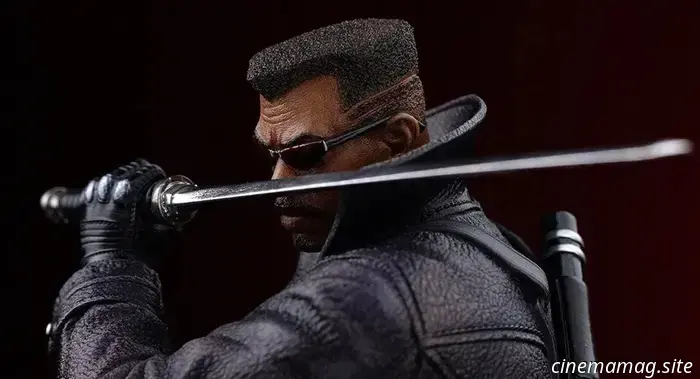 Iron Studios has unveiled a collectible statue of Marvel's Blade.
Iron Studios has officially revealed its 1:10 scale collectible statue of Blade, which draws inspiration from the Daywalker’s appearance in Marvel comics, and it is now available for pre-order, priced at 9.9...
Iron Studios has unveiled a collectible statue of Marvel's Blade.
Iron Studios has officially revealed its 1:10 scale collectible statue of Blade, which draws inspiration from the Daywalker’s appearance in Marvel comics, and it is now available for pre-order, priced at 9.9...
 Preview of Comic Book – Echo: Seeker of Truth #1
Marvel Comics is set to release Echo: Seeker of Truth #1 on Wednesday, and you can check out the official preview below... After her cousin goes missing in Los Angeles, ECHO heads to the City of Angels...
Preview of Comic Book – Echo: Seeker of Truth #1
Marvel Comics is set to release Echo: Seeker of Truth #1 on Wednesday, and you can check out the official preview below... After her cousin goes missing in Los Angeles, ECHO heads to the City of Angels...
Film Review – Sentimental Value (2025)
Sentimental Value, 2025. Directed by Joachim Trier. Featuring Renate Reinsve, Stellan Skarsgård, Inga Ibsdotter Lilleaas, Elle Fanning, Cory Michael Smith, Catherine Cohen, Pia Borgli, Jonas Jacobsen,…