
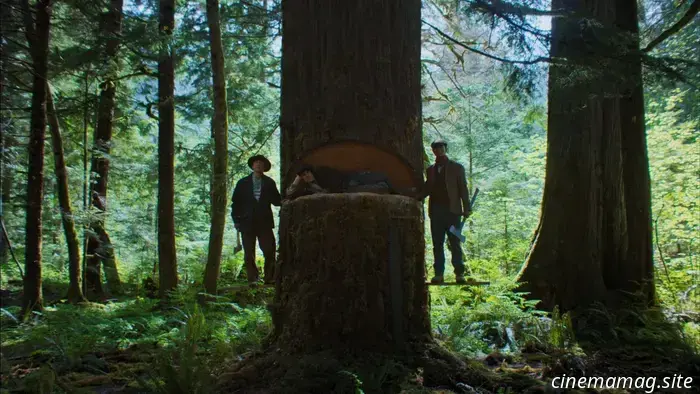
Production Designer Alexandra Schaller of Train Dreams discusses discovering the beauty in landscapes and how to give small films a grander feel.
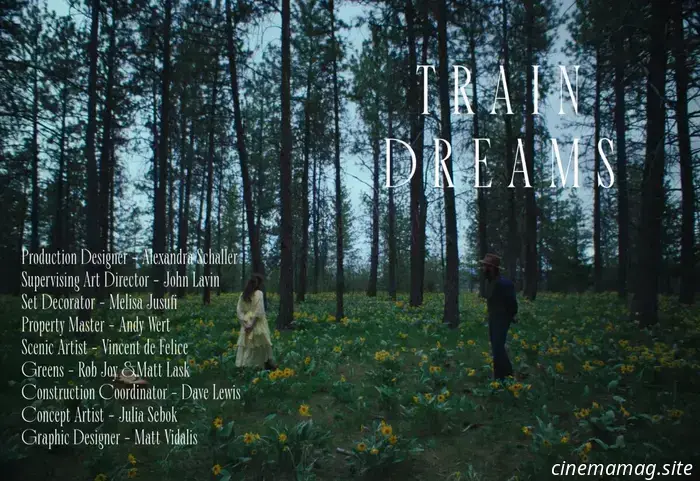
One of the standout features of Train Dreams, directed by Clint Bentley, is its production design. Each element of the settings feels as though it was naturally there, waiting to be filmed. However, this is not the case; everything was meticulously planned and constructed. The Film Stage had the privilege of speaking with Alexandra Schaller, the film’s production designer, about the challenges and joys of bringing Train Dreams to fruition, as well as her earlier successful projects.
Special thanks to Schaller, who generously provided The Film Stage with mood boards and behind-the-scenes images from the project, included throughout this piece. This interview has been condensed for brevity and clarity, and the full audio can be found below.
The Film Stage: Train Dreams is adapted from Denis Johnson’s novella and features talented actors, including Joel Edgerton. One aspect that struck me while writing the review months ago was, how did you accomplish this? It’s a smaller film with grand sequences, and from a production design perspective, it’s quite impressive. Where did you begin in creating this?
Alexandra Schaller: We indeed began with lofty ambitions, and at the start, none of us truly knew how to achieve any of it. It began with discussions with Clint [Bentley] about the feeling we wanted the movie to convey. When embarking on a project, looking at the numerous tasks ahead can feel daunting. Therefore, we needed to focus on the core of what we aimed to communicate and the sort of film Clint wanted to create. How he envisioned the world influenced its aesthetic significantly. From the beginning, we recognized that both Adolpho, the cinematographer, and Clint preferred to shoot with natural light and minimal artificial lighting. Consequently, we redirected some budget resources towards creating extensive sets and environments, as our scope exceeded the budget typical for such a film. Once we established the desired feel, our focus turned to selecting suitable locations that showcased natural beauty, since we preferred constructing our settings on-site rather than in a studio.
Did you use any studio settings at all?
We had one brief section of the fire on a sound stage, but the majority of it involved practical fire effects and additional lighting in an actual forest. There was also a segment with Gladys and his memory of her death that we filmed on a sound stage, but everything else was shot on location.
What was the most challenging build or sequence?
Usually, small films do not require multiple builds of a cabin. We needed a cabin for a family, a cabin that burns down, the ashes of that cabin, a rebuilt cabin, and a cabin overgrown with foliage. On top of that, we had to create a bridge that would appear to be under construction, and then a train had to traverse this newly constructed bridge!
The bridge and train combination must have been a daunting task.
Initially, we were unsure how to approach it. Our coordinator had an excavator named Butch, who suggested a site near the Canadian border in Washington with an old bridge that seemed promising. We discovered this dilapidated bridge made from logs, which was significant for the film's themes about the life cycle of trees. We needed to make this old bridge look as if it was in the process of being built, requiring us to set up a large logging operation. Eventually, we discovered that we had to construct it ourselves, and we did.
Collaboration between the production design team and the location team appears crucial for a project of this nature. Did you work closely with the location team from the very beginning to establish your requirements and explore potential sites throughout Washington?
Absolutely, that was a significant discussion. Because of the desire to use natural light, it was essential to carefully consider how we positioned the sets on each piece of land, keeping in mind the sun's arc and other factors. The location scouting was vital. The film's production started and stopped several times before we moved into proper prep, influenced by a few events and the strike. I had the fortunate opportunity to scout locations prior to real prep, which was beneficial. It was me, Clint, Adolpho, and the producers walking around searching for the right spots.
We were pressed for time regarding the cabin site, as we wanted it to feel magical and significant due to its importance to the character's memories. We waited until the absolute last moment to find it, but in terms of our builds, this film was quite ambitious. We were documenting a period, the early 20th century, when loggers were shaping America, constructing towns and railroads, and cutting down ancient trees. We had to craft many large 12-foot diameter cross-trees and move substantial logs, some of which were real, but we needed to manipulate them for production purposes. We had to create many from foam, a challenge I hadn’t anticipated when first reading the script. Additionally, we built a fire tower and a plane for Joel’s final scene since we couldn’t put the actor in an actual plane for those reaction
Otros artículos
 Comic Book Sneak Peek – Immortal Legend Batman #4
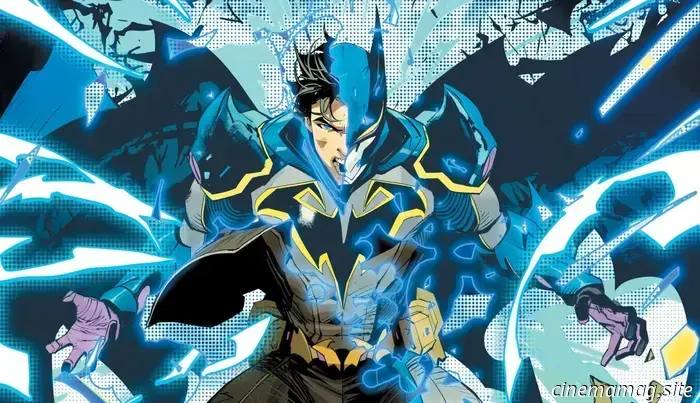
Immortal Legend Batman #4 will be released on Wednesday, and we have the official preview for you below… WELCOME TO THE JUNGLE! The Immortal Legend Batman is aware of how to thwart a Shadow assault, b…
Comic Book Sneak Peek – Immortal Legend Batman #4
Immortal Legend Batman #4 will be released on Wednesday, and we have the official preview for you below… WELCOME TO THE JUNGLE! The Immortal Legend Batman is aware of how to thwart a Shadow assault, b…
 Dead Man’s Wire Trailer: Gus Van Sant Narrates a Real Kidnapping Tale
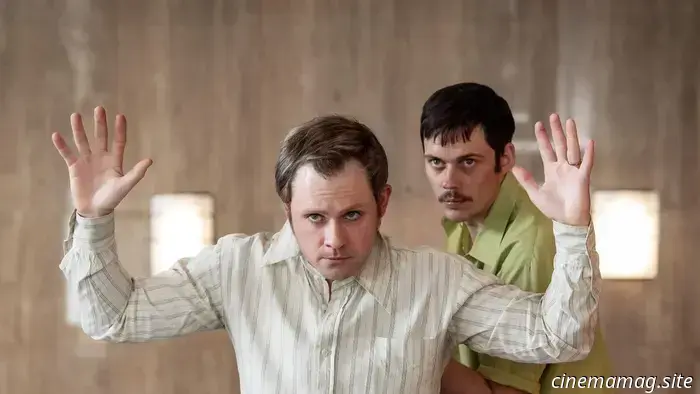
After a seven-year hiatus, Gus Van Sant made his return with the premiere of Dead Man's Wire at the Venice Film Festival, and it is set to be released before the year concludes. Featuring Bill Skarsgård, Dacre Montgomery, Cary Elwes, Myha'la, Colman Domingo, and Al Pacino, the thriller will have an awards-qualifying run under the new distributor Row K Entertainment.
Dead Man’s Wire Trailer: Gus Van Sant Narrates a Real Kidnapping Tale
After a seven-year hiatus, Gus Van Sant made his return with the premiere of Dead Man's Wire at the Venice Film Festival, and it is set to be released before the year concludes. Featuring Bill Skarsgård, Dacre Montgomery, Cary Elwes, Myha'la, Colman Domingo, and Al Pacino, the thriller will have an awards-qualifying run under the new distributor Row K Entertainment.
 Brango Casino Affiliate Sites - Best Online Casinos Similar to Brango - MovieMaker Magazine
While looking for trustworthy online casinos, numerous players come across Brango Casino and become curious about its sister sites and other options. The Brango Casino network
Brango Casino Affiliate Sites - Best Online Casinos Similar to Brango - MovieMaker Magazine
While looking for trustworthy online casinos, numerous players come across Brango Casino and become curious about its sister sites and other options. The Brango Casino network
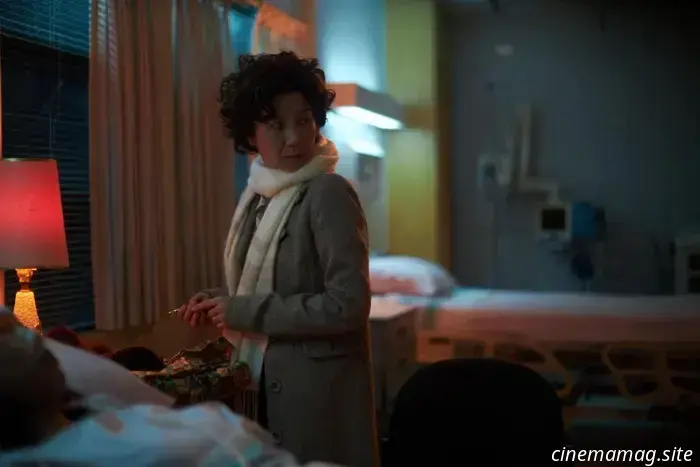 Exclusive U.S. Trailer for Johnny Ma's The Mother and the Bear, Supported by Pablo Larraín
Making its world premiere in the Centrepiece Section at the previous year's Toronto International Film Festival, Johnny Ma's comedic drama The Mother and the Bear features Kim Ho-jung, Won-Jae Lee, Jonathn Kim, and Amara Pedroso. The story revolves around a mother who interferes in her comatose daughter's life while on a trip to Winnipeg. This film is set to be released by Dekanalog starting in January.
Exclusive U.S. Trailer for Johnny Ma's The Mother and the Bear, Supported by Pablo Larraín
Making its world premiere in the Centrepiece Section at the previous year's Toronto International Film Festival, Johnny Ma's comedic drama The Mother and the Bear features Kim Ho-jung, Won-Jae Lee, Jonathn Kim, and Amara Pedroso. The story revolves around a mother who interferes in her comatose daughter's life while on a trip to Winnipeg. This film is set to be released by Dekanalog starting in January.
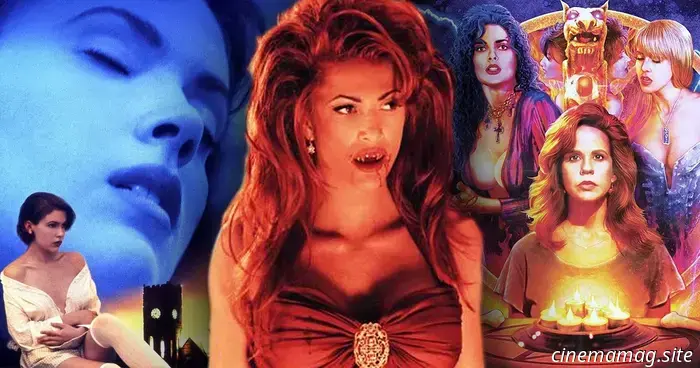 The 1990s' Erotic Horror Renaissance: The Intersection of Cinemax and Creature Features
The 1990s' Erotic Horror Renaissance: The Intersection of Cinemax and Creature Features
The 1990s' Erotic Horror Renaissance: The Intersection of Cinemax and Creature Features
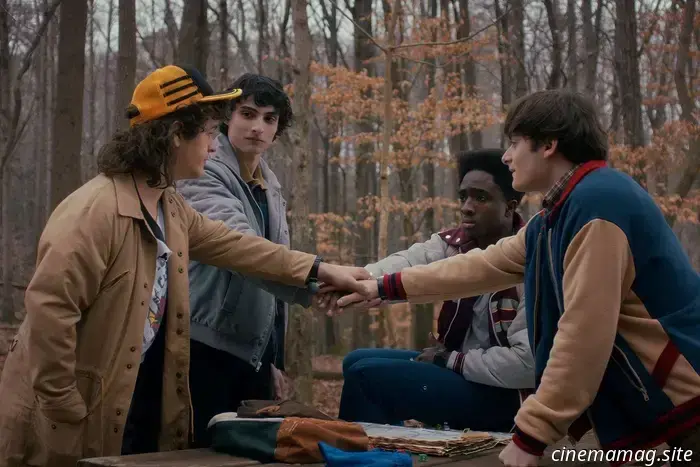 The trailer for Stranger Things Season 5 Volume 1 hints at the onset of the conclusion.
As the eagerly awaited premiere of Stranger Things approaches in just a few days, Netflix has unveiled another trailer for volume 1 of the fifth and final season of the supernatural drama series, which provides...
The trailer for Stranger Things Season 5 Volume 1 hints at the onset of the conclusion.
As the eagerly awaited premiere of Stranger Things approaches in just a few days, Netflix has unveiled another trailer for volume 1 of the fifth and final season of the supernatural drama series, which provides...
Production Designer Alexandra Schaller of Train Dreams discusses discovering the beauty in landscapes and how to give small films a grander feel.
One of the standout features of Train Dreams, directed by Clint Bentley, is its production design. Almost every aspect of the settings appears to have been naturally positioned, ready to be photographed. However, this is not true; it was thoughtfully and painstakingly designed and created. The Film Stage was fortunate and privileged.