

The Top Directorial Debuts of 2025
While we strive to cover a wide array of films each year, few experiences bring us greater joy than the emergence of fresh voices in cinema. This drives us to festivals and prompts us to explore a diverse range of features in search of new talent. This year was particularly remarkable for debuting directors making their mark, and we've compiled a list of the 2025 debuts that left a strong impression on us.
Below, you'll find a compilation spanning various genres. Keep an eye on these directors in the coming years as they (hopefully) rise in prominence, and stay tuned for our continuous year-end coverage here.
The Ballad of Suzanne Césaire (Madeleine Hunt-Ehrlich)
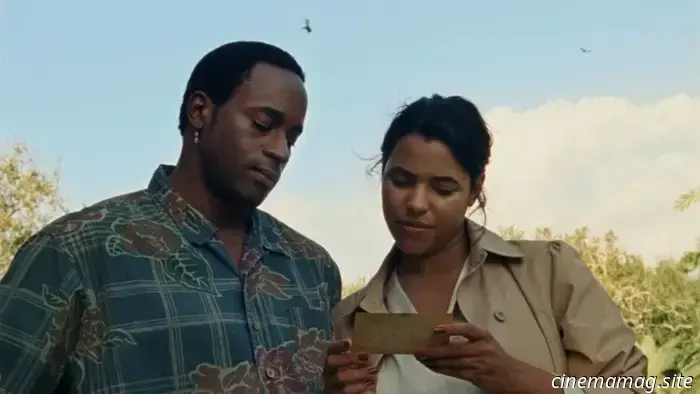
Madeleine Hunt-Ehrlich's feature debut, The Ballad of Suzanne Césaire, seeks to highlight its literary and historical foundations but ultimately draws more focus to its dreamlike elements and environmental aspects—like the “wind in the trees.” The titular character and her more renowned husband, Aimé Césaire, were key figures in the négritude movement, striving to connect Francophone literature from colonized regions with its African roots, depicted through a flexible and surreal lens. Based on extensive research, collaboration with academic experts, and consultations with the Césaire family, Hunt-Ehrlich’s daring formal approach still hindered a complete grasp of their efforts: “feeling” often surpasses our full comprehension. The lively Caribbean soundtrack underscores its identity as a ballad rather than a formal lesson on Suzanne Césaire. – David K. (full review)
Blue Sun Palace (Constance Tsang)
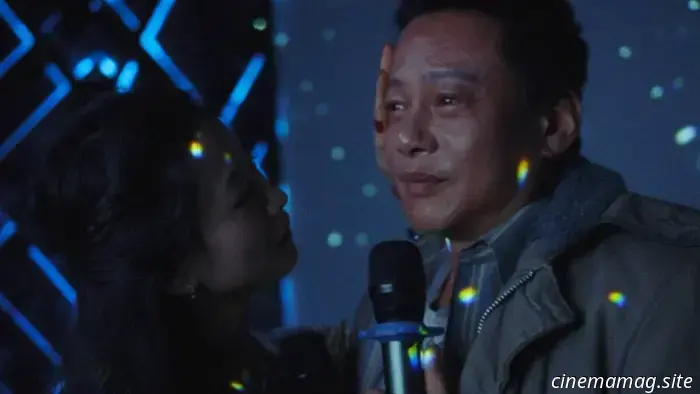
Set primarily in Queens, Blue Sun Palace delves into a concealed culture and environment. The film follows Amy and Didi, two friends at a massage parlor whose lives are disrupted by violence. Director Constance Tsang, a New York native, brings an authentic touch to the script. With Lee Kang-sheng portraying a Taiwanese immigrant in search of connection, the standout element is cinematographer Norm Li, who captures the film's massage parlors, fast-food outlets, and convenience stores—intriguingly lit in gritty fluorescent hues—making them relatable in contexts as varied as Korea, Mexico, or the U.S. – Daniel E.
Boys Go to Jupiter (Julian Glander)
Directed and written by Julian Glander, an animated feature from Pittsburgh, Boys Go to Jupiter encapsulates the essence of its time—now. As the press notes indicate: “[The film] was self-produced and entirely animated over 90 days using the free and open-source 3D modeling program Blender, with executive production by Peisin Yang Lazo.” Spanning approximately 85 minutes and boasting an impressive voice cast (including Elsie Fisher, Julio Torres, Sarah Sherman, Joe Pera, Janeane Garofalo, Demi Adejuyigbe, Cole Escola, and Eva Victor), this film is often humorous while also offering introspective commentary on our screen-dominated existence. Occasionally lengthy, it remains undeniably captivating and consistently bizarre. – Dan M. (full review)
BLKNWS: Terms & Conditions (Kahlil Joseph)
Kahlil Joseph’s BLKNWS: Terms & Conditions richly celebrates and condenses centuries of Black history—an undertaking that would take experts lifetimes to grasp fully. Avoiding dry academic ethnographic studies, it presents a vibrant, dynamic journey. Utilizing the latest edition of Henry Louis Gates and Anthony Appiah’s W. E. B. Du Bois-inspired “Africana: The Encyclopedia of the African and African American Experience”—spanning nearly 4,000 pages—as its base, the film integrates page numbers throughout its vast array of references, making the viewing experience less intimidating than the behind-the-scenes filmmaking challenges suggest. By interweaving seemingly thousands of media pieces to thought-provoking effect, this directorial debut overwhelmed viewers with its rapid pacing while inviting a closer investigation into its expansive connections to Black history, both past and present. – Jordan R. (full review)
The Chronology of Water (Kristen Stewart)
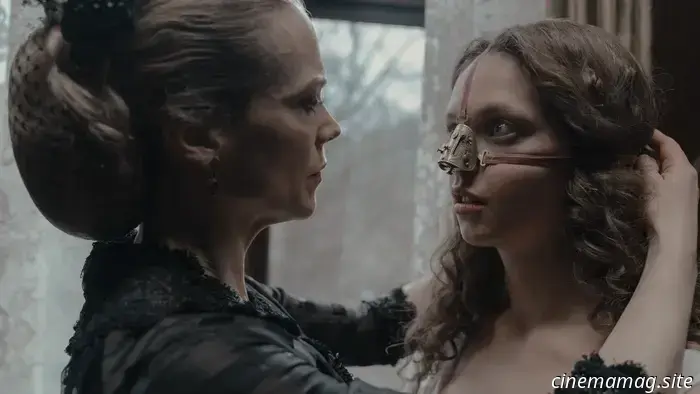
Adaptations yield two types of films: those that transliterate and those that translate. The former often prioritize preserving the original work's spirit, leading to a rigid transition from page to screen. The latter trust each medium's essence, allowing for a poetic gap between the two, akin to translating idioms between languages. Adaptations can be particularly daunting for experienced filmmakers, much less for newcomers. This challenge is amplified for an A-list actress whose directorial debut likely faces intense scrutiny. In this light, Kristen Stewart’s choice to adapt Lidia Yuknavitch’s 2011 memoir, The Chronology of Water—better known for her second book, The Small Backs of Children—indicates a natural alignment between the artist and her material. – Savina P. (full review)
Eephus (Carson Lund)
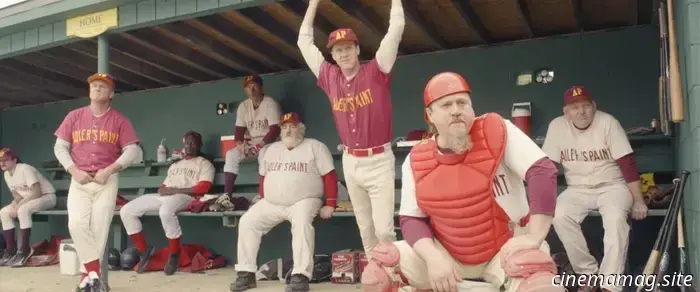
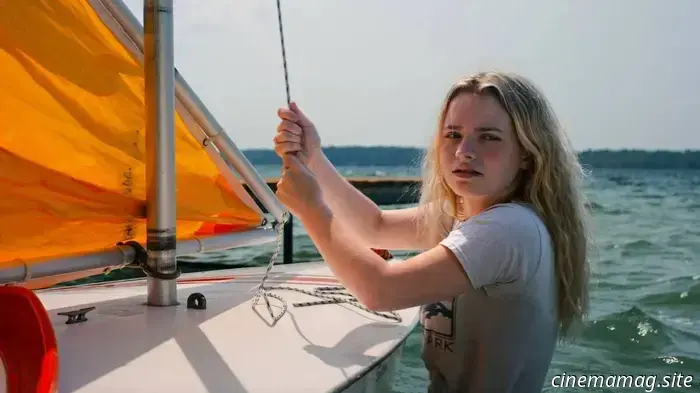
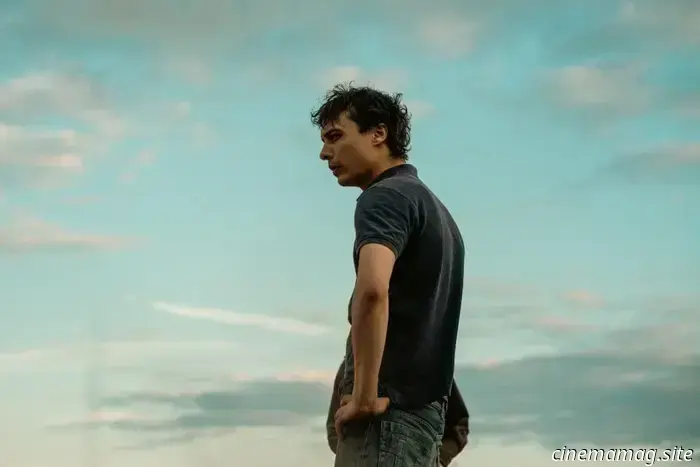
A perfect sports film reveals the passions that make one fall in love with the game, and Carson




Other articles
 Why Filmmakers Are Reevaluating Digital Asset Management in 2025: An Examination of New Cloud-Based Studios
The film industry is undergoing one of its most crucial technical changes in decades, propelled by the swift growth of cloud-based workflows and the
Why Filmmakers Are Reevaluating Digital Asset Management in 2025: An Examination of New Cloud-Based Studios
The film industry is undergoing one of its most crucial technical changes in decades, propelled by the swift growth of cloud-based workflows and the
 It’s the most amazing time of the year in the seasonal teaser trailer for Fallout Season 2.
With the month arriving where viewers are set to return to the wasteland, Prime Video has released yet another teaser for the second season of their highly praised adaptation of the video game.
It’s the most amazing time of the year in the seasonal teaser trailer for Fallout Season 2.
With the month arriving where viewers are set to return to the wasteland, Prime Video has released yet another teaser for the second season of their highly praised adaptation of the video game.
 Mother Mary Trailer: David Lowery Comes Back with a Pop Melodrama Featuring Anne Hathaway and Michaela Coel
Reuniting with A24 following A Ghost Story and The Green Knight, writer-director David Lowery is set to release Mother Mary next year, an ambitious pop melodrama starring Anne Hathaway, Michaela Coel, Hunter Schafer, Jessica Brown Findlay, Sian Clifford, and FKA Twigs. The film includes original music from Charli XCX, Jack Antonoff, and FKA Twigs, and A24 has now
Mother Mary Trailer: David Lowery Comes Back with a Pop Melodrama Featuring Anne Hathaway and Michaela Coel
Reuniting with A24 following A Ghost Story and The Green Knight, writer-director David Lowery is set to release Mother Mary next year, an ambitious pop melodrama starring Anne Hathaway, Michaela Coel, Hunter Schafer, Jessica Brown Findlay, Sian Clifford, and FKA Twigs. The film includes original music from Charli XCX, Jack Antonoff, and FKA Twigs, and A24 has now
 Marty Supreme Review: Timothée Chalamet Achieves New Heights in Josh Safdie’s Dynamic Drama
The introductory credits of Marty Supreme showcase vintage animation depicting a sperm fertilizing an enormous egg. Accompanied by Alphaville's "Forever Young" playing in the background, the massive fertilized egg ultimately morphs into a ping pong ball soaring across a table's net. The individual striking the ball, and the holder of the triumphant spermatozoon, is
Marty Supreme Review: Timothée Chalamet Achieves New Heights in Josh Safdie’s Dynamic Drama
The introductory credits of Marty Supreme showcase vintage animation depicting a sperm fertilizing an enormous egg. Accompanied by Alphaville's "Forever Young" playing in the background, the massive fertilized egg ultimately morphs into a ping pong ball soaring across a table's net. The individual striking the ball, and the holder of the triumphant spermatozoon, is
The Top Directorial Debuts of 2025
While we strive to cover a diverse range of films annually, nothing brings us greater joy than the emergence of bold new voices. That's why we attend festivals and examine numerous features that may unveil some budding talent. This year was particularly significant for